
Nutrient quality
The formula has a focused hormone theme but weak practical dose quality. Poor chrysin absorption and unquantified tribulus potency are major limitations.
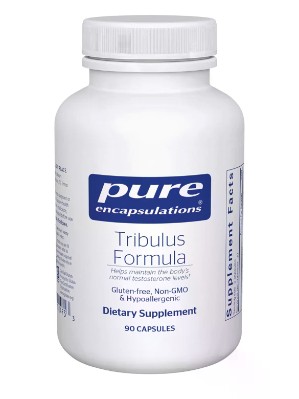
.
 Pure Formulas Pure Formulas | $ 44.00 |
Tribulus fruit extract includes a named protodioscin marker, while D-aspartic acid provides another commonly marketed testosterone pathway. Chrysin and hesperetin add flavonoid components intended to broaden hormone-related support.
Protodioscin is not quantified, D-aspartic acid is below commonly studied amounts, and chrysin has poor oral bioavailability. The formula also omits foundational zinc, vitamin D, and magnesium.
Three capsules per serving and premium cost create weak value for the disclosed doses. It fits few users better than a simpler, better-characterized hormone-support formula.
The formula has a focused hormone theme but weak practical dose quality. Poor chrysin absorption and unquantified tribulus potency are major limitations.
.All active amounts are visible without a hidden blend. Complete directions, inactive ingredients, and quantified marker potency remain missing.
.The supplied average is very strong and based on a small sample. No review themes were provided, so consistency and purpose-specific experience cannot be assessed.
.The very high serving cost is poorly matched to the formula quality. Modest key doses and low-value supporting ingredients further weaken competitiveness.
.| Ingredient | Amount per serving |
|---|---|
Tribulus Fruit Extract (Protodioscin) | 250 mg |
D-Aspartic Acid | 1000 mg |
Chrysin | 100 mg |
Hesperetin | 50 mg |
Fruit extract and a named protodioscin marker support source quality, but the label does not quantify that marker. The Tribulus amount reaches the collection median and is clearly disclosed. The very high serving cost makes the product inefficient for Tribulus-focused use.
Published studies used for the product analysis and the top-ranked studies for each ingredient and goal.