
Nutrient quality
The ginkgo amount is practical and the marker groups are identified. Missing marker percentages, purity limits, and eleuthero standardization reduce confidence in quality.
.
 iHerb iHerb | $ 7.33 | |
 Pure Formulas Pure Formulas | $ 7.13 | |
| iHerb | $ 7.33 | |
 Vitacost Vitacost | $ 6.97 | |
 Daily Vita Daily Vita | $ 7.00 | |
 Amazon Amazon | $ 7.00 |
Ginkgo is the meaningful active, with a daily amount that fits common cognitive-support use. Eleuthero adds a related stress-resilience idea but is unlikely to carry the formula at its listed amount.
Flavonglycosides and terpene lactones are named without percentages, and no ginkgolic-acid specification is given. Eleuthero also lacks its plant part, extract type, and marker standardization.
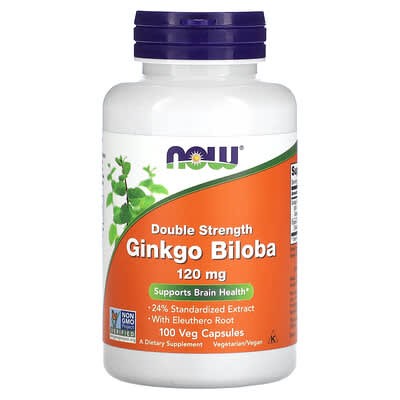
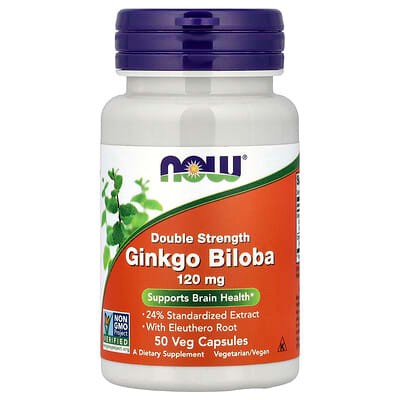
The 50-serving bottle is useful for trying the routine without committing to a bulk supply. It is better aligned with cognition and mental stamina than broad vision support, and medication interactions require attention.
The ginkgo amount is practical and the marker groups are identified. Missing marker percentages, purity limits, and eleuthero standardization reduce confidence in quality.
.Both botanical amounts are disclosed without a hidden blend. Intake directions, inactive ingredients, and important extract details are not supplied.
.The supplied average rating is strong and comes from a very large rating pool. No firsthand experiences or recurring complaint details were provided, so consistency remains uncertain.
.A practical ginkgo amount and low serving cost create strong value. Missing marker percentages are the main quality limitation.
.
Ginkgo extract directly supports cerebral circulation, while eleuthero may help cognitive stamina under stress. The ginkgo amount fits a commonly used daily range.
Missing marker percentages weaken potency assurance, and the eleuthero is not standardized. Ginkgo may increase bleeding risk with anticoagulant or antiplatelet medicines.

The full ginkgo extract amount directly supports cerebral circulation and is well aligned with memory and attention. Eleuthero adds a stress-resilience angle, creating broader cognitive intent than ginkgo alone.
Ginkgo marker percentages are missing, and the eleuthero amount falls below the usual raw-powder threshold with no standardization details. Ginkgo may increase bleeding risk with anticoagulant or antiplatelet medicines and around surgery.

Ginkgo may support attention through cerebral circulation, while eleuthero may add mild stress-resilience support. Evidence is mixed for ginkgo in healthy adults, and the eleuthero amount is low.
The ginkgo extract amount fits a common daily range, but marker percentages and purity limits are missing. Ginkgo may increase bleeding risk with anticoagulant or antiplatelet medicines.

Ginkgo and eleuthero combine circulation support with possible stress-fatigue support, giving the formula reasonable productivity relevance. Ginkgo has mixed human evidence and eleuthero evidence is less certain at the low supplied amount.
The 120 mg ginkgo extract is plausible, while 250 mg of unstandardized eleuthero falls short of a strong standalone amount. The pairing is conceptually complementary, but ginkgo may raise bleeding risk with anticoagulants, antiplatelet medicines, or around surgery.
No linked studies yet.

A full ginkgo extract amount may support ocular microcirculation in specific situations, but it is not a core broad-spectrum vision formula. Evidence for ocular outcomes is less established than for macular carotenoids or AREDS2 nutrients.
The label names key ginkgo marker groups without stating their percentages or a ginkgolic-acid purity limit, while eleuthero adds little direct vision relevance. Ginkgo may increase bleeding risk when used with anticoagulant or antiplatelet medicines.
| Ingredient | Amount per serving |
|---|---|
Ginkgo extract (Ginkgoflavonglycosides, Terpene Lactones) | 120 mg |
organic Eleuthero | 250 mg |
The extract amount fits the commonly used daily range, and both key marker groups are named. Missing marker percentages and ginkgolic-acid testing leave quality less certain. The cost per reference dose is very favorable. Ginkgo may increase bleeding risk when combined with anticoagulant or antiplatelet medicines.
The capsule clearly states the eleuthero amount but omits its plant part, extract type, and active-marker standardization. The low amount does not meet the minimum powder threshold, so the inexpensive serving does not translate into effective eleuthero value. Ginkgo may increase bleeding risk when combined with warfarin, antiplatelet medicines, or before surgery.
Published studies used for the product analysis and the top-ranked studies for each ingredient and goal.