
Nutrient quality
A few standardized extracts and useful fiber ingredients add substance to the blend. Most goal-relevant botanicals are modestly dosed, poorly characterized, or diluted by a long list of low-value additions.
.
 Vitacost Vitacost | $ 67.59 | |
 iHerb iHerb | $ 64.99 | |
 Amazon Amazon | $ 67.59 | |
 Pure Formulas Pure Formulas | $ 67.59 |
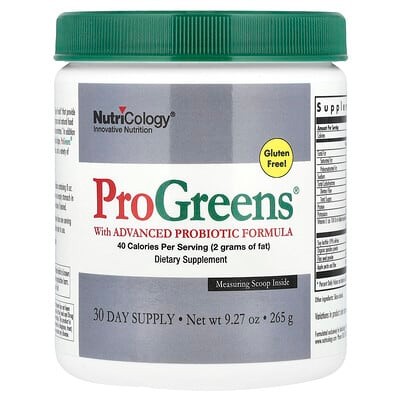
The formula works mainly as a broad greens and fiber powder rather than a focused heart or cognitive supplement. Spirulina, grass powders, chlorella, flax, apple fiber, and fructooligosaccharides give it nutritional variety, while the protein and potassium contributions are modest.
Ginkgo, eleuthero, green tea, beet, and flax touch circulation, stress, and cognitive pathways, but several extracts are included at small amounts or lack useful standardization details. The probiotic cultures have no disclosed viable count, so their expected contribution cannot be judged.
Many clearly listed ingredients improve basic transparency, yet the large formula spreads attention across too many goals without giving the most relevant actives much depth. Licorice, high vitamin E, soy, royal jelly, and bee pollen also create meaningful suitability questions, making the high serving cost harder to justify.
A few standardized extracts and useful fiber ingredients add substance to the blend. Most goal-relevant botanicals are modestly dosed, poorly characterized, or diluted by a long list of low-value additions.
.Most active amounts are listed individually rather than hidden in a proprietary blend. Missing standardization, an unusable probiotic quantity, absent intake directions, and no non-active ingredient list leave major gaps.
.The available satisfaction metric is favorable and supported by a substantial sample. Specific experience details are absent, so repeated complaints and purpose fit remain uncertain.
.The costly serving is difficult to justify because most target actives are modestly dosed or incompletely standardized. Numerous low-dose extras reduce effective value and category competitiveness.
.| Ingredient | Amount per serving |
|---|---|
Calories | 39 Calorie(s) |
Total Fat | 2 Gram(s) |
Sodium | 36 mg |
Total Carbohydrates | 4.6 Gram(s) |
Protein | 1.5 Gram(s) |
Potassium | 115 mg |
Vitamin E (D-Alpha-Tocopheryl Acid Succinate) | 67 mg |
Soy Lecithin | 2 Gram(s) |
organic Spirulina powder | 1 Gram(s) |
Flax seed powder | 650 mg |
Apple Pectin and Fiber | 600 mg |
Fructooligosaccharides | 500 mg |
organic Wheat grass powder | 350 mg |
organic Barley grass powder | 350 mg |
organic Alfalfa Grass powder | 350 mg |
organic Oat Grass powder | 350 mg |
Chlorella | 350 mg |
Acerola berry juice powder | 200 mg |
Beet juice powder | 200 mg |
Spinach powder (Octacosanol) | 150 mg |
Royal Jelly (10-Hydroxy-2-decenoic Acid) | 150 mg |
Bee Pollen | 150 mg |
Eleuthero root extract | 130 mg |
Licorice root powder | 100 mg |
Suma root powder | 60 mg |
Astragalus root extract | 60 mg |
Echinacea purpurea aerial parts powder | 60 mg |
Milk Thistle (seed) extract (Silymarin) | 60 mg |
Dunaliella extract | 40 mg |
Dulse powder | 30 mg |
Ginkgo leaf extract (Ginkgo Flavonglycosides, Terpene Lactones) | 20 mg |
Green Tea extract (Catechins) | 20 mg |
Grape seed extract (Proanthocyanidins) | 20 mg |
Bilberry extract (Anthocyanidins) | 20 mg |
Ginger root powder | 5 mg |
Non-Dairy Probiotic Cultures | 0 NP |
Flax seed powder reaches 650 mg and meets the practical powder benchmark. Added vitamin E offers some oxidation protection, though the label gives no ALA or SDG amount. High serving cost limits value even with the adequate dose.
Acerola berry juice powder is a recognizable natural source, but its Vitamin C potency is not standardized. The 200 mg amount reaches moderate support and the berry juice wording clarifies the plant part. Very high cost per active weight makes it poor value for targeted acerola use.
The root extract uses the supported plant part but does not disclose eleutheroside standardization or an extraction ratio. Its clearly listed 130 mg amount reaches the lower effective extract range in one scoop. The high per-serving cost results in weak Eleuthero-specific value.