
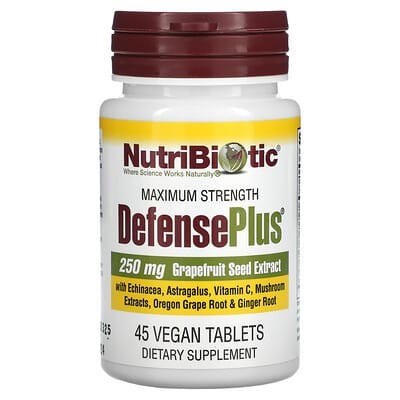
Nutrient quality
A coherent immune theme and safe core nutrients provide basic quality. Missing standardization and many lightly dosed botanicals make the formula shallow and padding-prone.
.
 iHerb iHerb | $ 22.49 | |
 Vitacost Vitacost | $ 22.49 | |
 Amazon Amazon | $ 22.25 |
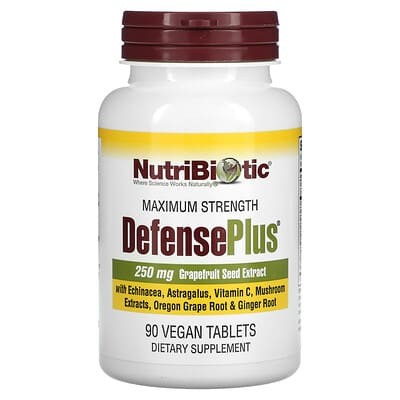
Grapefruit seed extract leads the blend, supported by vitamin C, zinc, astragalus, and reishi. Every active amount is visible, which makes the busy formula easier to assess.
Ginger, maitake, shiitake, echinacea, Oregon grape, and yarrow appear at modest amounts. The label does not state extract ratios or active markers for these supporting botanicals.
A one-tablet serving and ninety-day supply provide better routine value than the smaller presentation. The formula suits broad seasonal supplementation rather than concentrated mushroom or ginger use.
A coherent immune theme and safe core nutrients provide basic quality. Missing standardization and many lightly dosed botanicals make the formula shallow and padding-prone.
.Every active amount is explicit without a proprietary blend. Missing potency markers, timing, and excipient details limit the usefulness of that disclosure.
.The aggregate rating is very favorable, but it provides no specific experience evidence. The very large review count gives the broad signal a useful volume base, while no detailed feedback supports taste, tolerance, or recurring-problem assessment.
.A long supply and low relative serving cost provide good practical value. Shallow botanical dosing remains the main category weakness.
.| Ingredient | Amount per serving |
|---|---|
Vitamin C (Meta-C) | 125 mg |
Zinc (Zinc Gluconate) | 5 mg |
Grapefruit seed extract | 250 mg |
Astragalus | 100 mg |
Reishi Mushroom Extract | 100 mg |
Echinacea angustifolia extract | 50 mg |
Ginger root extract | 50 mg |
Maitake Mushroom Extract | 50 mg |
Oregon grape | 50 mg |
Shiitake Mushroom Extract | 50 mg |
Yarrow extract | 50 mg |
The label identifies ginger root extract but gives no extract ratio or gingerol standardization. Naming the root improves botanical specificity, while the extraction method remains unknown. The dose is low, though the inexpensive serving partly limits the value concern.
The low-cost serving includes a clearly stated amount of Maitake extract. Potency remains limited because the amount is low and the mushroom part, extraction method, and active markers are not disclosed. It fits better as a broad multi-ingredient immune formula than as a concentrated Maitake supplement.
The disclosed amount is clear, but the label does not identify a root extract, species, or active marker. No organic or other purity claim is provided, and additive quality cannot be checked from the available label data. Cost per standardized extract equivalent is high for such limited form detail.