

Nutrient quality
Sodium is carried by chondroitin sulfate, which is not a conventional hydration salt. The 120 mg sodium amount is too low for substantial sweat replacement.
.
 iHerb iHerb | $ 51.39 | |
 Pure Formulas Pure Formulas | $ 40.99 | |
 Daily Vita Daily Vita | $ 43.99 | |
 Amazon Amazon | $ 51.39 |
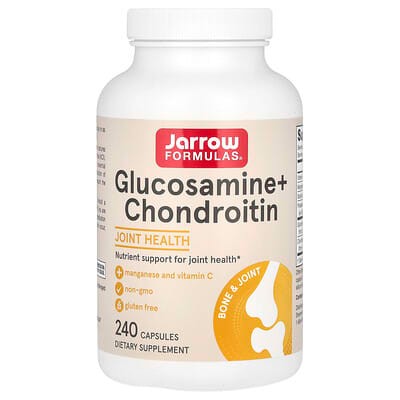
The capsules provide 1,500 mg of glucosamine sulfate and 1,200 mg of chondroitin sulfate, supported by vitamin C and manganese. All main amounts are disclosed, giving the joint-focused formula a clear rationale.
Potassium reaches 260 mg from glucosamine sulfate potassium chloride, while 120 mg of sodium comes from chondroitin sulfate sodium. Naming those sources improves transparency, though the electrolyte profile remains secondary to the joint actives.
The product suits someone who wants the full joint combination and values source disclosure. It should not be chosen primarily for heart support, and chondroitin may be unsuitable alongside warfarin or other anticoagulants.
Sodium is carried by chondroitin sulfate, which is not a conventional hydration salt. The 120 mg sodium amount is too low for substantial sweat replacement.
.Active amounts are listed clearly. No proprietary blend hides a key dose, but other ingredients and full directions are missing.
.The supplied average rating is generally strong and the rating volume provides an aggregate signal. No comment-level evidence is provided to assess recurring complaints or confirm how experience matches the intended purpose.
.The low sodium contribution or weak disclosure limits effective value. The main non-electrolyte actives are purposeful rather than obvious padding.
.| Ingredient | Amount per serving |
|---|---|
Vitamin C (Ascorbic Acid) | 60 mg |
Manganese (Manganese Citrate) | 1 mg |
Sodium (Chondroitin Sulfate Sodium) | 120 mg |
Potassium (Glucosamine Sulfate Potassium Chloride) | 260 mg |
Glucosamine Sulfate | 1500 mg |
Chondroitin Sulfate | 1200 mg |
The sodium amount is too low for exercise replenishment and comes from a joint-support compound rather than a conventional hydration salt. Potassium is clearly measured, but potassium chloride offers only standard supporting-mineral quality. The economical cost is attractive for joint support, not for building a complete electrolyte plan.
Potassium chloride contributes a moderate amount alongside the joint-support actives. The electrolyte form is functional but lacks the broader buffering role of citrate or bicarbonate. A modest serving cost supports fair value, although consumers seeking potassium alone would be paying for a joint formula.