

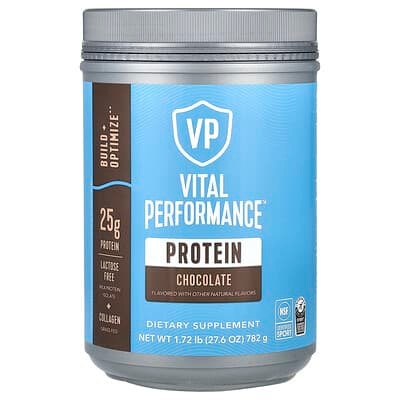
Nutrient quality
The protein amount is meaningful for general protein nutrition. Missing source detail and secondary nutrient forms limit quality assessment.
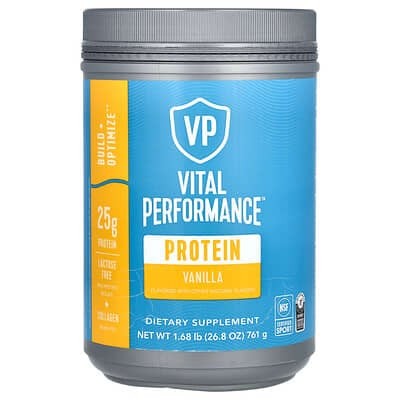
 Vitacost Vitacost | $ 27.69 | |
 iHerb iHerb | $ 30.00 | |
 Amazon Amazon | $ 29.99 |
Milk protein and bovine collagen combine for a substantial total protein serving. The two sources offer complete milk protein alongside collagen-rich amino acids for broader structural support.
The listed source amounts do not reconcile cleanly with total protein. That inconsistency should be clarified, and the sodium source and full inactive ingredients are not identified.
It fits adults who want both dietary protein and collagen in one powder. Users seeking a single complete protein should remember that collagen has a different amino-acid profile from milk protein.
The protein amount is meaningful for general protein nutrition. Missing source detail and secondary nutrient forms limit quality assessment.
Macronutrients and minerals have specific amounts without a hidden blend. Protein-source detail, inactive ingredients, and complete preparation directions remain incomplete.
The aggregate satisfaction signal is moderate and the supplied volume is substantial. No specific experience details are supplied to assess repeated complaints, taste, texture, or purpose-related outcomes.
The serving provides reasonable value for a substantial protein amount. Missing source and inactive-ingredient detail limit precise category comparison.
| Ingredient | Amount per serving |
|---|---|
Calories | 130 Calorie(s) |
Cholesterol | 10 mg |
Total Carbohydrate | 6 Gram(s) |
Protein | 25 Gram(s) |
Calcium | 350 mg |
Sodium | 230 mg |
Potassium | 40 mg |
Milk Protein | 18 Gram(s) |
Collagen Peptides (Bovine) | 10 Gram(s) |
The modest sodium dose may support light replenishment, but it is less suited to heavy sweat losses. Sodium and potassium amounts are disclosed, while their chemical forms and any trace-mineral support are unclear. The protein-and-collagen focus also makes it less targeted than a dedicated electrolyte formula, though its cost per serving is reasonably competitive.
A moderate calcium amount is clearly quantified in the vanilla protein powder, but its chemical form is not disclosed. The dose can supplement daily intake, although unknown form and elemental context limit absorption confidence. Calcium-specific value is weak because protein is the main cost driver.