
Nutrient quality
Calcium citrate, vitamin B6, chasteberry, and related actives fit PMS support. Weaker nutrient forms and hidden blends limit dose quality and focus.
.
 iHerb iHerb | $ 9.75 |
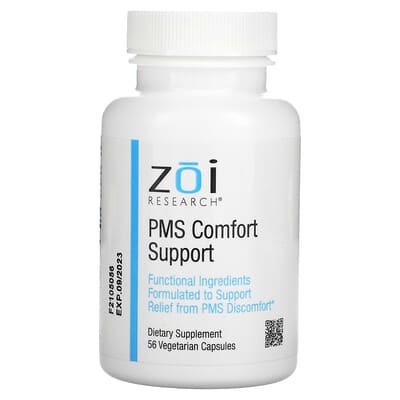
The formula combines 300 mg calcium citrate, 150 mg magnesium, 25 mg vitamin B6, chasteberry extract, and a DIM complex. These ingredients create a more focused menstrual-support design than a standard multivitamin.
Magnesium is supplied as oxide and vitamin D uses a very small amount of D2. The 250 mg PMS Support Blend and 23 mg absorption blend are undisclosed, while the DIM complex presentation repeats several carrier entries in a way that is difficult to interpret.
Four capsules per serving and a 14-day supply make the routine demanding and short. Users considering chasteberry or DIM should review hormone-related medicines and pregnancy plans before use.
Calcium citrate, vitamin B6, chasteberry, and related actives fit PMS support. Weaker nutrient forms and hidden blends limit dose quality and focus.
.Most core nutrient amounts are individually shown. A proprietary blend plus missing directions and excipient details prevents complete assessment.
.The aggregate rating is favorable and supported by solid feedback volume. Complaint-level experiences are unavailable, so repeated drawbacks and purpose fit remain uncertain.
.The formula offers useful nutrients at a relatively high serving cost. Dose balance, hidden blends, or modest minerals weaken competitiveness.
.| Ingredient | Amount per serving |
|---|---|
Vitamin D (Ergocalciferol, Vitamin D2) | 2.5 mcg |
Vitamin B6 (Pyridoxine Hydrochloride) | 25 mg |
Calcium (Calcium Citrate) | 300 mg |
Magnesium (Magnesium Oxide) | 150 mg |
Proprietary PMS Support Blend | 250 mg |
Chasteberry fruit extract | 175 mg |
Diindolymethane Complex (Diindolylmethane, Phosphatidylcholine, Silica, Starch, Vitamin E TPGS) | 100 mg |
Proprietary Absorption Blend | 23 mg |
Calcium citrate offers reliable absorption in a moderate supplemental amount. The label is clear and the supplied data disclose no controversial additives, though four capsules are required. Serving value is average because the formula includes several PMS-focused cofactors.
Pyridoxine hydrochloride is a precursor form, and no riboflavin cofactor is listed to support conversion. The 25 mg dose sits in the preferred range for metabolic and neurological support. Price per serving is poor for pyridoxine hydrochloride.