

Nutrient quality
The sodium source is not identified, so its form quality cannot be assessed confidently. The 160 mg sodium amount is too low for substantial sweat replacement.
.
 iHerb iHerb | $ 60.18 |
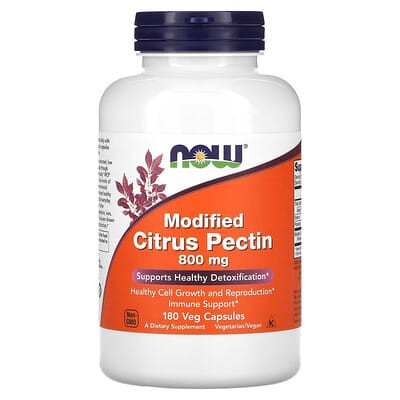
The serving supplies 4.8 g of modified citrus pectin powder, making the product's primary purpose clear. Potassium reaches 390 mg, a meaningful secondary contribution that may help general dietary intake.
Sodium is lower at 160 mg, but neither mineral form is disclosed. The product therefore offers a useful amount of potassium without the form transparency found in a dedicated mineral supplement.
Choose it when modified citrus pectin is the main goal and potassium is a welcome extra. People with reduced kidney function or medicines that retain potassium need to account for the full 390 mg serving.
The sodium source is not identified, so its form quality cannot be assessed confidently. The 160 mg sodium amount is too low for substantial sweat replacement.
.Active amounts are listed clearly. No proprietary blend hides a key dose, but other ingredients and full directions are missing.
.The supplied average rating is generally strong and the rating volume provides an aggregate signal. No comment-level evidence is provided to assess recurring complaints or confirm how experience matches the intended purpose.
.The low sodium contribution or weak disclosure limits effective value. The main non-electrolyte actives are purposeful rather than obvious padding.
.
MK-7 vitamin K supports calcium placement and offers a clear arterial-health mechanism. The identified long-acting form is well aligned with cardiovascular use.
The single-active formula is narrow but supplies a meaningful, transparent amount. People using warfarin or another vitamin K antagonist need consistent vitamin K intake because abrupt changes can alter anticoagulant control.
| Ingredient | Amount per serving |
|---|---|
Total Carbohydrates | 4 Gram(s) |
Sodium | 160 mg |
Potassium | 390 mg |
modified Citrus Pectin powder | 4.8 Gram(s) |
The serving provides an effective potassium amount, but its likely food-derived chemical form is not identified. The dietary label appears to report elemental potassium without explicitly confirming it. Value is reasonable at the collection norm, although the product is not a dedicated potassium supplement.
The sodium amount is too low to replace substantial sweat losses during intense activity. Source quality and supporting-electrolyte absorption remain uncertain because their chemical forms are incomplete. The supplied data leave some sugar or additive uncertainty, while cost efficiency is reasonable for the broader formula.
Published studies used for the product analysis and the top-ranked studies for each ingredient and goal.