
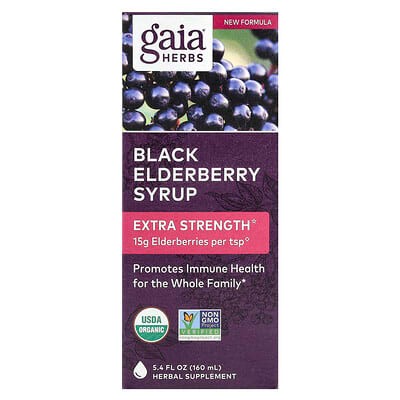
Nutrient quality
Elderberry concentrate provides the useful core, while acerola contributes only a small supporting amount. The simple formula avoids excess but lacks anthocyanin and vitamin C standardization.
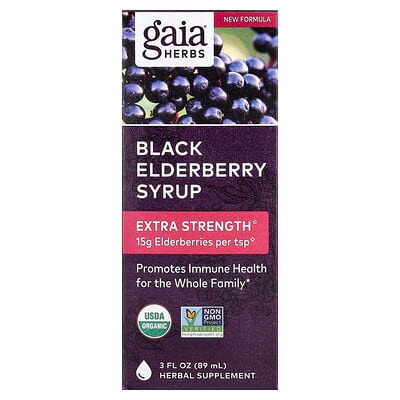
 Amazon Amazon | $ 22.94 | |
 Vitacost Vitacost | $ 22.94 | |
 iHerb iHerb | $ 22.94 | |
| iHerb | $ 22.94 |
Elderberry fruit juice concentrate at 476 mg provides the main botanical component. Acerola is present at 37 mg as a minor complement rather than a substantial standalone ingredient.
The label is refreshingly simple and avoids a proprietary mixture. Neither extract provides an active-marker yield, however, so shoppers cannot compare anthocyanin or vitamin C potency across products.
The syrup format suits people who dislike capsules and keeps the serving easy to adjust. It is primarily an elderberry product; users prioritizing acerola should choose a formula with a larger standardized amount.
Elderberry concentrate provides the useful core, while acerola contributes only a small supporting amount. The simple formula avoids excess but lacks anthocyanin and vitamin C standardization.
Both active fruit ingredients have clear amounts and no blend hides them. Missing marker yields, complete directions, and inactive ingredients prevent full transparency.
The aggregate rating is strong, and the very large review count makes it stable. No detailed feedback is supplied, so repeated complaints and purpose fit cannot be judged.
A useful elderberry amount and simple ingredient list support the formula’s quality. The relatively costly serving and very small acerola contribution limit value.
| Ingredient | Amount per serving |
|---|---|
Calories | 0 Calorie(s) |
Total Carbohydrates | 1 Gram(s) |
Black Elderberry (Sambucus nigra) fruit juice concentrate | 476 mg |
Acerola fruit extract | 37 mg |
Sambucus nigra fruit juice concentrate is clearly identified and approaches the high-potency amount range. The actual weight is transparent, though no extract ratio or active-marker level is available. Cost efficiency is favorable for the active weight supplied.
Acerola appears as a minor component beside a much larger elderberry amount. Its active vitamin C yield and botanical species are not disclosed. The very small acerola dose makes this better viewed as an elderberry syrup than a dedicated acerola option.