
Nutrient quality
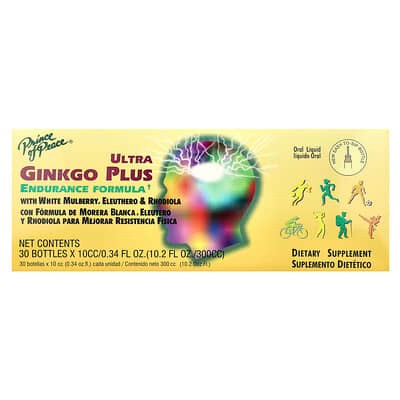
Eleuthero, rhodiola, and ginkgo offer plausible endurance support. Their modest doses, absent standardization, and a dominant white mulberry component weaken the formula.
.
 iHerb iHerb | $ 23.48 | |
 Pure Formulas Pure Formulas | $ 18.79 | |
 Vitacost Vitacost | $ 20.29 | |
 Amazon Amazon | $ 16.10 | |
 Walmart Walmart | $ 17.99 |
Eleuthero at 300 mg and rhodiola at 100 mg may support resilience during stress, although the rhodiola amount is modest. Ginkgo is present at only 40 mg, below the range usually expected from a stand-alone cognitive formula.
White mulberry accounts for 1,400 mg, even though it is not the main ingredient expected for energy or mental focus. The separate 1,840 mg proprietary blend further obscures how much of the formula can be evaluated from the label.
The liquid may appeal to people who prefer a ready-to-use botanical serving, but its goal alignment is scattered. It is a weak choice for ginkgo-focused use, vision support, or anyone who wants standardized adaptogen potency.
Eleuthero, rhodiola, and ginkgo offer plausible endurance support. Their modest doses, absent standardization, and a dominant white mulberry component weaken the formula.
.Some botanical amounts are disclosed, but a large proprietary blend remains hidden. Extract potency, complete contents, and inactive ingredients are unclear.
.The supplied average rating is strong and comes from a substantial rating pool. No firsthand experiences or recurring complaint details were provided, so consistency remains uncertain.
.The serving cost is hard to justify because the most relevant actives are modest or low. A large opaque blend and weakly aligned extras further reduce useful value.
.
Eleuthero and rhodiola provide relevant adaptogenic support for stress-related fatigue and resilience. Their combination covers more than one stress-response need, but the rhodiola amount is modest.
White mulberry dominates the botanical serving despite weak relevance to stress relief. Missing extract ratios and active-marker percentages make the formula harder to judge consistently.

Eleuthero and rhodiola provide plausible stress-resilience support, while ginkgo may aid mental performance. The formula covers adaptogenic and cognitive pathways but does not directly support mitochondrial fuel production.
Eleuthero, rhodiola, and ginkgo amounts are modest or low, and no extract standardization is disclosed. A large white mulberry amount and a broad proprietary blend weaken the energy-specific balance.

Eleuthero provides a plausible stress-resilience and fatigue-support core, while Rhodiola and ginkgo add related cognitive intent. Human evidence is useful for standardized adaptogens, but none of the botanical marker profiles are disclosed.
Eleuthero reaches a practical amount, while Rhodiola and ginkgo appear low for stand-alone effects. A large white mulberry component and broad proprietary blend reduce focus on productivity.
No linked studies yet.

Eleuthero and rhodiola offer adaptogenic support, while ginkgo may contribute to cerebral circulation. The eleuthero amount is the strongest cognitive-relevant part of the formula.
Rhodiola and ginkgo are underdosed and unstandardized, and a large proprietary blend obscures much of the formula. Ginkgo may increase bleeding risk when combined with anticoagulant or antiplatelet medicines.
| Ingredient | Amount per serving |
|---|---|
Calories | 25 Calorie(s) |
Total Carbohydrates | 6 Gram(s) |
Proprietary Blend | 1840 mg |
White Mulberry extract | 1400 mg |
Eleuthero (root) extract | 300 mg |
Rhodiola (root) extract | 100 mg |
Ginkgo (leaf) extract | 40 mg |
The formula provides a useful amount of eleuthero root extract with clear dose disclosure. However, no eleutheroside percentage or extract ratio is provided, limiting confidence in extract consistency. Its near-median serving cost offers good value for the stated dose within a broader botanical blend.
The ginkgo extract lacks active-marker percentages and a ginkgolic acid purity guarantee. Its specific amount is disclosed, but the daily dose is below the maintenance range. High cost and absent standardization make it poor value for ginkgo-focused use.
Published studies used for the product analysis and the top-ranked studies for each ingredient and goal.