

Nutrient quality
Stable chlorophyllin is meaningfully dosed, while alfalfa adds only modest supporting value. Missing elemental copper disclosure and limited evidence for broad detoxification reduce confidence.
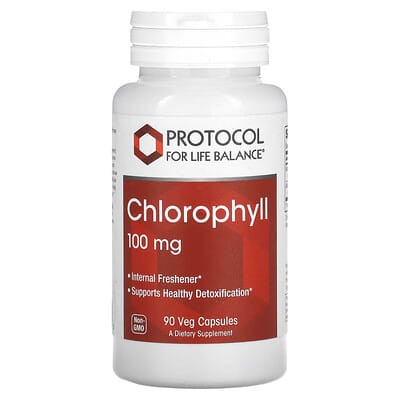
 Vitacost Vitacost | $ 25.00 | |
 Pure Formulas Pure Formulas | $ 25.00 | |
 iHerb iHerb | $ 25.00 | |
| iHerb | $ 25.00 |
One capsule supplies 100 mg of stable, water-soluble sodium copper chlorophyllin. The 250 mg alfalfa addition offers botanical context without a clearly defined role in the active dose.
The amount is useful for focused chlorophyllin use, though the label does not quantify elemental copper. Its detoxification role is mainly limited to binding selected compounds in the gut rather than supporting multiple liver pathways.
Ninety servings provide a simple long-term routine at a reasonable cost. It suits users who want a substantial chlorophyllin dose and do not require detailed mineral disclosure.
Stable chlorophyllin is meaningfully dosed, while alfalfa adds only modest supporting value. Missing elemental copper disclosure and limited evidence for broad detoxification reduce confidence.
Every listed active ingredient has a stated amount and no proprietary blend hides a dose. Complete use directions and inactive ingredients are not supplied.
The aggregate rating is favorable, and the large review count supports confidence. No detailed feedback is supplied, so repeated complaints and purpose fit cannot be judged.
The substantial active amount supports good value despite less favorable serving economics. Missing elemental copper disclosure and limited broad detox relevance cap competitiveness.

Sodium copper chlorophyllin can bind selected compounds in the gut before absorption. Its role is situational and does not directly strengthen liver Phase I or Phase II pathways.
The 100 mg amount is substantial and the stable water-soluble form is clearly identified. The elemental copper amount is missing, while the added alfalfa provides little distinct detox depth.
| Ingredient | Amount per serving |
|---|---|
Sodium Copper Chlorophyllin | 100 mg |
Alfalfa powder | 250 mg |
Sodium copper chlorophyllin delivers a stable, water-soluble form at a high-potency amount in one capsule. Alfalfa gives useful botanical-source context, but the label does not explicitly say it supplies the chlorophyllin. Cost efficiency remains strong, while the missing elemental copper amount makes total copper exposure difficult to track.
Published studies used for the product analysis and the top-ranked studies for each ingredient and goal.