
Nutrient quality
Balanced maintenance dosing fits routine multivitamin use. Conventional forms and a small fruit blend reduce formulation quality.
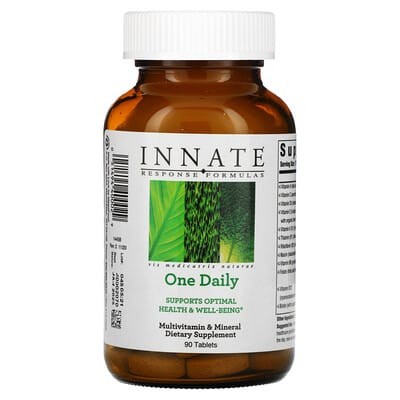
 iHerb iHerb | $ 74.99 | |
 Pure Formulas Pure Formulas | $ 64.99 | |
| iHerb | $ 74.99 | |
 Vitacost Vitacost | $ 57.75 |
The product supplies major vitamins plus modest iron, iodine, zinc, selenium, copper, and manganese. A one-tablet serving is simple, and natural vitamin E is a positive form choice.
Folic acid and cyanocobalamin are conventional forms, while several minerals are tied to yeast without enough detail to establish a clear advantage. Calcium and magnesium are not meaningful parts of the formula.
The high daily cost is difficult to justify for maintenance-level nutrient depth. Iron suitability should be based on individual need rather than the general multivitamin positioning.
Balanced maintenance dosing fits routine multivitamin use. Conventional forms and a small fruit blend reduce formulation quality.
Active amounts are complete and serving counts are clear. Vague yeast-derived forms, blend composition, and absent excipient details reduce transparency.
The supplied average rating is strong. Specific feedback is absent, so complaint consistency and purpose fit remain uncertain.
Balanced coverage provides baseline utility. Conventional forms and relatively high serving cost weaken competitiveness.
| Ingredient | Amount per serving |
|---|---|
Vitamin A (Beta Carotene) | 180 mcg RAE |
Vitamin C (organic Orange) | 60 mg |
Vitamin D3 (S. cerevisiae) | 10 mcg |
Vitamin E (D-Alpha-Tocopherol, organic Brown Rice) | 10 mg |
Vitamin K (Phytonadione) | 65 mcg |
Thiamine (Thiamine HCl) | 5 mg |
Riboflavin (organic Brown Rice) | 2 mg |
Niacin (Niacinamide) | 20 mg NE |
Vitamin B6 (Pyridoxine HCl) | 6 mg |
Folate (Folic Acid) | 400 mcg DFE |
Vitamin B12 (Cyanocobalamin) | 15 mcg |
Biotin (organic Brown Rice) | 30 mcg |
Pantothenic Acid (Calcium D-Pantothenate) | 10 mg |
Iron (S. cerevisiae) | 4.5 mg |
Iodine (S. cerevisiae) | 75 mcg |
Zinc (S. cerevisiae) | 6 mg |
Selenium (S. cerevisiae) | 25 mcg |
Copper (S. cerevisiae) | 0.1 mg |
Manganese (S. cerevisiae) | 1.2 mg |
Chromium (S. cerevisiae) | 40 mcg |
Molybdenum (S. cerevisiae) | 20 mcg |
Boron (S. cerevisiae) | 500 mcg |
Fruit Phenolic Blend | 10 mg |
The four and a half mg iron serving is below the effective target range for focused supplementation. Iron supplied through nutritional yeast offers a food-based matrix, though it is not identified as Koji iron. Zinc in the same serving may compete with iron despite adequate vitamin C, folate, and vitamin B12. Cost per serving is above the collection benchmark.
Phytonadione supplies vitamin K1, which is less aligned with bone and cardiovascular goals than MK-7. No confirmed MK-7 dose is available for targeted bone or cardiovascular support; value for MK-7 is weak because the form is absent, undefined, or underdosed. Vitamin K can oppose warfarin and related vitamin K antagonists, so users of those medicines need consistent intake and clinician guidance.