

Nutrient quality
Protein and fat create a coherent low-carbohydrate nutrition profile. Unknown ingredient sources and weak heart-purpose alignment reduce confidence.
.
 Vitacost Vitacost | $ 45.72 | |
 Pure Formulas Pure Formulas | $ 55.21 | |
 Daily Vita Daily Vita | $ 55.21 |
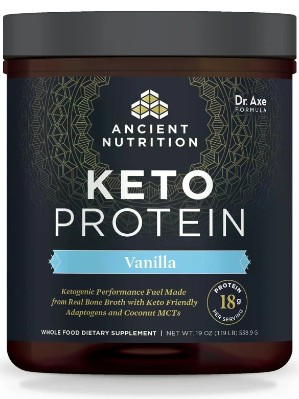
The serving provides 18 g protein, 10 g fat, and 2 g carbohydrate, which is clearly aimed at a higher-fat eating pattern. Its 30.2 g KetoPROTEIN Blend is not broken down into individual ingredients or amounts.
Potassium at 260 mg makes a moderate but sub-target contribution. Sodium is present in a similar range, while the formula lacks defined ingredients aimed at other cardiovascular pathways.
The high serving cost is a notable trade-off for only 17 servings. Unspecified blend components, mineral forms, and other ingredient details also make quality and tolerance difficult to judge.
Protein and fat create a coherent low-carbohydrate nutrition profile. Unknown ingredient sources and weak heart-purpose alignment reduce confidence.
.Core nutrition totals are clear enough for basic comparison. Missing complete ingredients, use directions, and detailed protein or blend composition leave notable gaps.
.Aggregate satisfaction data are favorable. Specific firsthand comments were not supplied, leaving repeated complaints and purpose fit uncertain.
.Formula opacity or weak serving economics limit value. More transparent or efficient alternatives are likely to be more practical.
.| Ingredient | Amount per serving |
|---|---|
Calories | 160 Calorie(s) |
Total Fat | 10 Gram(s) |
Cholesterol | 15 mg |
Total Carbohydrates | 2 Gram(s) |
Protein | 18 Gram(s) |
Sodium | 170 mg |
Potassium | 260 mg |
KetoPROTEIN Blend | 30.2 Gram(s) |
The sodium serving is too small for intense exercise and its source is not disclosed. Potassium adds some breadth, although its form is unknown and no buffering minerals are listed. The high serving cost mainly buys a protein blend, so electrolyte value is only neutral.
Food-derived potassium in the protein blend has no disclosed chemical form. The amount is moderate but does not reach the collection target, and full elemental yield is not shown. A premium serving cost creates weak potassium value because the formula is priced mainly as a protein product.
Published studies used for the product analysis and the top-ranked studies for each ingredient and goal.