
Nutrient quality
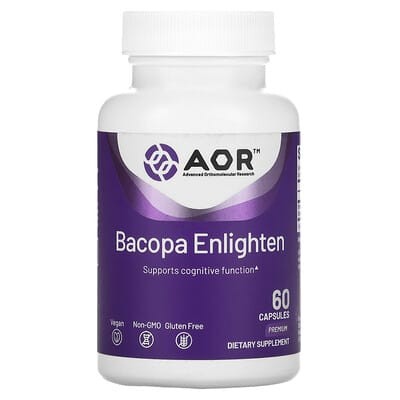
A focused Bacopa extract reaches a clinically familiar serving weight, but missing bacoside standardization leaves potency uncertain. The main ingredient amount is meaningful, while active potency remains the central uncertainty.
.
 Amazon Amazon | $ 32.96 | |
 iHerb iHerb | $ 23.97 |
The 300 mg extract serving is the clearest strength because it sits in a commonly used range for Bacopa products. Its single-ingredient design also makes the role of the active easy to understand.
The label does not state a bacoside percentage, plant part, or named extract source. Those omissions matter because equal extract amounts can deliver very different levels of active compounds.
It is a reasonable middle-ground option for buyers who want a credible extract amount without a complex blend. Those who want tightly verified potency should look for explicit standardization details.
A focused Bacopa extract reaches a clinically familiar serving weight, but missing bacoside standardization leaves potency uncertain. The main ingredient amount is meaningful, while active potency remains the central uncertainty.
.Active ingredient weights are stated clearly without a hidden blend. Active-marker potency, complete directions, and non-active ingredients remain incomplete.
.The aggregate rating is mixed and is supported by limited review volume. No review comments are supplied, so tolerance, ease of use, and purpose alignment cannot be assessed directly.
.The formula provides good value after considering dose, evidence, and potency disclosure. Missing potency detail limits the category position.
.
Bacopa is closely aligned with long-term memory support, and the 300 mg extract amount matches a commonly studied serving. Its effects tend to build with consistent use rather than provide an immediate focus boost.
The single botanical gives strong depth for memory acquisition but does not cover energy metabolism or membrane health. No bacoside percentage is supplied, so the potency of the extract cannot be compared with standardized clinical materials.

Bacopa monnieri has relevant human evidence for memory recall and processing after consistent use. Its effects are gradual rather than an immediate boost in attention.
The extract amount matches common study servings, but no bacoside percentage is disclosed. Missing plant-part and source details make active potency uncertain despite the focused single-ingredient design.

Bacopa monnieri may support memory and information processing after consistent use over several weeks. The extract amount matches a common clinical target but is not an acute stimulant.
Missing bacoside standardization leaves the active yield uncertain despite the appropriate extract weight. Bacopa may cause nausea, abdominal cramping, or loose stools in sensitive users.

Bacopa may support stress resilience over sustained use, but it is better established for cognition than acute calm. The 300 mg extract amount matches common research quantities.
Missing bacoside standardization and plant-part details prevent verification of active potency. The focused formula avoids distraction but offers only one gradual pathway.

Bacopa may support memory and sustained cognitive performance after consistent use rather than providing an immediate focus effect. The 300 mg extract reaches a familiar study amount, but active potency cannot be verified.
No bacoside percentage, plant part, or trademarked source is disclosed. The formula is focused, yet uncertain standardization limits confidence in meaningful delivery.

Bacopa may support stress resilience and emotional steadiness over time, but its mood evidence is still developing. The botanical is better supported for memory than for direct mood improvement.
The 300 mg extract amount is plausible for studied use, although no bacoside percentage is supplied. The single-extract design is focused and avoids unrelated ingredients.
| Ingredient | Amount per serving |
|---|---|
Bacopa (Bacopa monnieri) extract | 300 mg |
The 300 mg extract matches the established clinical dose range at a low serving cost. Missing bacoside standardization prevents calculation of the active compound yield and leaves potency uncertain. The label also omits the plant part and any trademarked extract source.
Published studies used for the product analysis and the top-ranked studies for each ingredient and goal.