
Nutrient quality
Organic decaffeinated tea leaf is a straightforward beverage source, but its catechin content naturally varies. The simple beverage format is sensible, although it cannot deliver or verify a concentrated EGCG dose.
 iHerb iHerb | $ 4.93 | |
 Amazon Amazon | $ 26.76 | |
 Vitacost Vitacost | $ 4.89 | |
| Vitacost | $ 4.89 |
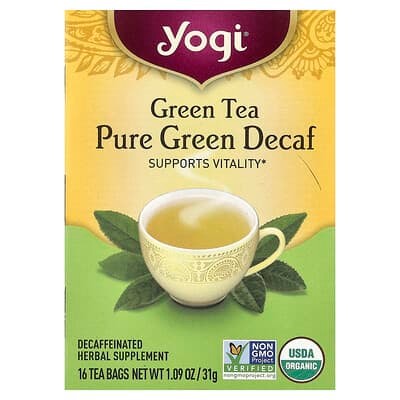
Each tea bag contains 1,937 mg of organic decaffeinated green tea leaf. Brewing provides a gentler food-format source of catechins and fluid than a concentrated extract capsule.
Neither EGCG nor total catechin yield is measured, and brewing time and water temperature will change the delivered amount. Decaffeination lowers stimulant exposure but does not guarantee a completely caffeine-free cup.
The tea format suits regular sipping and people who prefer beverages over supplements. It is not designed to deliver a tightly controlled catechin dose, but it offers a simple and affordable route to green tea.
Organic decaffeinated tea leaf is a straightforward beverage source, but its catechin content naturally varies. The simple beverage format is sensible, although it cannot deliver or verify a concentrated EGCG dose.
The tea-leaf amount and decaffeinated status are clear, while active catechins are not quantified. No proprietary blend hides the listed active doses.
The supplied average is favorable, with very large response volume. Complaint patterns and purpose-related experiences are not supplied.
The asking price is only partly justified by the disclosed formula. Serving value is moderate relative to the formula quality.

Decaffeinated green tea supplies a relevant botanical source with antioxidant and inflammatory-signaling activity. Human evidence supports green tea polyphenols, but the brewed tea's active strength cannot be confirmed from leaf weight alone.
The label gives no EGCG or total-polyphenol amount, so each cup may vary with processing and brewing. It offers gentle, focused support, yet the missing active yield limits confidence in a meaningful dose.

Decaffeinated green tea provides gentle polyphenol exposure without a large stimulant burden. Organic leaf sourcing is a practical strength.
No EGCG or total-polyphenol amount is disclosed, so active potency cannot be compared with studied extracts. The beverage may complement a healthy pattern but is not a strong targeted anti-aging intervention.
Green tea polyphenols may support antioxidant and inflammatory defenses that matter for skin. The tea is not standardized for EGCG or total polyphenols, so the active amount varies between servings.
Decaffeination makes it suitable for people limiting stimulants, and the single botanical is easy to understand. As a brewed tea, it offers no direct collagen, hydration, or barrier-lipid support.

Decaffeinated green tea may provide antioxidant support, but it lacks the caffeine-theanine pairing used for acute focus. Green tea has supportive human evidence, yet unknown catechin and theanine yields make cognitive effects uncertain.
The 1,937 mg tea-leaf amount does not reveal an effective EGCG, polyphenol, or theanine dose. Organic and decaffeinated status are clear, but active standardization is absent.
| Ingredient | Amount per serving |
|---|---|
organic decaffeinated Green Tea | 1937 mg |
The organic tea leaf is not standardized to EGCG or polyphenols, so active strength varies and cannot be quantified. Clear decaffeinated labeling makes it suitable for people limiting stimulants. The missing EGCG amount prevents a reliable active-value comparison.
Published studies used for the product analysis and the top-ranked studies for each ingredient and goal.