
Nutrient quality
A useful iodine form and dose are the clearest strengths. Minimal potassium and a sizable alginate addition weaken the intended nutrient contribution.
.
 Pure Formulas Pure Formulas | $ 10.11 | |
 Daily Vita Daily Vita | $ 9.90 | |
 Amazon Amazon | $ 9.90 | |
 Vitacost Vitacost | $ 10.97 | |
 iHerb iHerb | $ 10.40 | |
 Walmart Walmart | $ 12.99 |
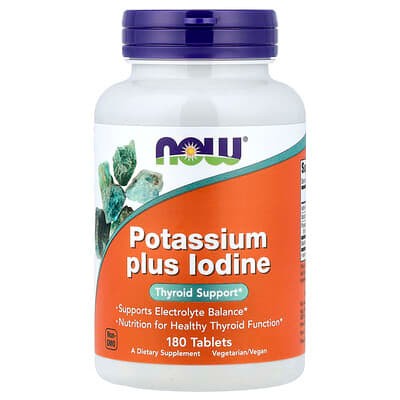
The tablet's main strength is 225 mcg of iodine from stable potassium iodide. Iodine supports normal thyroid hormone production, so its energy and metabolism relevance depends largely on whether intake is inadequate.
The listed potassium amount is modest, and potassium iodide is not an efficient way to cover broader potassium needs. Five milligrams of sodium also has no practical role in exercise hydration.
One tablet and a long supply make the product easy and economical to use. People with thyroid conditions or thyroid treatment need more individualized guidance because added iodine can alter thyroid control.
A useful iodine form and dose are the clearest strengths. Minimal potassium and a sizable alginate addition weaken the intended nutrient contribution.
.The main nutrient forms and amounts are mostly identifiable. Repeated potassium totals and missing non-active ingredients leave avoidable uncertainty.
.The supplied average rating is very strong. No specific review comments were supplied, so repeated negative experiences cannot be assessed.
.The iodine component delivers strong value at a low serving cost. Minimal potassium and low-value alginate keep the formula from leading on usefulness.
.
Iodine directly supports thyroid-hormone production and can restore normal metabolism when intake is low. Extra iodine does not reliably accelerate metabolism when thyroid function is already normal.
Potassium iodide is stable, readily absorbed, and supplied at a well-chosen amount. Potassium and alginate do not add meaningful metabolism support but remain clearly disclosed.

Potassium iodide supplies a well-absorbed iodine amount that can support thyroid hormone production and normal metabolic rate. The effect on energy is most relevant when iodine intake is inadequate rather than as an immediate boost.
The added potassium amount is too small to provide broad electrolyte or energy support. People with autoimmune thyroid disease, thyroid nodules, or thyroid-hormone treatment should have iodine intake reviewed because extra iodine can disrupt thyroid control.
| Ingredient | Amount per serving |
|---|---|
Iodine (Potassium Iodide) | 225 mcg |
Sodium (Sodium Alginate) | 5 mg |
Potassium (Potassium Chloride, Potassium Iodide) | 99 mg |
Sodium Alginate | 100 mg |
Potassium iodide supplies a stable, readily absorbed iodine form at a well-chosen 225 mcg dose. The label clearly identifies both the source and active iodine amount, while one tablet keeps use simple. Its very low serving cost provides strong iodine-specific value despite the additional potassium ingredients.
The tiny sodium dose is poorly suited to athletic sweat replacement despite excellent cost efficiency. Sodium alginate is disclosed, but it is not a preferred natural salt or standard citrate source. Potassium and iodine broaden the mineral profile, though the formula lacks bicarbonate or a trace-mineral complex.
Potassium Plus Iodine uses potassium iodide, which is a less useful potassium form for general mineral support. The standard tablet dose offers only a modest contribution to daily intake. Its low serving cost partly offsets the limited potency.
Published studies used for the product analysis and the top-ranked studies for each ingredient and goal.