

Nutrient quality
Substantial mineral totals provide some nutritional depth. Poorly absorbed oxide forms and several hidden complexes prevent reliable dose and formulation assessment.
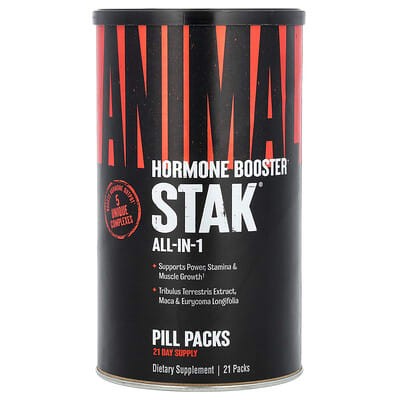
 iHerb iHerb | $ 46.51 | |
 Nutrition Faktory Nutrition Faktory | $ 46.50 | |
 Vitacost Vitacost | $ 47.47 | |
 Amazon Amazon | $ 46.44 | |
| Vitacost | $ 47.47 |
Vitamin D3 and vitamin B6 are useful disclosed nutrients, but magnesium oxide and zinc oxide have limited systemic absorption. The substantial mineral amounts do not fully compensate for form quality or long-term tolerance concerns.
Pro-testosterone, growth-hormone, aromatase, hormone-amplifying, and restorative complexes make up most of the formula without individual ingredient doses. Blend names suggest a targeted hormone product, yet the available data cannot show whether those pathways are coherently or safely covered.
The pack is convenient for users who want many ingredients at once, but convenience is not enough when the central formula cannot be audited. Very weak value and limited transparency make a simpler disclosed product easier to evaluate.
Substantial mineral totals provide some nutritional depth. Poorly absorbed oxide forms and several hidden complexes prevent reliable dose and formulation assessment.
The vitamin and mineral totals are clear, but several large proprietary complexes dominate the formula. Hidden component doses, incomplete directions, and absent non-active ingredients make transparency poor.
The supplied average is strong and supported by very large response volume. No comment-level evidence is available to assess repeated complaints or alignment with the intended use.
Substantial minerals and multiple functional categories offer some apparent breadth. Poor forms, hidden doses, and a high serving cost produce weak effective value.

Vitamin C directly supports collagen synthesis and antioxidant defense in skin. Vitamin C has established human and mechanistic evidence for collagen formation and antioxidant protection.
The clearly disclosed 1,000 mg vitamin C amount provides more than enough collagen-synthesis cofactor for most users. Vitamin C covers collagen synthesis and antioxidant defense but not direct hydration or barrier-lipid support.

Zinc supports follicle function and may help when low zinc status contributes to shedding. Routine high intake is unlikely to improve hair when zinc status is adequate.
Zinc oxide provides a clearly disclosed 25 mg amount. Long-term use at this amount without copper may contribute to copper depletion in susceptible users.

Zinc supports retinal enzyme activity and vitamin A transport, giving it a clear role in ocular nutrition. The disclosed amount is substantial and can contribute to a broader vision regimen.
Zinc alone does not recreate the balanced combinations used in established vision formulas. Higher daily amounts also need attention to copper intake because prolonged use can reduce copper absorption.
| Ingredient | Amount per serving |
|---|---|
Vitamin D (Cholecalciferol) | 25 mcg |
Vitamin B6 (Pyridoxine Hydrochloride) | 10.5 mg |
Magnesium (Magnesium Oxide) | 425 mg |
Zinc (Zinc Oxide) | 25 mg |
Pro Testosterone Complex | 1500 mg |
Growth Hormone Support | 1500 mg |
Aromatase Combating Complex | 300 mg |
Hormone Amplifying Blend (AstaPure) | 500 mg |
Restorative Support Complex | 500 mg |
Zinc oxide is a poorly absorbed form that may be harder on the stomach, and the pack format does not clarify delivery quality. The 25 mg dose is effective and carries a relatively low copper-depletion risk at this level. A very high per-serving cost makes the value weak for a basic zinc form.
Magnesium oxide has low systemic absorption despite the substantial dose. The 425 mg elemental amount sits just above the preferred therapeutic range. Vitamin B6 and vitamin D support the formula logic, but the very high serving cost is poor value for oxide.
Published studies used for the product analysis and the top-ranked studies for each ingredient and goal.