
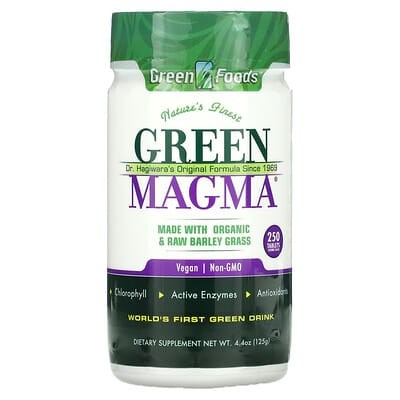
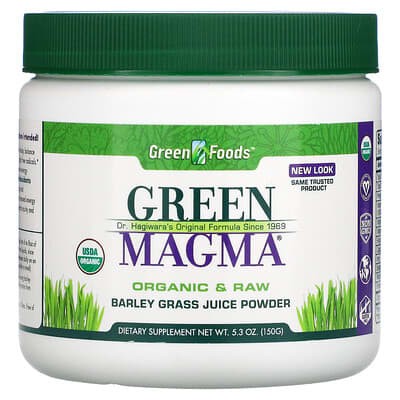
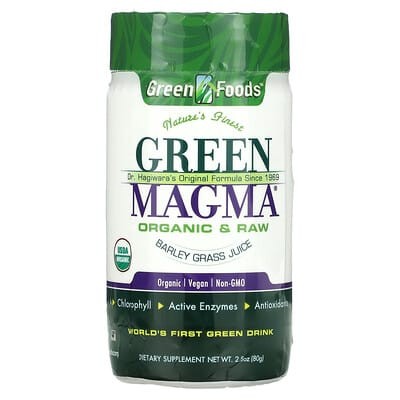
Nutrient quality
The micronutrient forms are mostly unspecified and the active amounts are modest. Potassium and chlorophyll provide limited relevance, but the formula lacks a focused cardiovascular strategy.
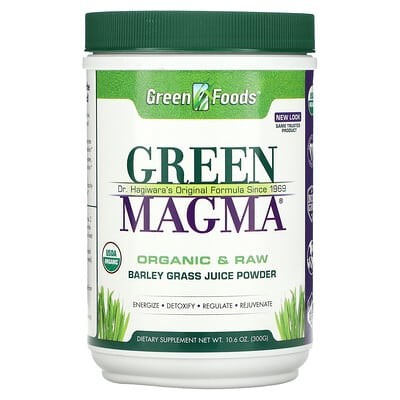
 iHerb iHerb | $ 42.58 | |
 Vitacost Vitacost | $ 42.93 | |
 Amazon Amazon | $ 34.79 | |
| Vitacost | $ 42.93 |
The greens powder provides modest potassium and plant-based nutrients in a simple formula. Low nutrient depth and limited form detail make it better for light dietary support than targeted supplementation.
Potassium supports blood-pressure regulation and cardiac electrical activity, but the amount here is modest compared with daily dietary needs. The small magnesium contribution adds little additional rhythm support. The potassium amount is clear, while its chemical form and absorption characteristics are not identified.
Barley-grass nutrients provide general plant nutrition but no concentrated heart-health mechanism. The magnesium, folate, and antioxidant amounts are too small to substitute for a targeted cardiovascular supplement. Chlorophyll and potassium add some dietary breadth without strong evidence for meaningful cardiovascular effects at these amounts.
The micronutrient forms are mostly unspecified and the active amounts are modest. Potassium and chlorophyll provide limited relevance, but the formula lacks a focused cardiovascular strategy.
Nutrient amounts are stated and no proprietary blend is shown. The underlying plant source, most ingredient forms, usage directions, and non-active ingredients are not supplied.
The supplied average rating is strong and the review base is substantial. No review text is available to assess recurring complaints or cardiovascular experiences.
The simple nutrient panel offers limited quality justification. The moderate serving cost and modest active amounts determine the practical value of this package.

Potassium supports blood-pressure regulation and cardiac electrical activity, but the amount here is modest compared with daily dietary needs. The small magnesium contribution adds little additional rhythm support.
The potassium amount is clear, while its chemical form and absorption characteristics are not identified. The broad green-food format provides general nutrition rather than concentrated cardiovascular support.
| Ingredient | Amount per serving |
|---|---|
Total Calories | 20 {Calories} |
Total Carbohydrates | 4 Gram(s) |
Protein | 1 Gram(s) |
Vitamin A (Beta-Carotene) | 1000 IU |
Vitamin C | 9 mg |
Vitamin K | 18 mcg |
Folic Acid | 29 mcg |
Calcium | 35 mg |
Iron | 0.5 mg |
Sodium | 52 mg |
Magnesium | 12 mg |
Potassium | 238 mg |
Chlorophyll | 13 mg |
Beta-carotene is clearly named, but its source is not identified as natural and the 1,000 IU amount is low for vitamin A supplementation. The dry powder has no listed lipid carrier, so taking it with dietary fat may support absorption. The broad greens formula and near-median serving cost partly offset the low vitamin A concentration.
The chlorophyll amount is below the collection median and comes within a broad greens powder rather than a concentrated chlorophyll formula. Its chemical form and botanical source are not specified, which limits confidence in stability and sourcing. The listed ingredients avoid harsh laxatives and artificial dyes, though the vitamin K content may matter for people using warfarin or another vitamin K antagonist.
The potassium contribution is moderate and falls short of the collection's effective-dose benchmark. No chemical form is supplied, so its absorption profile and metabolic role remain uncertain. The lower serving cost makes the moderate amount reasonably economical.
Published studies used for the product analysis and the top-ranked studies for each ingredient and goal.