
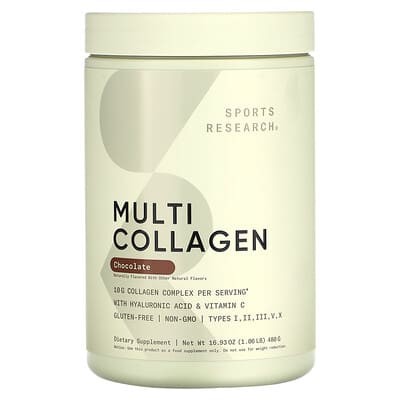
Nutrient quality
A clearly identified hydrolyzed collagen source provides useful structural-protein support. Its incomplete amino acid profile and weak heart-specific role limit broader protein quality.
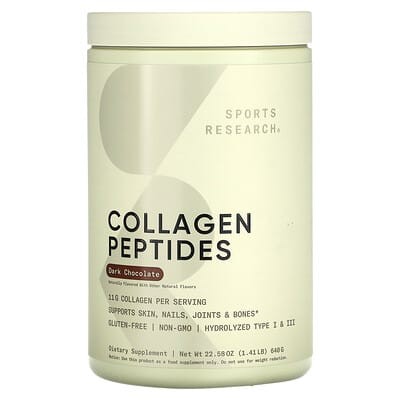
 iHerb iHerb | $ 35.97 | |
 Vitacost Vitacost | $ 35.97 |
The formula supplies 11 g hydrolyzed bovine collagen peptides and an equal amount of protein. Hydrolysis supports easy mixing, but collagen remains an incomplete protein compared with whey, egg, or balanced plant blends.
Fat and carbohydrate stay low, while sodium is moderate and potassium is modest. Those minerals do not create a strong heart-health rationale beyond the powder's primary collagen purpose.
The active collagen amount and bovine source are clearly named. More specific sourcing and inactive chocolate-flavor details are not supplied, leaving some quality and tolerance questions open.
A clearly identified hydrolyzed collagen source provides useful structural-protein support. Its incomplete amino acid profile and weak heart-specific role limit broader protein quality.
The collagen source and amount are clear without a proprietary blend. Missing sourcing standards, complete directions, and non-active flavor ingredients leave modest gaps.
The supplied average is strong and supported by very large response volume. No comment-level evidence is available to assess repeated complaints or alignment with the intended use.
A clearly measured collagen serving and low cost provide good specialized value. Limited heart-specific utility keeps it from being broadly competitive for the configured purpose.
| Ingredient | Amount per serving |
|---|---|
Calories | 50 Calorie(s) |
Total Fat | 0.5 Gram(s) |
Total Carbohydrate | 2 Gram(s) |
Protein | 11 Gram(s) |
Iron | 1.5 mg |
Sodium | 200 mg |
Potassium | 145 mg |
hydrolyzed Bovine Collagen Peptides | 11 Gram(s) |
The 200 mg sodium amount is too low for typical athletic sweat replacement. Sodium and potassium sources are not identified, and the formula provides no trace-mineral or buffering support. The low serving cost and limited carbohydrate content are favorable, but the product is designed primarily as collagen rather than a complete electrolyte option.
Food-derived potassium in the collagen powder has an unknown chemical form. The amount falls just below the moderate-dose range and is secondary to the protein serving. A moderate serving cost offers limited potassium value because no premium source or effective dose is provided.
Published studies used for the product analysis and the top-ranked studies for each ingredient and goal.