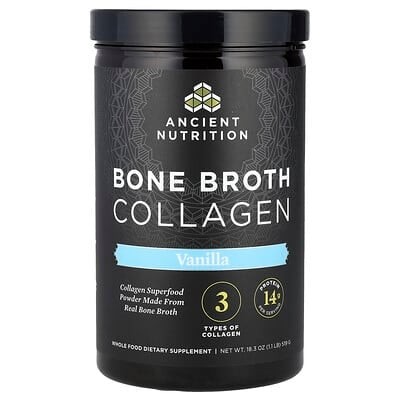
Product Image

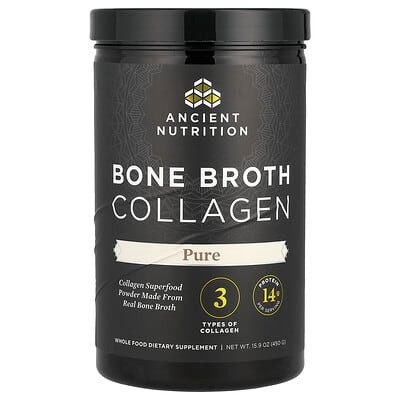
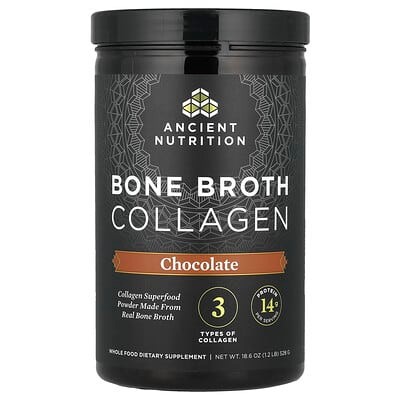
Bone Broth Collagen Chocolate

4.4
★ ★ ★ ★ ★
(2552 ratings)
Sodium 115 mg
Potassium 200 mg
Collagen
Protein (unspecified) 14 Gram(s)
Product Image
Score66
A meaningful collagen-protein serving with a fairly simple nutrition profile. The hidden blend is better suited to structural support than targeted heart health.
How scoring works
Powder
Quantity:18 Ounce(s) • (30 servings)
Goals:

Score 66

A meaningful collagen-protein serving with a fairly simple nutrition profile. The hidden blend is better suited to structural support than targeted heart health.
How scoring works
$46.71($1.55 per serving)
BodyBuilding.com
$ 54.95
Vitacost
$ 51.39
iHerb
$ 46.71
Pure Formulas
$ 46.71
Daily Vita
$ 46.71
Report prices

Analysis

A 15.5 g bone-broth collagen blend yields 14 g protein, making the serving useful for collagen-oriented intake. Collagen is not a complete substitute for a balanced dietary protein source.

Sodium is modest and potassium is moderate, but neither amount creates a strong electrolyte or heart-health rationale. The formula does not disclose another active aimed at cardiovascular support.

The total blend amount is clear, while the individual collagen sources and proportions remain hidden. That opacity makes amino-acid profile, animal source, and quality differences hard to evaluate.

Who is it for
  • Adults seeking bone-broth collagen
  • Users adding collagen protein to drinks
  • People comfortable with animal-derived ingredients
Best for
  • Collagen supplementation
  • Adding protein to snacks
  • Structural-protein routines

Pros

  • Provides 14 g protein
  • Discloses the total collagen blend amount
  • Keeps sodium modest
  • Contains little carbohydrate

Cons

  • Blend sources and proportions are hidden
  • Collagen is not complete protein
  • Cardiovascular support is limited
  • Value is only moderate

Warnings

  • The undisclosed animal sources may matter for allergies or dietary restrictions
  • Collagen should not replace complete dietary protein
  • Flavoring details are absent, limiting allergen and tolerance screening

Nutrient quality

76 High impact

A meaningful bone-broth protein amount provides useful structural nutrition. Hidden blend composition, modest protein depth, and weak heart-specific design limit overall quality.

Ingredient transparency

55 Moderate impact

Protein and basic nutrition totals are clear, but the main broth or collagen blend remains opaque. Missing source proportions, full directions, and non-active ingredients reduce transparency.

Customer satisfaction

70 High impact

The supplied average is strong and supported by substantial response volume. No comment-level evidence is available to assess repeated complaints or alignment with the intended use.

Value for money

66 High impact

A useful collagen-rich protein serving offers some specialized value. Modest protein depth, hidden source proportions, and premium cost limit category competitiveness.

Report analysis

Ingredients

IngredientAmount per serving
Calories
60 Calorie(s)
Dietary Fiber
1 Gram(s)
Protein
14 Gram(s)
Iron
0.6 mg
Sodium
115 mg
Potassium
200 mg
Bone Broth Collagen Blend
15.5 Gram(s)
Adults 18–50
Report overview
Sodium · 115 mg OverallScore52
D Active Ingredient Quality & BioavailabilityC- Dose, Safety & Label TransparencyD+ Value

The sodium amount is too low for athletic replenishment, and its source is not identified. Potassium is quantified but lacks a stated form, while magnesium and buffering support are absent. Collagen dominates the formula and helps explain the higher cost, but it does not improve electrolyte performance.

Potassium · 200 mg OverallScore39
F Active Ingredient Quality & BioavailabilityC Dose, Safety & Label TransparencyF Value

A food-derived potassium source provides a moderate amount, but the chemical form is not identified. The label implies elemental potassium without showing its source compound or yield. A high serving cost creates weak potassium-specific value.

Loading alternative details
Report alternatives

Sources

Published studies used for the product analysis and the top-ranked studies for each ingredient and goal.

  1. Potassium intake, stroke, and cardiovascular disease a meta-analysis of prospective studies.
    D'Elia L; Barba G; Cappuccio FP; Strazzullo P · Journal of the American College of Cardiology · 2011
    Meta-analysis247,510 participants11 studies pooledHeart Health forPotassium
  2. Associations between sodium, potassium, and blood pressure: results from the Hispanic Community Health Study/Study of Latinos, a prospective cohort study.
    Swift SL; Sotres-Alvarez D; Raij L; Wassertheil-Smoller S; Schneiderman N; Llabre M; Zeki Al Hazzouri A; Rundek T; Van Horn L; Daviglus M; Castaneda S; Youngblood M; Mossavar-Rahmani Y; Elfassy T · The American journal of clinical nutrition · 2024
    Cohort study11,429 participantsHeart Health forPotassium
  3. Dietary Sodium and Potassium Intake and Risk of Non-Fatal Cardiovascular Diseases: The Million Veteran Program.
    Wang DD; Li Y; Nguyen XT; Song RJ; Ho YL; Hu FB; Willett WC; Wilson PWF; Cho K; Gaziano JM; Djoussé L; On Behalf Of The Va Million Veteran Program · Nutrients · 2022
    Cohort study180,156 participantsCardiovascular Support forPotassium
  4. Urinary potassium excretion and risk of cardiovascular events.
    Kieneker LM; Gansevoort RT; de Boer RA; Brouwers FP; Feskens EJ; Geleijnse JM; Navis G; Bakker SJ; Joosten MM; PREVEND Study Group · The American journal of clinical nutrition · 2017
    Cohort study7,795 participantsCardiovascular Support forPotassium