
Nutrient quality
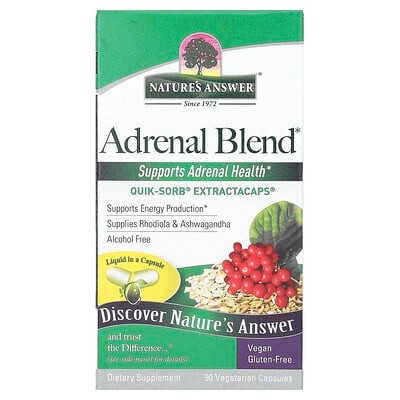
Rhodiola rosea with named rosavins and standardized holy basil provides credible forms, but salidroside data are missing. The Rhodiola amount is meaningful, while the small holy basil amount and hidden blend are harder to judge.
.
 iHerb iHerb | $ 19.49 | |
 Vitacost Vitacost | $ 26.24 |
Rhodiola rosea reaches a practical 300 mg amount for stress-related fatigue and sustained focus. Holy basil adds a smaller calming adaptogen contribution without introducing a conventional stimulant.
Rosavins are identified, but their percentage and salidroside content are not provided. The 60 mg proprietary herbal blend also hides its ingredients and individual amounts.
The two-capsule serving is manageable and the core adaptogen structure is coherent. Its strongest fit is daytime resilience rather than immediate energy or broad memory support.
Rhodiola rosea with named rosavins and standardized holy basil provides credible forms, but salidroside data are missing. The Rhodiola amount is meaningful, while the small holy basil amount and hidden blend are harder to judge.
.A proprietary or composite ingredient hides meaningful component doses. Missing excipient details and complete use directions leave the supplied label information incomplete.
.The supplied aggregate satisfaction average is favorable, while the response volume determines how stable that signal appears. No comment-level evidence is available to assess repeated complaints or confirm intended-use experiences.
.The formula offers mixed but reasonable serving value. The unnamed herbal blend may be relevant, but its practical contribution cannot be verified.
.
Rhodiola directly targets stress resilience and fatigue
Rhodiola rosea and its rosavin marker are identified, but salidroside standardization is missing. A small proprietary blend adds uncertainty while the core rhodiola dose retains good depth.

Rhodiola provides highly targeted support for mental fatigue, resilience, and performance under pressure. Holy basil adds a smaller adaptogenic contribution without creating broad cognitive coverage.
The rhodiola amount sits in a commonly useful range and the rosea species is clear. Rosavins are named without salidroside detail, while a small proprietary blend prevents full supporting-dose assessment.

Rhodiola rosea at 300 mg directly targets stress adaptation, with holy basil adding a secondary calming adaptogen. The 300 mg Rhodiola amount is well aligned, while holy basil at 50 mg is a minor contribution.
The product addresses stress adaptation strongly and adds limited complementary herbal calming support. Holy basil complements the central Rhodiola adaptogen without an obvious stimulant conflict.

Rhodiola and holy basil form a targeted adaptogenic blend for stress-related fatigue and resilience. The combination is more likely to support daytime coping than immediate sedation.
Rhodiola reaches a commonly useful amount and its rosea species is named. Rosavins are identified without salidroside detail, while a small proprietary blend prevents full assessment of the supporting herbs.

A clearly disclosed 300 mg Rhodiola rosea extract may support attention and mental stamina under stress. Holy basil adds a complementary stress-resilience pathway.
Rosavins are named but salidroside is not, so the extract profile is only partly characterized. A small proprietary herbal blend also prevents full assessment, while no direct alertness or cholinergic active is present.

Rhodiola rosea reaches a useful amount for mental fatigue and performance under stress. Holy basil adds a modest calming adaptogen, while the proprietary blend is too small and opaque to judge.
Rosavins are named but salidroside is missing, leaving the rhodiola profile incomplete. The focused adaptogen design is best suited to stress-related fatigue rather than broad memory support.

Rhodiola is a well-aligned adaptogen for mental fatigue and stress resilience. Holy basil adds a related calming pathway, while the proprietary blend may contribute further adaptogens but cannot be assessed ingredient by ingredient.
The rhodiola amount is useful and rosavins are named, though salidroside and marker percentages are missing. The compact formula has good depth for resilience but does not cover memory, membrane health, or neurotransmitter precursors broadly.
| Ingredient | Amount per serving |
|---|---|
Rhodiola rosea root extract (Rosavins) | 300 mg |
Proprietary Herbal Extract Blend | 60 mg |
Holy Basil (Ocimum sanctum) leaf extract (Ursolic Acid) | 50 mg |
The Rhodiola rosea extract discloses rosavins but omits salidroside, leaving the active profile incomplete. The serving amount sits within the supported range and is clearly stated. The clear serving amount is well aligned with common use.
Published studies used for the product analysis and the top-ranked studies for each ingredient and goal.