Nutrient quality
Potassium citrate and standardized uva-ursi and grape-seed markers add some form quality. Many plant powders remain unstandardized, and overlapping diuretic ingredients create a meaningful tolerance and safety concern.
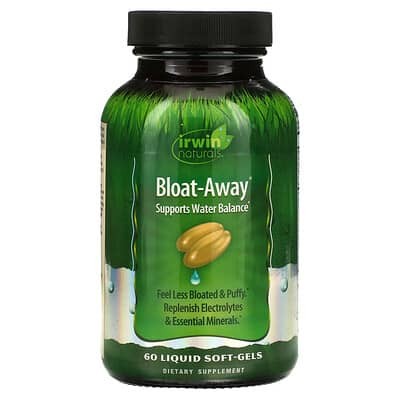
 iHerb iHerb | $ 21.99 | |
 Walmart Walmart | $ 21.99 | |
 Vitacost Vitacost | $ 21.99 | |
 Pure Formulas Pure Formulas | $ 21.99 |
Potassium citrate is a useful, well-absorbed mineral form, but the amount is low for meaningful daily repletion. Flaxseed oil, hibiscus, and grape seed offer some cardiovascular relevance, although the active fatty-acid and extract yields are not fully disclosed.
Dandelion, juniper, uva-ursi, buchu, parsley, and cornsilk give the blend a strong fluid-management emphasis. That focus may change short-term water balance but does not replace a balanced cardiovascular formula.
The softgels best fit occasional bloat support for someone who understands the multi-herb profile. They are less suitable for routine potassium use or for shoppers wanting transparent, targeted doses.
Potassium citrate and standardized uva-ursi and grape-seed markers add some form quality. Many plant powders remain unstandardized, and overlapping diuretic ingredients create a meaningful tolerance and safety concern.
All listed actives have specific amounts, and most botanicals are individually named. BioPerine composition, complete directions, softgel excipients, and several botanical active yields remain incomplete.
The fair average rating and substantial review count make the aggregate satisfaction signal reasonably dependable. No detailed review text was provided, so recurring complaints and purpose alignment cannot be assessed.
Broad botanical coverage provides some value, but the serving cost is high and active standardization is inconsistent. Simpler, fully standardized digestive formulas are likely to be more competitive.
Flaxseed oil, hibiscus, grape seed, and potassium provide some cardiovascular overlap within a bloat formula. Evidence is mixed because ALA content is undisclosed and several botanicals are aimed at diuresis rather than long-term heart support.
Potassium is low and the active ALA yield from flaxseed oil is not stated. Potassium citrate and marked grape-seed compounds are useful, but many powders lack standardization.
| Ingredient | Amount per serving |
|---|---|
Calories | 30 Calorie(s) |
Total Fat | 2 Gram(s) |
Total Carbohydrates | 2 Gram(s) |
Protein | 1 Gram(s) |
Iron | 1.3 mg |
Potassium (Potassium Citrate) | 100 mg |
Flaxseed Oil | 1950 mg |
Dandelion powder | 330 mg |
Juniper berry powder | 300 mg |
Uva-ursi extract (Arbutin) | 252 mg |
Buchu powder | 162 mg |
Cranberry powder | 120 mg |
Hibiscus extract | 120 mg |
Chamomile extract | 90 mg |
Cornsilk powder | 90 mg |
Grape seed extract (Proanthocyanidins) | 90 mg |
Parsley extract | 90 mg |
Red Raspberry powder | 90 mg |
BioPerine Complex | 6 mg |
Potassium citrate provides a highly bioavailable and alkalizing form. The amount remains near the standard low dose, while the label omits paired compound weight and elemental yield. A high serving cost makes it inefficient for potassium support.
Published studies used for the product analysis and the top-ranked studies for each ingredient and goal.