Nutrient quality
The concentrated grass-juice powder is simple and avoids aggressive dosing. Modest micronutrient amounts and limited heart-specific coverage constrain its usefulness.
 iHerb iHerb | $ 29.54 | |
 Vitacost Vitacost | $ 32.53 | |
| Vitacost | $ 32.53 | |
 Pure Formulas Pure Formulas | $ 28.00 |
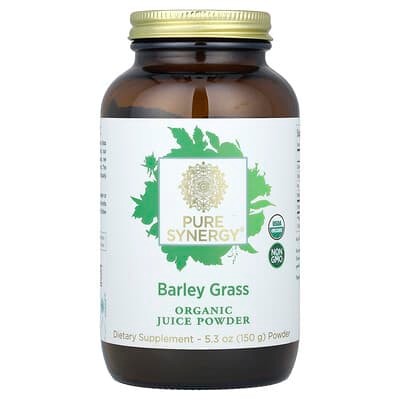
The single-ingredient barley grass juice powder keeps the formula simple and easy to understand. It supplies vitamin K1, a little potassium, and a small amount of iron.
Potassium is far below the amounts normally obtained from food, while vitamin K1 is only a supporting contribution. The heart-health fit is therefore limited and indirect.
The powder may suit people who want a concentrated grass-juice addition rather than a conventional multivitamin. Anyone seeking meaningful potassium or a focused cardiovascular formula will need a different approach.
The concentrated grass-juice powder is simple and avoids aggressive dosing. Modest micronutrient amounts and limited heart-specific coverage constrain its usefulness.
The active formula is short and fully quantified. Missing intake directions, non-active ingredients, and nutrient forms limit complete label review.
The aggregate rating is favorable and backed by a large review volume. No specific comments are available to assess recurring problems or real-world fit.
A focused formula and long supply support fair value. Limited nutrient breadth keeps the benefit modest for the intended purpose.
Barley grass supplies modest potassium and naturally occurring vitamin K1 within a whole-food powder. Those nutrients have some cardiovascular relevance but remain lightly supplied.
Vitamin K1 is not a substitute for the longer-lasting MK-7 form emphasized for arterial calcium handling. The formula is clean and transparent, yet it is too weak for targeted heart support.
| Ingredient | Amount per serving |
|---|---|
Calories | 10 Calorie(s) |
Total Carbohydrates | 1 Gram(s) |
Vitamin K1 | 60 mcg |
Iron | 0.5 mg |
Potassium | 100 mg |
organic Barley grass juice powder | 2500 mg |
Barley grass supplies food-based potassium, but the specific compound is not identified. The 100 mg serving is low for focused potassium supplementation. A low serving cost helps, though the small amount limits cost efficiency.
The barley-grass powder naturally supplies 60 mcg of Vitamin K1. The whole-food source may fit general nutrition, but it does not provide MK-7 or a lipid carrier. Vitamin K-specific value is limited despite a moderate serving cost.
Published studies used for the product analysis and the top-ranked studies for each ingredient and goal.