Published studies used for the product analysis and the top-ranked studies for each ingredient and goal.
- Effects of green tea or green tea extract on insulin sensitivity and glycaemic control in populations at risk of type 2 diabetes mellitus: a systematic review and meta-analysis of randomised controlled trials.
Wang X; Tian J; Jiang J; Li L; Ying X; Tian H; Nie M · Journal of human nutrition and dietetics : the official journal of the British Dietetic Association · 2015
Meta-analysis510 participants7 studies pooledflagMetabolism Boost forscienceGreen Tea
- Metabolic response to green tea extract during rest and moderate-intensity exercise.
Hodgson AB; Randell RK; Boon N; Garczarek U; Mela DJ; Jeukendrup AE; Jacobs DM · The Journal of nutritional biochemistry · 2013
Randomized trial27 participantsflagMetabolism Boost forscienceGreen Tea
- Effect of green tea on glucose control and insulin sensitivity: a meta-analysis of 17 randomized controlled trials.
Liu K; Zhou R; Wang B; Chen K; Shi LY; Zhu JD; Mi MT · The American journal of clinical nutrition · 2013
Meta-analysis1,133 participants17 studies pooledflagMetabolism Boost forscienceGreen Tea
- Green tea extract ingestion, fat oxidation, and glucose tolerance in healthy humans.
Venables MC; Hulston CJ; Cox HR; Jeukendrup AE · The American journal of clinical nutrition · 2008
Randomized trial23 participantsflagMetabolism Boost forscienceGreen Tea
- A 60-Day Green Tea Extract Supplementation Counteracts the Dysfunction of Adipose Tissue in Overweight Post-Menopausal and Class I Obese Women.
Rondanelli M; Gasparri C; Perna S; Petrangolini G; Allegrini P; Fazia T; Bernardinelli L; Cavioni A; Mansueto F; Oberto L; Patelli Z; Tartara A; Riva A · Nutrients · 2022
Randomized trial28 participantsflagMetabolism Boost forscienceGreen Tea
- Metabolic response to epigallocatechin-3-gallate in relapsing-remitting multiple sclerosis: a randomized clinical trial.
Mähler A; Steiniger J; Bock M; Klug L; Parreidt N; Lorenz M; Zimmermann BF; Krannich A; Paul F; Boschmann M · The American journal of clinical nutrition · 2015
Randomized trial18 participantsflagMetabolism Boost forscienceGreen Tea
- Effect of Acute and Chronic Dietary Supplementation with Green Tea Catechins on Resting Metabolic Rate, Energy Expenditure and Respiratory Quotient: A Systematic Review.
Rondanelli M; Riva A; Petrangolini G; Allegrini P; Perna S; Faliva MA; Peroni G; Naso M; Nichetti M; Perdoni F; Gasparri C · Nutrients · 2021
Systematic review499 participants15 studies pooledflagMetabolism Boost forscienceGreen Tea
- Epigallocatechin-3-gallate and postprandial fat oxidation in overweight/obese male volunteers: a pilot study.
Thielecke F; Rahn G; Böhnke J; Adams F; Birkenfeld AL; Jordan J; Boschmann M · European journal of clinical nutrition · 2011
Randomized trial10 participantsflagMetabolism Boost forscienceGreen Tea
- Effects of timing of acute catechin-rich green tea ingestion on postprandial glucose metabolism in healthy men.
Takahashi M; Ozaki M; Miyashita M; Fukazawa M; Nakaoka T; Wakisaka T; Matsui Y; Hibi M; Osaki N; Shibata S · The Journal of nutritional biochemistry · 2020
Randomized trial17 participantsflagMetabolism Boost forscienceGreen Tea
- Time-of-day-dependent effects of a green tea extract on postprandial glycemia and insulinemia in healthy adults: a randomized, controlled, double-blind, cross-over intervention.
Sulaimani N; Rosbotham EJ; Warnock R; Polzella L; Judowski R; Nicolotti L; Houghton MJ; Williamson G; Bonham MP · Food & function · 2025
Randomized trial14 participantsflagMetabolism Boost forscienceGreen Tea
- Green tea and coffee intake and risk of cognitive decline in older adults: the National Institute for Longevity Sciences, Longitudinal Study of Aging.
Shirai Y; Kuriki K; Otsuka R; Kato Y; Nishita Y; Tange C; Tomida M; Imai T; Ando F; Shimokata H · Public health nutrition · 2021
Cohort study1,305 participantsflagAnti-Aging forscienceGreen Tea
- Associations of green tea, coffee, and soft drink consumption with longitudinal changes in leukocyte telomere length.
Sohn I; Shin C; Baik I · Scientific reports · 2023
Cohort study1,952 participantsflagAnti-Aging forscienceGreen Tea
- Can teatime increase one's lifetime?
Nakachi K; Eguchi H; Imai K · Ageing research reviews · 2003
Cohort studyflagAnti-Aging forscienceGreen Tea
- Influences of tea consumption on self-rated health and life satisfaction among older adults: Evidence from the CLHLS.
Zou M; Sun C; Yang M; Li C; Wang S; Zheng D; Wang J; Yu L; Sun L; Wang Y; Chen H; Zeng Y · PsyCh journal · 2025
Cohort study78,345 participantsflagAnti-Aging forscienceGreen Tea
- Double-blinded, placebo-controlled trial of green tea extracts in the clinical and histologic appearance of photoaging skin.
Chiu AE; Chan JL; Kern DG; Kohler S; Rehmus WE; Kimball AB · Dermatologic surgery : official publication for American Society for Dermatologic Surgery [et al.] · 2005
Randomized trial40 participantsflagAnti-Aging forscienceGreen Tea
- The effects of green tea on acne vulgaris: A systematic review and meta-analysis of randomized clinical trials.
Kim S; Park TH; Kim WI; Park S; Kim JH; Cho MK · Phytotherapy research : PTR · 2021
Meta-analysis247 participants5 studies pooledflagAnti-Inflammatory Support forscienceGreen Tea
- Green Tea Catechin Association with Ultraviolet Radiation-Induced Erythema: A Systematic Review and Meta-Analysis.
Kapoor MP; Sugita M; Fukuzawa Y; Timm D; Ozeki M; Okubo T · Molecules (Basel, Switzerland) · 2021
Meta-analysis100 participants6 studies pooledflagAnti-Inflammatory Support flagSkin Health forscienceGreen Tea
- Efficacy of (-)-epigallocatechin gallate delivered by a new-type scaler tip during scaling and root planing on chronic periodontitis: a split-mouth, randomized clinical trial.
Wang Y; Zeng J; Yuan Q; Luan Q · BMC oral health · 2021
Randomized trial20 participantsflagAnti-Inflammatory Support forscienceGreen Tea
- Camellia Sinensis Mouthwashes in Oral Care: a Systematic Review.
Tafazoli A; Tafazoli Moghadam E · Journal of dentistry (Shiraz, Iran) · 2020
Systematic review69 studies pooledflagAnti-Inflammatory Support forscienceGreen Tea
- Skin photoprotection by green tea: antioxidant and immunomodulatory effects.
Katiyar SK · Current drug targets. Immune, endocrine and metabolic disorders · 2004
Narrative reviewflagAnti-Inflammatory Support forscienceGreen Tea
- Efficacy of a green tea extract rich in catechin polyphenols and caffeine in increasing 24-h energy expenditure and fat oxidation in humans.
Dulloo AG; Duret C; Rohrer D; Girardier L; Mensi N; Fathi M; Chantre P; Vandermander J · The American journal of clinical nutrition · 1999
Randomized trial10 participantsflagMetabolism Boost forscienceGreen Tea
- Epigallocatechin gallate alleviates non-alcoholic fatty liver disease through the inhibition of the expression and activity of Dipeptide kinase 4.
Yang M; Yan R; Sha R; Wang X; Zhou S; Li B; Zheng Q; Cao Y · Clinical nutrition (Edinburgh, Scotland) · 2024
Randomized trialflagMetabolism Boost forscienceGreen Tea
- Topical Polyphenon E in the treatment of external genital and perianal warts: a randomized controlled trial.
Stockfleth E; Beti H; Orasan R; Grigorian F; Mescheder A; Tawfik H; Thielert C · The British journal of dermatology · 2008
Randomized trial503 participantsflagSkin Health forscienceGreen Tea
- Efficacy, safety and tolerability of green tea catechins in the treatment of external anogenital warts: a systematic review and meta-analysis.
Tzellos TG; Sardeli C; Lallas A; Papazisis G; Chourdakis M; Kouvelas D · Journal of the European Academy of Dermatology and Venereology : JEADV · 2011
Meta-analysis1,247 participants3 studies pooledflagSkin Health forscienceGreen Tea
- Green tea polyphenols provide photoprotection, increase microcirculation, and modulate skin properties of women.
Heinrich U; Moore CE; De Spirt S; Tronnier H; Stahl W · The Journal of nutrition · 2011
Randomized trial60 participantsflagSkin Health forscienceGreen Tea
- Efficacy of Epigallocatechin-3-Gallate in Preventing Dermatitis in Patients With Breast Cancer Receiving Postoperative Radiotherapy: A Double-Blind, Placebo-Controlled, Phase 2 Randomized Clinical Trial.
Zhao H; Zhu W; Zhao X; Li X; Zhou Z; Zheng M; Meng X; Kong L; Zhang S; He D; Xing L; Yu J · JAMA dermatology · 2022
Randomized trial180 participantsflagSkin Health forscienceGreen Tea

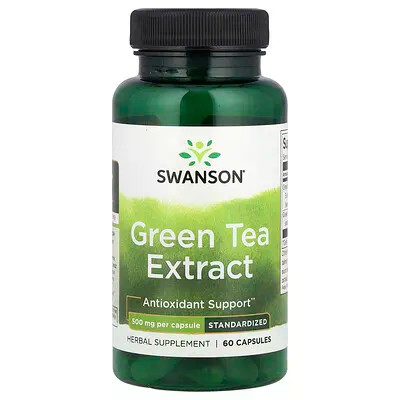
 iHerb
iHerb