

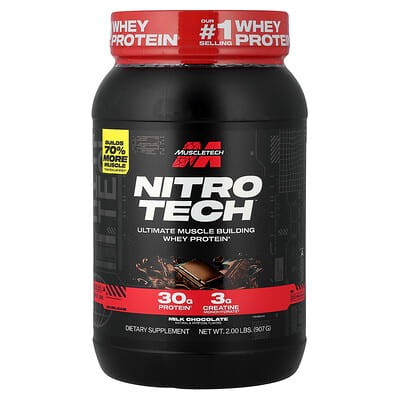
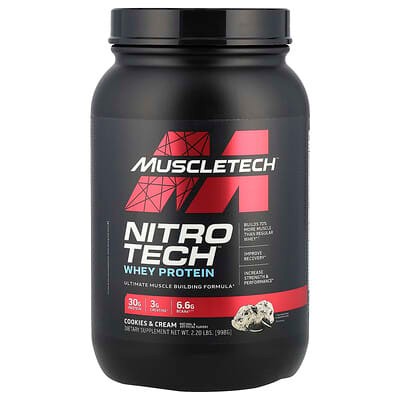
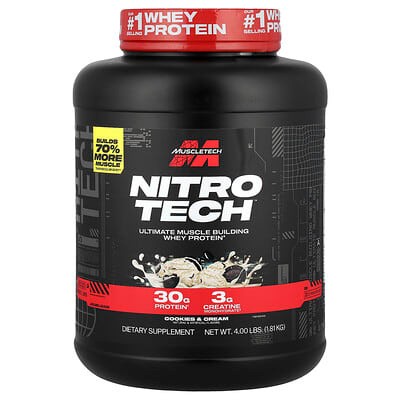
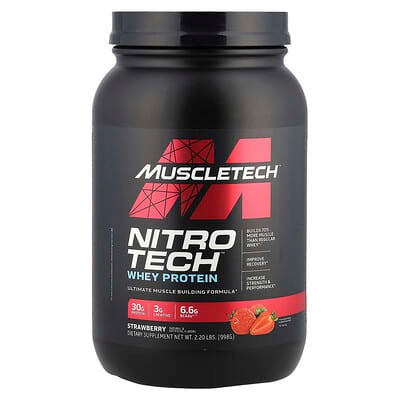
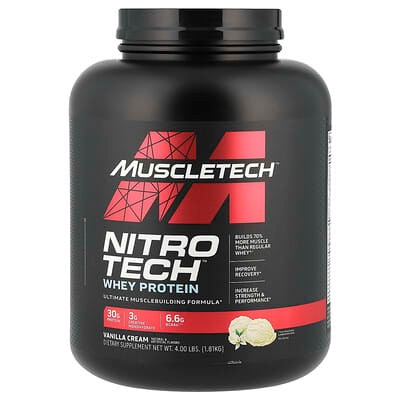
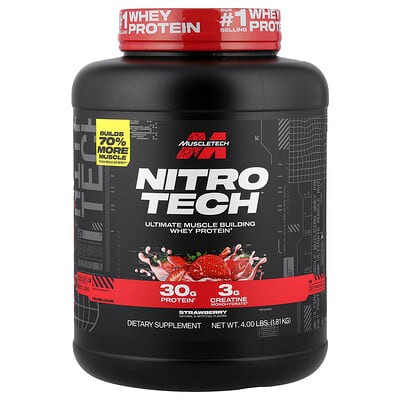
Nutrient quality
The protein amount is meaningful for general protein nutrition. Missing source detail and secondary nutrient forms limit quality assessment.
 iHerb iHerb | $ 46.44 | |
| iHerb | $ 46.44 |
A substantial protein serving and a meaningful calcium amount provide useful muscle and dietary support. The powder can serve as a convenient protein-rich snack or meal addition.
Two zero-quantity marketing matrices offer no usable composition or dose information. The protein source and complete powder ingredients are also insufficiently described for quality assessment.
It fits users who value flavor and convenience over formula transparency. The relatively high serving cost is difficult to justify without clearer protein and ingredient details.
The protein amount is meaningful for general protein nutrition. Missing source detail and secondary nutrient forms limit quality assessment.
Core nutrition amounts are visible, but a named matrix hides its components or shows no usable amount. Inactive ingredients and complete preparation directions are also missing.
The aggregate satisfaction signal is strong and the supplied volume is substantial. No specific experience details are supplied to assess repeated complaints, taste, texture, or purpose-related outcomes.
The core protein provides some value, but the serving is costly or poorly aligned with the stated use. Weak disclosure or an unbalanced formula further reduces competitiveness.
| Ingredient | Amount per serving |
|---|---|
Calories | 160 Calorie(s) |
Total Fat | 2.5 Gram(s) |
Cholesterol | 70 mg |
Total Carbohydrates | 4 Gram(s) |
Protein | 30 Gram(s) |
Calcium | 400 mg |
Sodium | 140 mg |
Nitro-Amino Matrix | 0 NP |
Scientifically Studied Musclebuilder | 0 NP |
The 400 mg calcium amount fits the preferred single-serving range, but its chemical form is not disclosed. Clear elemental labeling helps with dose assessment, while the protein-focused formula is costly when judged as a calcium source. The supplied ingredient details do not identify artificial colors, sweeteners, or titanium dioxide.
The sodium dose is too low for substantial sweat replacement, and its source is not identified. No potassium or magnesium is included to round out the electrolyte profile. The protein-focused formula explains some of the higher serving cost, but it remains a weak choice when sodium replenishment is the main goal.