
Nutrient quality
The large oil blend provides meaningful fatty-acid quantity and uses mixed tocopherols. Missing active fatty-acid yields and oil-form details limit confidence in the formula quality.
 iHerb iHerb | $ 24.39 |
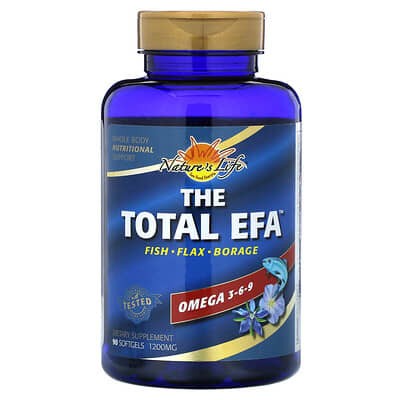
The blend supplies 2.5 g of fish-oil concentrate from anchovy and sardine, plus borage and organic flaxseed oils. That combination may support a broader balance of fatty acids, while mixed tocopherols help protect the oils and add modest vitamin E coverage.
The main limitation is the absence of EPA and DHA amounts. Without those active amounts or the fish oil's molecular form, buyers cannot tell how concentrated the serving is or compare its practical potency with more transparent omega-3 products.
Three softgels per serving suit people who want several oil sources in one product and do not need a precisely targeted EPA or DHA dose. Value is difficult to judge because much of the listed fish-oil weight may not represent active omega-3s.
The large oil blend provides meaningful fatty-acid quantity and uses mixed tocopherols. Missing active fatty-acid yields and oil-form details limit confidence in the formula quality.
Every oil has a specific weight and source, but the biologically important fatty-acid amounts are absent. Daily directions and a complete inactive-ingredient list are not supplied.
The aggregate rating is very strong, but the evidence base is fairly small. No review excerpts are supplied, so repeated complaints and purpose-specific experiences cannot be assessed.
Substantial oil quantity and mixed tocopherols provide some support for the premium cost. Missing active fatty-acid yields and a relatively high serving cost weaken category value.

Fish oil, borage oil, flaxseed oil, and mixed tocopherols provide broad fatty-acid and antioxidant coverage. Cardiovascular value remains uncertain because EPA and DHA amounts are not disclosed.
Anchovy and sardine sources plus mixed tocopherols are useful quality signals. People using anticoagulant or antiplatelet therapy should review combined omega-3 use clinically, especially alongside other fish-oil products.

Fish oil and a mixed essential-fatty-acid profile may support inflammatory lipid balance. Anchovy and sardine sourcing is disclosed, but the active EPA and DHA amounts are not.
The total fish-oil amount appears substantial, yet molecular form, purification, and active concentration remain unknown. The fatty-acid concept is coherent, but missing potency data prevents a strong conclusion.
| Ingredient | Amount per serving |
|---|---|
Calories | 40 {Calories} |
Total Fat | 3.5 Gram(s) |
Cholesterol | 10 mg |
Protein | 1 Gram(s) |
Vitamin E (Mixed Tocopherols) | 30 IU |
Fish Oil Concentrate (Anchovy, Sardine) | 1250 mg |
Borage seed Oil | 1200 mg |
Organic Flax Seed Oil | 1200 mg |
Mixed tocopherols provide broader coverage than alpha-tocopherol alone, but the specific isomers and natural d-alpha status are not disclosed. The amount fits a maintenance role, while tocotrienols are absent. Its serving cost is above the standard natural-form bands without a premium complex.
Anchovy and sardine sourcing is a meaningful quality strength, and mixed tocopherols help protect the oil. The molecular form, purification method, and independent testing remain undisclosed. Missing EPA and DHA amounts prevent assessment of dose, concentration, and active-value efficiency.
Published studies used for the product analysis and the top-ranked studies for each ingredient and goal.