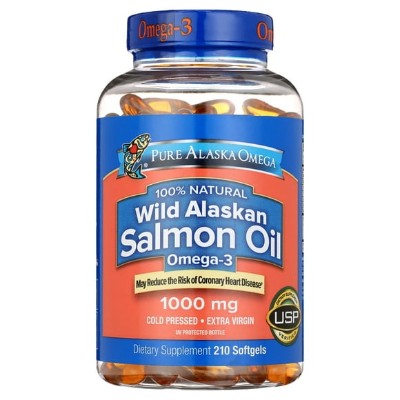
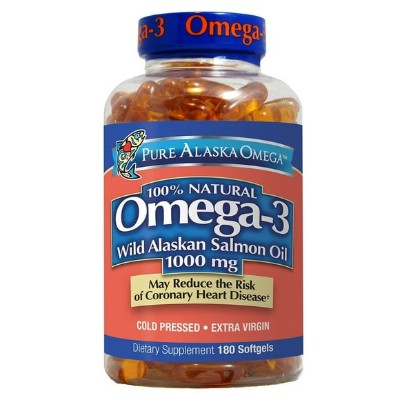
A two-softgel serving supplies 2,000 mg of salmon oil alongside 5 mcg of vitamin D3. Fish-derived omega-3 fats may support cardiovascular and inflammatory pathways, but those effects depend mainly on the actual EPA and DHA delivered rather than total oil weight.
The named salmon source is useful, while missing EPA, DHA, molecular form, purification, testing, and antioxidant details prevent a meaningful quality assessment. The 105-serving bottle offers slightly better supply length and serving economy than the smaller version, but active-dose value cannot be established.
The product fits users who accept a general fish-oil serving without verified active-fatty-acid potency. Better-labeled alternatives are easier to compare when a specific EPA or DHA target matters.
thumb_upPros
Clearly identifies salmon oil
Includes vitamin D3
Large 105-serving supply
thumb_downCons
No separate EPA or DHA amounts
Oil form and purification are not stated
No independent testing or antioxidant protection is shown
warningWarnings
Contains fish-derived oil and may not suit people with fish allergy.
scienceNutrient quality
57
Moderate impact
Separate EPA and DHA amounts are missing, so active potency and concentration cannot be verified from total oil weight. Salmon is identified as the source, but molecular form, purification, and independent testing remain undisclosed.
.
scienceIngredient transparency
49
Lower impact
The total oil amount is disclosed, but the key EPA and DHA constituents are not quantified. Serving count is available, while complete usage directions, excipients, and several source-quality details are absent.
.
thumb_upCustomer satisfaction
62
Moderate impact
The supplied aggregate rating is strong, though confidence depends on the available review volume. No review text is provided to identify recurring complaints or firsthand experiences such as fishy aftertaste or capsule tolerance.
.
workspace_premiumValue for money
60
Moderate impact
The listed serving economics appear moderate, but missing EPA and DHA amounts prevent an effective-dose comparison. Vitamin D adds modest complementary value without replacing clear omega-3 disclosure.
B
Goal FitF
Strength of SupportD-
CoverageA-
Formula Quality
Vitamin D · 5 mcgFish Oil · 2000 mg
Salmon oil is a relevant source class for EPA and DHA, but the label does not state either active amount. The total oil weight therefore cannot confirm meaningful anti-inflammatory potency.
Vitamin D3 adds modest supportive value, while the molecular form, purification, antioxidant protection, and independent testing remain unclear. The simple formula is coherent but too poorly disclosed for confident use.
scienceStudy evidence
SupportiveMixedNo effectAdverse
Fish Oil Supportive star star_border star_border star_border star_border 68 studies
4015120
Vitamin D Supportive star star_border star_border star_border star_border 101 studies
F
Active Ingredient Quality & BioavailabilityF
Dose, Safety & Label TransparencyF
Value
Salmon is identified, but molecular form, purification, and certified sourcing are not disclosed. Missing EPA and DHA amounts prevent assessment of dose and concentration. Active-dose value cannot be determined and no antioxidant stabilizer is shown.
<p>Its label clearly provides 2800 mg of Fish Oil Concentrate, making it a more clearly defined fish oil option. Compared with the original, its ingredient and goal alignment is stronger, although the input does not provide independent testing or absorption evidence.</p>
<p>Its label clearly provides 2 g of Total Fat, making it a more clearly defined fish oil option. Compared with the original, its ingredient and goal alignment is stronger, although the input does not provide independent testing or absorption evidence.</p>
<p>Its label clearly provides 2 g of Total Fat, making it a more clearly defined fish oil option. Compared with the original, its ingredient and goal alignment is stronger, although the input does not provide independent testing or absorption evidence.</p>
<p>Its label clearly provides 1 g of Total Fat, preserving relevant fish oil coverage. Compared with the original, it lowers the serving cost, although the input does not provide independent testing or absorption evidence.</p>
<p>Its label clearly provides 1 g of Total Fat, preserving relevant fish oil coverage. Compared with the original, it lowers the serving cost, although the input does not provide independent testing or absorption evidence.</p>
<p>Its label clearly provides 1 g of Total Fat, preserving relevant fish oil coverage. Compared with the original, it lowers the serving cost, although the input does not provide independent testing or absorption evidence.</p>
<p>Its label clearly provides 1.50 g of Total Fat, keeping the formula relevant to fish oil. Compared with the original, the somewhat higher serving cost and ingredient detail create a useful quality-to-cost balance, although the input does not provide independent testing or absorption evidence.</p>
<p>Its label clearly provides 1 g of Total Fat, keeping the formula relevant to fish oil. Compared with the original, the lower serving cost and ingredient detail create a useful quality-to-cost balance, although the input does not provide independent testing or absorption evidence.</p>
<p>Its label clearly provides 1 g of Total Fat, keeping the formula relevant to fish oil. Compared with the original, the lower serving cost and ingredient detail create a useful quality-to-cost balance, although the input does not provide independent testing or absorption evidence.</p>
flagReport alternatives
schoolSources
Published studies used for the product analysis and the top-ranked studies for each ingredient and goal.