Product Image

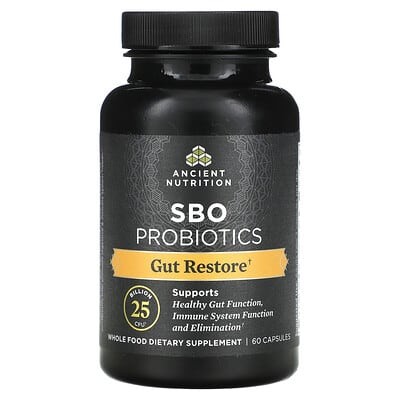
SBO Probiotics Gut Restore 25 Billion CFU

4.7
★ ★ ★ ★ ★
(258 ratings)
Zinc 20 mg
Product Image
Score46
A meaningful zinc amount sits inside a broad gut formula with limited ingredient and strain disclosure. The concept is appealing, but most of its product-specific value cannot be verified.
How scoring works
Capsule
Quantity:60 Capsule(s) • (30 servings)
Goals:
Immunity
General Health
Testosterone Support

Score 46

A meaningful zinc amount sits inside a broad gut formula with limited ingredient and strain disclosure. The concept is appealing, but most of its product-specific value cannot be verified.
How scoring works
$42.46($1.41 per serving)
Vitacost
$ 46.73
iHerb
$ 42.46
Pure Formulas
$ 42.46
Daily Vita
$ 42.46
Report prices

Analysis

The capsule provides 20 mg of zinc plus a soil-based probiotic blend, fermented botanicals, mushrooms, and a very small magnesium amount. Zinc is the clearest contributor, although its chemical form is not stated.

The probiotic strain identities and individual botanical or mushroom amounts are not supplied. Those omissions make product-specific digestive, immune, skin, hair, or testosterone effects difficult to judge.

Two capsules per serving may suit someone who wants an all-in-one gut concept. A focused, strain-defined probiotic or clearly specified zinc product would offer more transparent value for most buyers.

Who is it for
  • Adults seeking combined gut and zinc support
  • Users comfortable with proprietary blends
  • People who value a broad concept over precise ingredient detail
Best for
  • An all-in-one gut-support concept
  • Maintenance-level zinc within a probiotic formula
  • Users willing to investigate the complete blend label

Pros

  • Provides a useful 20 mg zinc amount
  • Includes probiotic, fermented botanical, and mushroom blends
  • Avoids an excessive zinc dose
  • Combines digestive and immune positioning

Cons

  • Does not identify the zinc form
  • Does not disclose probiotic strains
  • Hides individual botanical and mushroom amounts
  • Provides only a token magnesium amount
  • Costs more than focused alternatives

Warnings

  • People with severe immune compromise should obtain medical guidance before using a live-microorganism supplement.
  • Review the full proprietary-blend label for allergies and medication interactions before use.
  • Zinc can reduce absorption of tetracycline or quinolone antibiotics and penicillamine when taken too closely.

Nutrient quality

54 Moderate impact

Magnesium uses a named chelate, but the zinc form and blend compositions are missing. A useful zinc amount is present, but opaque gut-focused blends and a token magnesium dose weaken clarity and value.
Ingredient transparency

41 Lower impact

Mineral amounts and blend totals are shown, but component-level doses are hidden. Named matrices or blends conceal their component-level doses.

Customer satisfaction

67 High impact

The supplied average is strong, with moderate response volume. Complaint patterns and purpose-related experiences are not supplied.

Value for money

24 Situational impact

The asking price is difficult to justify for the disclosed formula. Serving value is weak relative to the zinc support provided.

Report analysis

Goals

Immunity
Impact
Moderate effect
B- Goal FitC Strength of SupportC+ CoverageC- Formula Quality
Magnesium · 9 mgZinc · 20 mg

Zinc and soil-based probiotics create a plausible cellular and gut-immune foundation. The zinc amount is meaningful for daily support.

The zinc form, probiotic strains, and individual botanical and mushroom amounts are not disclosed. That opacity makes the broad formula much harder to judge than its immune positioning suggests.

Study evidence
Zinc Supportive 73 studies
General Health
Impact
Moderate effect
C+ Goal FitC Strength of SupportC+ CoverageC Formula Quality
Magnesium · 9 mgZinc · 20 mg

A meaningful zinc amount and the probiotic blend connect immune readiness with digestive support. Magnesium is only lightly represented, while the botanical and mushroom blends broaden the concept with uncertain depth.

The probiotic strain identities and individual blend amounts are not supplied, which limits confidence in product-specific effects. The formula may suit someone seeking combined gut and immune support, but it is less transparent than a focused zinc or strain-defined probiotic.

Study evidence
Magnesium Supportive 114 studies
Zinc Supportive 60 studies
Testosterone Support
Impact
Moderate effect
B- Goal FitC+ Strength of SupportD+ CoverageF Formula Quality
Magnesium · 9 mgZinc · 20 mg

The zinc amount can support testosterone synthesis when zinc status is low. Its chemical form is not named, which limits confidence in absorption.

The probiotic, botanical, and mushroom blends dominate the formula and hide their individual amounts. These blends provide little direct evidence for testosterone support.

Study evidence
Zinc Disputed 7 studies

Ingredients

IngredientAmount per serving
Magnesium (Magnesium Glycinate Glutamine Chelate)
9 mg
Zinc
20 mg
SBO Gut Restore Probiotic Blend
634 mg
Organic Fermented Botanical Blend
250 mg
Organic Mushroom Blend
140 mg
Adults 18–50
Report overview
Zinc · 20 mg OverallScore48
F Active Ingredient Quality & BioavailabilityA- Dose, Safety & Label TransparencyF Value

The 20 mg amount is suitable for daily maintenance, but the zinc compound is not identified. Capsules offer reasonable delivery, while the lack of a named form limits confidence in absorption and tolerance. Cost is high for a zinc-focused serving because much of the formula is devoted to probiotic, botanical, and mushroom blends.

Loading alternative details
Report alternatives

Sources

Published studies used for the product analysis and the top-ranked studies for each ingredient and goal.

  1. Perioperative systemic magnesium to minimize postoperative pain: a meta-analysis of randomized controlled trials.
    De Oliveira GS; Castro-Alves LJ; Khan JH; McCarthy RJ · Anesthesiology · 2013
    Meta-analysis1,257 participants20 studies pooledGeneral Health forMagnesium
  2. Long-term outcome after intravenous magnesium sulphate in suspected acute myocardial infarction: the second Leicester Intravenous Magnesium Intervention Trial (LIMIT-2).
    Woods KL; Fletcher S · Lancet (London, England) · 1994
    Randomized trial2,316 participantsGeneral Health forMagnesium
  3. Association of magnesium sulfate use with mortality in critically ill patients with sepsis: a retrospective propensity score-matched cohort study.
    Gu WJ; Duan XJ; Liu XZ; Cen Y; Tao LY; Lyu J; Yin HY · British journal of anaesthesia · 2023
    Cohort study10,999 participantsGeneral Health forMagnesium
  4. Hypomagnesemia and Mortality in Incident Hemodialysis Patients.
    Li L; Streja E; Rhee CM; Mehrotra R; Soohoo M; Brunelli SM; Kovesdy CP; Kalantar-Zadeh K · American journal of kidney diseases : the official journal of the National Kidney Foundation · 2016
    Cohort study9,359 participantsGeneral Health forMagnesium
  5. The effects of magnesium supplementation on abnormal uterine bleeding, alopecia, quality of life, and acne in women with polycystic ovary syndrome: a randomized clinical trial.
    Jaripur M; Ghasemi-Tehrani H; Askari G; Gholizadeh-Moghaddam M; Clark CCT; Rouhani MH · Reproductive biology and endocrinology : RB&E · 2022
    Randomized trial64 participantsGeneral Health forMagnesium
  6. Effectiveness of sodium bicarbonate and zinc chloride mouthwashes in the treatment of oral mucositis and quality of life in patients with cancer under chemotherapy.
    Mohammadi F; Oshvandi K; Kamallan SR; Khazaei S; Ranjbar H; Ahmadi-Motamayel F; Gillespie M; Jenabi E; Vafaei SY · Nursing open · 2022
    Randomized trial144 participantsGeneral Health forZinc
  7. Zinc supplementation in young children with acute diarrhea in India.
    Sazawal S; Black RE; Bhan MK; Bhandari N; Sinha A; Jalla S · The New England journal of medicine · 1995
    Randomized trial937 participantsGeneral Health forZinc
  8. Associations of mortality with ocular disorders and an intervention of high-dose antioxidants and zinc in the Age-Related Eye Disease Study: AREDS Report No. 13.
    Clemons TE; Kurinij N; Sperduto RD; AREDS Research Group · Archives of ophthalmology (Chicago, Ill. : 1960) · 2004
    Randomized trial4,753 participantsGeneral Health forZinc
  9. Effects of zinc and probiotic co-supplementation on inflammation, gastrointestinal symptoms, quality of life, and mood in irritable bowel syndrome patients.
    Rezazadegan M; Soheilipour M; Amani R · Scientific reports · 2026
    Randomized trial84 participantsGeneral Health forZinc
  10. Effect of zinc sulfate supplementation on premenstrual syndrome and health-related quality of life: Clinical randomized controlled trial.
    Siahbazi S; Behboudi-Gandevani S; Moghaddam-Banaem L; Montazeri A · The journal of obstetrics and gynaecology research · 2018
    Randomized trial142 participantsGeneral Health forZinc
  11. Nutrient supplementation for prevention of viral respiratory tract infections in healthy subjects: A systematic review and meta-analysis.
    Vlieg-Boerstra B; de Jong N; Meyer R; Agostoni C; De Cosmi V; Grimshaw K; Milani GP; Muraro A; Oude Elberink H; Pali-Schöll I; Roduit C; Sasaki M; Skypala I; Sokolowska M; van Splunter M; Untersmayr E; Venter C; O'Mahony L; Nwaru BI · Allergy · 2022
    Meta-analysis199,055 participants115 studies pooledImmunity forZinc
  12. Zinc supplementation reduces the incidence of acute lower respiratory infections in infants and preschool children: a double-blind, controlled trial.
    Sazawal S; Black RE; Jalla S; Mazumdar S; Sinha A; Bhan MK · Pediatrics · 1998
    Randomized trial609 participantsImmunity forZinc
  13. A randomized controlled trial of zinc supplementation in the treatment of acute respiratory tract infection in Thai children.
    Rerksuppaphol S; Rerksuppaphol L · Pediatric reports · 2020
    Randomized trial64 participantsImmunity forZinc
  14. The effect of zinc and vitamin A supplementation on immune response in an older population.
    Fortes C; Forastiere F; Agabiti N; Fano V; Pacifici R; Virgili F; Piras G; Guidi L; Bartoloni C; Tricerri A; Zuccaro P; Ebrahim S; Perucci CA · Journal of the American Geriatrics Society · 1998
    Randomized trial136 participantsImmunity forZinc
  15. The role of specific nutrients in preventing immune system and blood cell disorders: an umbrella review.
    Vecchietti A; Strano P; Minutolo G; Grieco V; Cappuccio G; Granvillano G; Confalonieri L; Briganti GL; Raso E; Chimienti M; Pellegrini M; Mercogliano M; Spatari G; Lugli C; Urbano T; Lorenzon A · Journal of preventive medicine and hygiene · 2026
    Systematic review13 studies pooledImmunity forZinc
  16. Environmental exposure to metals and male reproductive hormones: circulating testosterone is inversely associated with blood molybdenum.
    Meeker JD; Rossano MG; Protas B; Padmanahban V; Diamond MP; Puscheck E; Daly D; Paneth N; Wirth JJ · Fertility and sterility · 2010
    Cross-sectional study219 participantsTestosterone Support forZinc
  17. Nonpharmacological Interventions for the Management of Testosterone and Sperm Parameters: A Scoping Review.
    Santos HO; Cadegiani FA; Forbes SC · Clinical therapeutics · 2022
    Scoping reviewTestosterone Support forZinc
  18. Zinc is an Essential Element for Male Fertility: A Review of Zn Roles in Men's Health, Germination, Sperm Quality, and Fertilization.
    Fallah A; Mohammad-Hasani A; Colagar AH · Journal of reproduction & infertility · 2020
    Narrative reviewTestosterone Support forZinc
  19. Clinical, endocrinological and biochemical effects of zinc deficiency.
    Prasad AS · Clinics in endocrinology and metabolism · 1986
    Narrative reviewTestosterone Support forZinc
  20. Clinical, endocrinologic, and biochemical effects of zinc deficiency.
    Prasad AS · Special topics in endocrinology and metabolism · 1986
    Narrative reviewTestosterone Support forZinc