
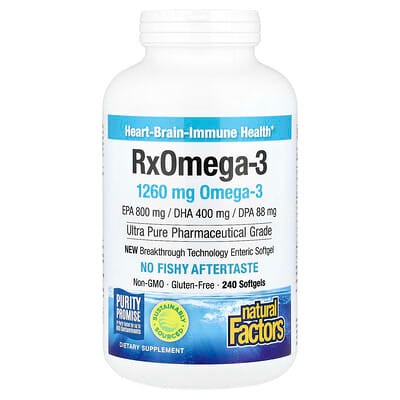
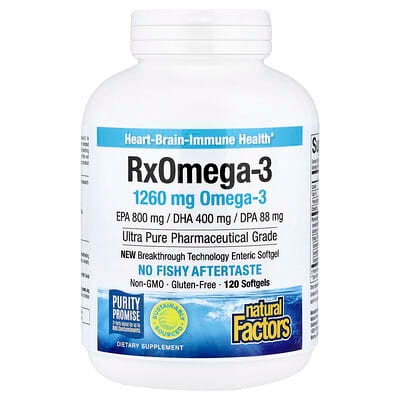
Nutrient quality
The concentrated oil supplies a useful active amount from named small-fish sources. Ethyl-ester delivery and an unclear EPA-to-DHA split limit quality.
 Vitacost Vitacost | $ 18.17 | |
 iHerb iHerb | $ 18.17 |
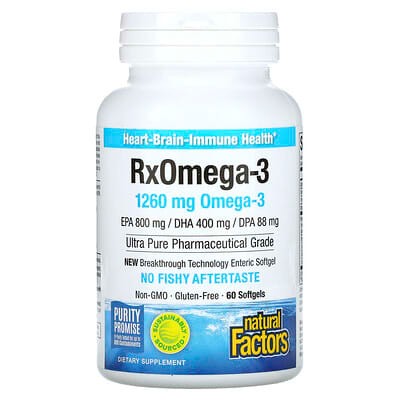
The daily softgel provides 630 mg of total omega-3 from 1,170 mg of fish-oil concentrate. Named anchovy, mackerel, and sardine sources add useful sourcing detail, while the listed pharmaceutical-grade description offers some quality context.
The active listing is the main limitation. Two ethyl ester entries are both called DHA, so a distinct EPA amount is not available, and ethyl esters are generally less efficiently absorbed than triglyceride forms.
The formula fits routine cardiovascular, inflammatory-balance, or skin-barrier support better than high-potency targeted use. No antioxidant protection or independent purity verification is included in the supplied details, leaving oxidation and contaminant control uncertain.
The concentrated oil supplies a useful active amount from named small-fish sources. Ethyl-ester delivery and an unclear EPA-to-DHA split limit quality.
Important active-label details are incomplete or ambiguous. Complete use directions and inactive-ingredient details are not available.
The aggregate satisfaction measure is favorable, with response volume determining how much confidence it deserves. Comment-level evidence is absent, so recurring complaints and purpose fit cannot be verified.
A substantial active amount and modest serving cost create strong value. The basic ethyl-ester form and ambiguous fatty-acid split keep it from leading the category.

Marine omega-3 fatty acids directly support lipid management and endothelial health, giving the formula strong cardiovascular relevance. The disclosed 630 mg total is a moderate daily amount rather than a concentrated therapeutic serving.
The label lists two DHA entries but no distinct EPA amount, making the active balance unclear. Ethyl ester delivery is less efficiently absorbed than triglyceride oil, and independent oxidation testing is not disclosed.

The concentrated fish oil provides a meaningful disclosed omega-3 amount from named small fish. Omega-3 fatty acids support the production of compounds that help resolve inflammatory signaling.
Two entries are both labeled as DHA and no separate EPA amount is shown, so the active balance is unclear. The ethyl ester form may absorb less efficiently than triglyceride forms, and no independent testing or antioxidant protection is stated.

630 mg of total omega-3 may support the skin lipid barrier and a balanced inflammatory response. Evidence is relevant to barrier function, but the formula does not address collagen structure or direct hydration-binding ingredients.
The ethyl ester form offers moderate absorption and small-fish sources are named, but EPA and DHA are not clearly separated. Missing antioxidant protection and independent purity evidence reduce quality confidence.
| Ingredient | Amount per serving |
|---|---|
Calories | 10 Calorie(s) |
Total Fat | 1 Gram(s) |
Polyunsaturated Fat | 1 Gram(s) |
Cholesterol | 5 mg |
pharmaceutical grade Fish Oil concentrate | 1170 mg |
Omega-3 Fatty Acids | 630 mg |
Docosahexaenoic Acid Ethyl Ester | 200 mg |
The two disclosed DHA entries together provide a high serving amount from named small-fish sources. The ethyl ester form is less readily absorbed than triglyceride forms, and no protective antioxidant is listed. The smaller package combines strong active-ingredient value with pharmaceutical-grade purity disclosure.
The pharmaceutical-grade oil comes from named small fish, but its ethyl ester form is less efficiently absorbed than triglyceride oil. The supplied data show two DHA entries and no distinct EPA amount, making the active profile unclear despite a moderate combined quantity. Cost efficiency appears favorable using the disclosed fatty-acid amounts, while independent testing and oxidation protection are not stated.
The named ethyl ester form offers moderate absorption potential rather than the preferred triglyceride forms. Small-fish sources are disclosed, but antioxidant protection and independent purity verification are not stated. The active concentration falls just below the collection's middle potency band, although the cost per active amount is favorable.
Published studies used for the product analysis and the top-ranked studies for each ingredient and goal.