Product Image

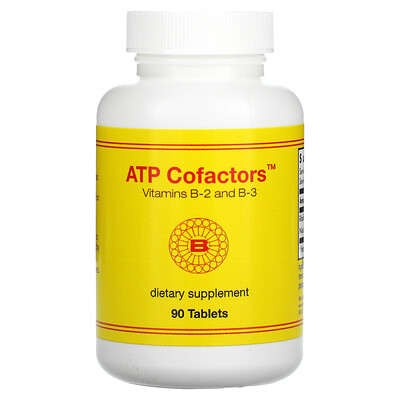
ATP Cofactors

Optimox
4.8
★ ★ ★ ★ ★
(1123 ratings)
Niacin 500 mg
Riboflavin 100 mg
Product Image
Score79
A focused high-potency B2 and non-flushing niacin formula has clear dosing, but its heart and skin relevance is narrower than the label goals suggest.
How scoring works
Quantity:90 Tablet(s) • (90 servings)
Goals:
Cardiovascular Support
Heart Health

Score 79

A focused high-potency B2 and non-flushing niacin formula has clear dosing, but its heart and skin relevance is narrower than the label goals suggest.
How scoring works
$34.99($0.38 per serving)
iHerb
$ 34.99
Pure Formulas
$ 34.99
iHerb
$ 34.99
Report prices

Analysis

The formula combines high-potency riboflavin with inositol hexanicotinate, a non-flushing niacin form. Both amounts are clearly disclosed, and the concise design avoids unrelated ingredients.

Inositol hexanicotinate may be easier to tolerate than flushing nicotinic acid but is less directly aligned with lipid-focused use. Standard riboflavin provides metabolic support but must be converted to active coenzyme forms.

The tablet offers reasonable value for users who specifically want this pairing. It is not a broad heart or skin formula, and the large niacin-derived amount warrants more care than an ordinary multivitamin serving.

Who is it for
  • Adults specifically seeking high-potency riboflavin
  • Users wanting non-flushing niacin
  • People who prefer a focused two-active tablet
Best for
  • Targeted B-vitamin supplementation
  • Metabolic cofactor support
  • Non-flushing niacin intake

Pros

  • High-potency riboflavin
  • Clearly identified niacin form
  • Concise formula
  • One-tablet serving

Cons

  • Niacin form is less direct for lipid effects
  • Riboflavin is not an active R5P form
  • Poor fit for skin-specific use
  • Not a comprehensive heart formula

Warnings

  • The substantial niacin-derived amount warrants care in people with liver disease or diabetes because high-dose niacin products can affect liver enzymes and glucose control.

Nutrient quality

78 High impact

Substantial riboflavin and a non-flushing niacin form provide focused B-vitamin support. The niacin amount is aggressive for general use.

.
Ingredient transparency

82 Highest impact

Active ingredients and their amounts are mostly clear without a hidden proprietary total. Daily directions and a complete other-ingredients panel are not included in the supplied data.

.

Customer satisfaction

70 High impact

The aggregate rating is favorable and supported by solid feedback volume. Complaint-level experiences are unavailable, so repeated drawbacks and purpose fit remain uncertain.

.

Value for money

84 Highest impact

The serving cost is reasonable for the documented actives. Form, dose, or disclosure limits keep value from standing out further.

.

Report analysis

Goals

Cardiovascular Support
Impact
Moderate effect
C- Goal FitC+ Strength of SupportD CoverageB+ Formula Quality
Niacin · 500 mg

The substantial niacin derivative amount is aimed at lipid support, and the chemical form is clearly disclosed. Inositol hexanicotinate is less likely to cause flushing but has weaker evidence for lipid changes than standard nicotinic acid.

Riboflavin adds a compatible energy cofactor without broadening the formula much. The product offers a focused concept, but its non-flushing form limits confidence in meaningful cardiovascular effects.

Study evidence
Niacin Supportive 136 studies
Heart Health
Impact
Moderate effect
D+ Goal FitB- Strength of SupportD CoverageB+ Formula Quality

The flush-free niacin form is less directly aligned with lipid management than nicotinic acid. Riboflavin adds metabolic support but not a separate major heart pathway.

The high amount is clearly disclosed, yet the form may not reproduce the lipid effects associated with prescription-style niacin. High-dose niacin products can affect liver enzymes and glucose control, so this amount warrants care in people with liver disease or diabetes.

Study evidence
Niacin Supportive 105 studies

Ingredients

IngredientAmount per serving
Riboflavin
100 mg
Niacin (Inositol Hexanicotinate)
500 mg
Adults 18–50 Dairy Free Sugar Free
Report overview
C+ Active Ingredient Quality & BioavailabilityB+ Dose, Safety & Label TransparencyC Value

Inositol hexanicotinate provides a non-flushing niacin form at a substantial dose, though it may be less direct than nicotinic acid for cardiovascular goals. The label clearly names the chemical form, but it does not explicitly explain the no-flush benefit or use a release technology. Cost is moderate for this form, and the included riboflavin adds relevant B-vitamin support.

Riboflavin · 100 mg OverallScore70
F Active Ingredient Quality & BioavailabilityA+ Dose, Safety & Label TransparencyB+ Value

The high-potency riboflavin dose appears well suited to substantial metabolic support. Standard riboflavin requires conversion before use, and the tablet format may release more slowly than a capsule or liquid. The serving offers good value, though the added high-dose niacin makes it less suitable for anyone seeking riboflavin alone.

Loading alternative details
Report alternatives

Sources

Published studies used for the product analysis and the top-ranked studies for each ingredient and goal.

  1. Role of Niacin in Current Clinical Practice: A Systematic Review.
    Garg A; Sharma A; Krishnamoorthy P; Garg J; Virmani D; Sharma T; Stefanini G; Kostis JB; Mukherjee D; Sikorskaya E · The American journal of medicine · 2017
    Meta-analysis35,206 participants13 studies pooledHeart Health forNiacin
  2. Relationship of lipoproteins to cardiovascular events: the AIM-HIGH Trial (Atherothrombosis Intervention in Metabolic Syndrome With Low HDL/High Triglycerides and Impact on Global Health Outcomes).
    Guyton JR; Slee AE; Anderson T; Fleg JL; Goldberg RB; Kashyap ML; Marcovina SM; Nash SD; O'Brien KD; Weintraub WS; Xu P; Zhao XQ; Boden WE · Journal of the American College of Cardiology · 2013
    Randomized trial3,414 participantsHeart Health Cardiovascular Support forNiacin
  3. Assessment of the Role of Niacin in Managing Cardiovascular Disease Outcomes: A Systematic Review and Meta-analysis.
    D'Andrea E; Hey SP; Ramirez CL; Kesselheim AS · JAMA network open · 2020
    Meta-analysis35,760 participants17 studies pooledHeart Health Cardiovascular Support forNiacin
  4. Supplemental Vitamins and Minerals for Cardiovascular Disease Prevention and Treatment: JACC Focus Seminar.
    Jenkins DJA; Spence JD; Giovannucci EL; Kim YI; Josse RG; Vieth R; Sahye-Pudaruth S; Paquette M; Patel D; Blanco Mejia S; Viguiliouk E; Nishi SK; Kavanagh M; Tsirakis T; Kendall CWC; Pichika SC; Sievenpiper JL · Journal of the American College of Cardiology · 2021
    Meta-analysisCardiovascular Support forNiacin
  5. Exploring the Cardiovascular Impacts of Oral Nicotinamide: A Comprehensive Narrative Review.
    Shoukfeh R; Tisack AM; Lim HW; Mohammad TF · Journal of drugs in dermatology : JDD · 2025
    Narrative reviewHeart Health forNiacin
  6. The current state of niacin in cardiovascular disease prevention: a systematic review and meta-regression.
    Lavigne PM; Karas RH · Journal of the American College of Cardiology · 2013
    Meta-analysis9,959 participants11 studies pooledCardiovascular Support forNiacin
  7. Effect of niacin therapy on cardiovascular outcomes in patients with coronary artery disease.
    Duggal JK; Singh M; Attri N; Singh PP; Ahmed N; Pahwa S; Molnar J; Singh S; Khosla S; Arora R · Journal of cardiovascular pharmacology and therapeutics · 2010
    Meta-analysis5,137 participants7 studies pooledHeart Health forNiacin
  8. Effects of niacin on apo A1 and B levels: a systematic review and meta-analysis of randomised controlled trials.
    Saboori S; Yousefi Rad E; Tammam J; Thondre PS; Coe S · The British journal of nutrition · 2024
    Meta-analysis12 studies pooledCardiovascular Support forNiacin
  9. Effect of niacin on lipid and lipoprotein levels and glycemic control in patients with diabetes and peripheral arterial disease: the ADMIT study: A randomized trial. Arterial Disease Multiple Intervention Trial.
    Elam MB; Hunninghake DB; Davis KB; Garg R; Johnson C; Egan D; Kostis JB; Sheps DS; Brinton EA · JAMA · 2000
    Randomized trial468 participantsHeart Health Cardiovascular Support forNiacin
  10. Effect of lipid-lowering therapies on lipoprotein(a) levels: a comprehensive meta-analysis of randomized controlled trials.
    Xie S; Galimberti F; Olmastroni E; Carugo S; Catapano AL; Casula M; META-LIPID Group · Atherosclerosis · 2025
    Meta-analysis145,314 participants147 studies pooledCardiovascular Support forNiacin
  11. The ARBITER 6-HALTS Trial (Arterial Biology for the Investigation of the Treatment Effects of Reducing Cholesterol 6-HDL and LDL Treatment Strategies in Atherosclerosis): final results and the impact of medication adherence, dose, and treatment duration.
    Villines TC; Stanek EJ; Devine PJ; Turco M; Miller M; Weissman NJ; Griffen L; Taylor AJ · Journal of the American College of Cardiology · 2010
    Randomized trial315 participantsHeart Health forNiacin
  12. Effectiveness of niacin supplementation for patients with type 2 diabetes: A meta-analysis of randomized controlled trials.
    Xiang D; Zhang Q; Wang YT · Medicine · 2020
    Meta-analysis2,110 participants8 studies pooledCardiovascular Support forNiacin
  13. The effects of extended-release niacin on carotid intimal media thickness, endothelial function and inflammatory markers in patients with the metabolic syndrome.
    Thoenes M; Oguchi A; Nagamia S; Vaccari CS; Hammoud R; Umpierrez GE; Khan BV · International journal of clinical practice · 2008
    Randomized trial50 participantsHeart Health forNiacin
  14. Niacin improves lipid profile but not endothelial function in patients with coronary artery disease on high dose statin therapy.
    Philpott AC; Hubacek J; Sun YC; Hillard D; Anderson TJ · Atherosclerosis · 2013
    Randomized trial66 participantsCardiovascular Support forNiacin
  15. Differential effect of two nicotinic acid preparations on low-density lipoprotein subclass distribution in patients classified as low-density lipoprotein pattern A, B, or I.
    Superko HR; McGovern ME; Raul E; Garrett B · The American journal of cardiology · 2004
    Randomized trial180 participantsHeart Health forNiacin
  16. Effects of HDL-modifiers on cardiovascular outcomes: a meta-analysis of randomized trials.
    Verdoia M; Schaffer A; Suryapranata H; De Luca G · Nutrition, metabolism, and cardiovascular diseases : NMCD · 2015
    Meta-analysis69,515 participants18 studies pooledCardiovascular Support forNiacin
  17. Extended-release niacin therapy and risk of ischemic stroke in patients with cardiovascular disease: the Atherothrombosis Intervention in Metabolic Syndrome with low HDL/High Triglycerides: Impact on Global Health Outcome (AIM-HIGH) trial.
    Teo KK; Goldstein LB; Chaitman BR; Grant S; Weintraub WS; Anderson DC; Sila CA; Cruz-Flores S; Padley RJ; Kostuk WJ; Boden WE; AIM-HIGH Investigators · Stroke · 2013
    Randomized trial3,414 participantsHeart Health forNiacin
  18. Extended-release niacin vs gemfibrozil for the treatment of low levels of high-density lipoprotein cholesterol. Niaspan-Gemfibrozil Study Group.
    Guyton JR; Blazing MA; Hagar J; Kashyap ML; Knopp RH; McKenney JM; Nash DT; Nash SD · Archives of internal medicine · 2000
    Randomized trial173 participantsCardiovascular Support forNiacin
  19. Equivalent efficacy of a time-release form of niacin (Niaspan) given once-a-night versus plain niacin in the management of hyperlipidemia.
    Knopp RH; Alagona P; Davidson M; Goldberg AC; Kafonek SD; Kashyap M; Sprecher D; Superko HR; Jenkins S; Marcovina S · Metabolism: clinical and experimental · 1998
    Randomized trial223 participantsCardiovascular Support forNiacin
  20. Effect of niacin on endothelial function: a systematic review and meta-analysis of randomized controlled trials.
    Sahebkar A · Vascular medicine (London, England) · 2014
    Meta-analysis441 participants7 studies pooledHeart Health forNiacin