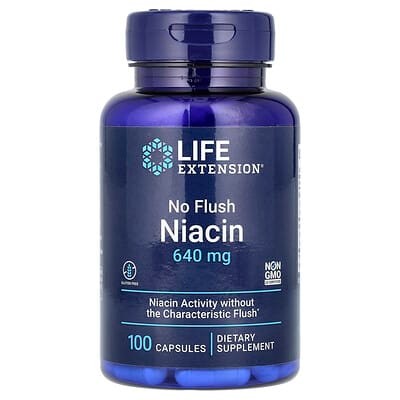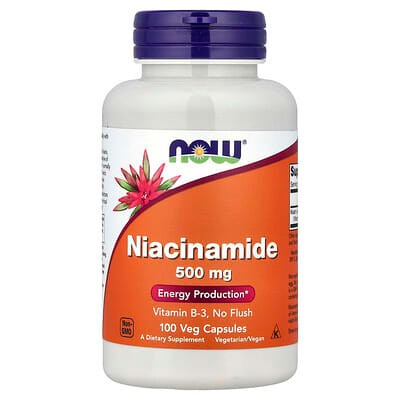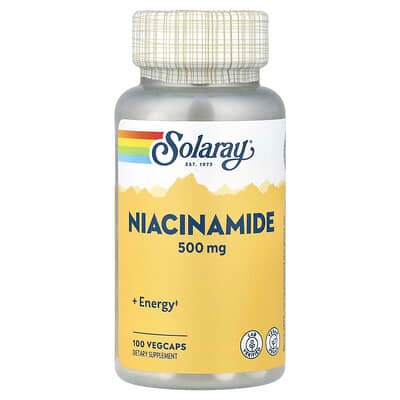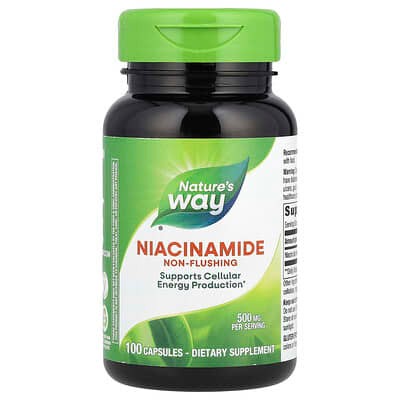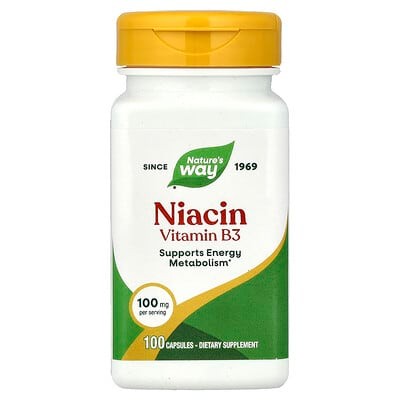
Niacin

vitamin

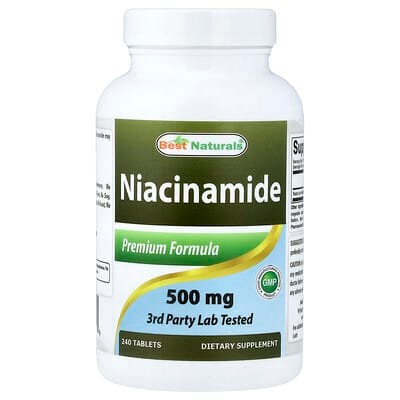
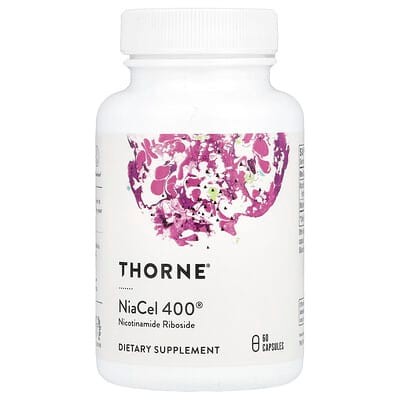
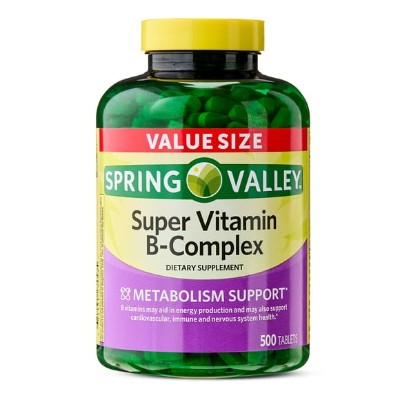
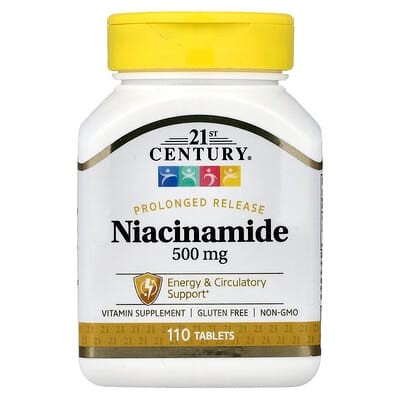
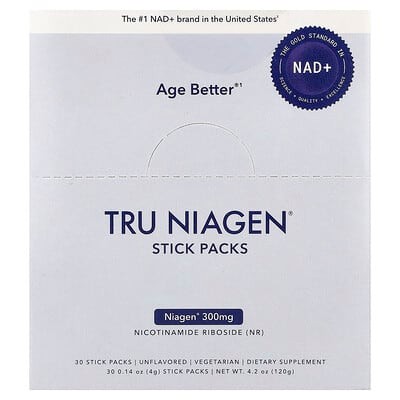
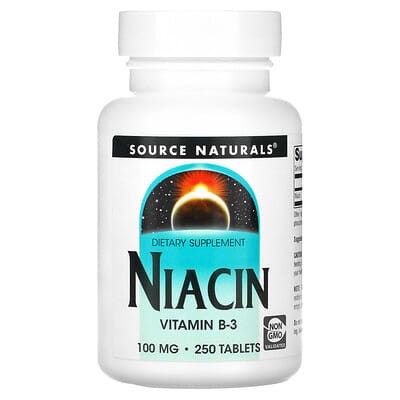
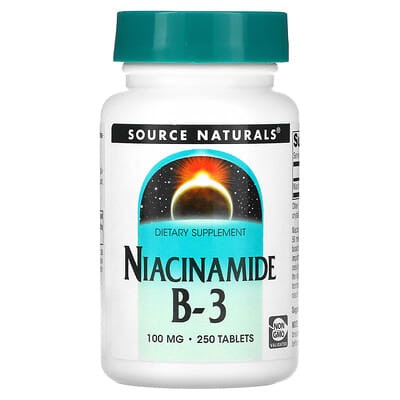
Niacin is a water-soluble nutrient that is necessary for many metabolic processes. It plays a central role in converting carbohydrates, fats, and proteins into usable energy, which supports cellular function and overall vitality. It also participates in DNA repair and provides antioxidant support. This vitamin is important for maintaining healthy skin, supporting the nervous system, and assisting with proper digestive function. It is available in several forms, such as nicotinic acid and nicotinamide, which have different roles in supporting cardiovascular health and skin integrity. While it was historically used to address severe deficiency symptoms like those seen in pellagra, this nutrient is now recognized for its role in supporting cardiovascular health and cognitive function. Because higher levels may lead to side effects, intake should be monitored carefully.

Natural sources
Meat (poultry, beef, pork)Fish (tuna, salmon)Nuts (peanuts)LegumesGrains (brown rice, fortified cereals)MushroomsAvocados

Ingredient forms

No public comparison lists found.

Timing & Intake
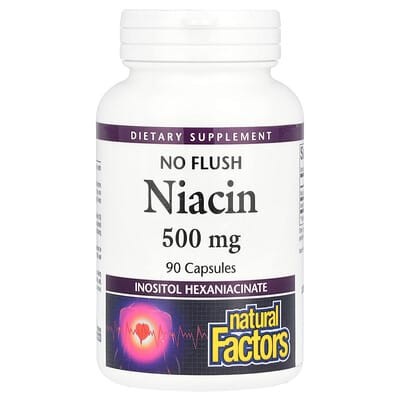
AnytimeWith foodTake with Niacin, especially in its nicotinic acid form, can cause a 'flush.' Taking it with food can help mitigate this effect.
Some forms of this vitamin can cause a temporary flush, characterized by redness or warmth on the skin. Taking it with a meal, or choosing buffered or non-flushing forms, may help reduce this effect.
Daily Intake
RDA (Men)16 mg
RDA (Women)14 mg
RDI16 mg
Optimal Dosage
Minimum20 mg
Maximum100 mg
Safety & Toxicity
Upper Limit (UL)35 mg
Toxicity Threshold500 mg
Toxicity Effectflushing; hepatotoxicity at ≥1000 mg
4 safety notes
  • Individuals with liver disease, peptic ulcers, or gout should use Niacin with caution and under medical supervision.
  • High doses of Niacin, particularly nicotinic acid, can cause severe liver damage.
  • May worsen diabetes by increasing blood sugar levels.
  • Pregnant or breastfeeding women should consult a healthcare professional before taking Niacin supplements beyond recommended daily allowances.
Goals
Metabolism Boost
Impact
Highest effect
Typical dose:16–500 mg
Niacin (Vitamin B3) is critical for cellular energy production. As a precursor to NAD+ and NADP+, it is directly involved in glycolysis, the Krebs cycle, and the electron transport chain—the core pathways for generating ATP from carbohydrates, fats, and proteins. Its role is foundational for a high-functioning metabolism.

Study evidence

17 studies

Niacin supports normal energy metabolism, but that does not mean extra niacin speeds metabolism or promotes fat burning. Medical niacin treatment can improve blood lipids while worsening glucose control, so the supplied evidence does not support a general metabolism-boosting benefit.

View goal

Cardiovascular Support
Impact
High effect
Typical dose:250–1000 mg
Niacin affects the blood lipid profile and is particularly known for raising HDL cholesterol. Flushing is a relevant side effect to consider when using it for this purpose.

Study evidence

136 studies

Niacin used as a lipid-lowering medicine improves cholesterol and triglycerides, but adding it to statins has not reduced cardiovascular events. Older benefits without statins are less applicable to current care, and adverse effects weaken the case for routine cardiovascular supplementation.

View goal
Hair Health
Impact
Moderate effect
Typical dose:16–100 mg
Niacin (Vitamin B3) promotes vasodilation, which widens blood vessels and improves circulation. Enhanced blood flow to the scalp ensures that hair follicles receive a richer supply of oxygen and essential nutrients, which is vital for robust hair growth and strength.

Study evidence

2 studies

Certain topical Niacin derivatives have shown preliminary promise for improving hair fullness in women with pattern hair loss. The evidence does not establish a benefit from oral Niacin supplements, and results from different topical vitamin B3 forms cannot be treated as interchangeable.

View goal
Heart Health
Impact
Situational effect
Typical dose:250–1000 mg
Niacin (Vitamin B3) inhibits the production of VLDL (a precursor to LDL) in the liver and reduces the breakdown of HDL. While effective for lipid modification, its use is more situational due to the "niacin flush" side effect and studies showing it may not reduce cardiovascular events when added to statin therapy. Best used under medical supervision.

Study evidence

105 studies

Niacin used as a lipid-lowering treatment improves cholesterol levels, but adding it to statin therapy has not reliably prevented cardiovascular events. Older benefits do not establish a role for routine supplementation, and treatment can worsen blood sugar and cause adverse effects.

View goal
Skin Health
Impact
Situational effect
Typical dose:250–750 mg
Supplementing with Niacinamide (a non-flushing form of Niacin/Vitamin B3) has been shown to increase the production of ceramides and other barrier lipids, enhancing barrier function. Its anti-inflammatory effects make it beneficial for conditions like acne and rosacea, improving overall skin tone and texture.

Study evidence

61 studies

Niacin (vitamin B3) supports skin health, but the form and use matter: topical niacinamide can improve some visible signs of skin aging, while oral nicotinamide has shown benefits in selected people at high skin-cancer risk. These findings do not establish the same benefits from ordinary niacin supplements.

View goal

Studies

Research connections will load here.
Sources

Up to five highest-ranked published examples per goal. Study counts and charts include all published studies for the connection.

  1. Niacin and contribution to normal energy-yielding metabolism: evaluation of a health claim pursuant to Article 14 of Regulation (EC) No 1924/2006.
    EFSA Panel on Dietetic Products, Nutrition and Allergies (NDA) · EFSA journal. European Food Safety Authority · 2026
    Guideline / consensusMetabolism Boost
  2. Targeted Microbiome Intervention by Microencapsulated Delayed-Release Niacin Beneficially Affects Insulin Sensitivity in Humans.
    Fangmann D; Theismann EM; Türk K; Schulte DM; Relling I; Hartmann K; Keppler JK; Knipp JR; Rehman A; Heinsen FA; Franke A; Lenk L; Freitag-Wolf S; Appel E; Gorb S; Brenner C; Seegert D; Waetzig GH; Rosenstiel P; Schreiber S; Schwarz K; Laudes M · Diabetes care · 2018
    Clinical trialMetabolism Boost
  3. The differential impact of three different NAD+ boosters on circulatory NAD and microbial metabolism in humans.
    Christen S; Redeuil K; Goulet L; Giner MP; Breton I; Rota R; Frézal A; Nazari A; Van den Abbeele P; Godin JP; Nutten S; Cuenoud B · Nature metabolism · 2026
    Randomized trial65 participantsMetabolism Boost
  4. Effects of extended-release niacin on lipid profile and adipocyte biology in patients with impaired glucose tolerance.
    Linke A; Sonnabend M; Fasshauer M; Höllriegel R; Schuler G; Niebauer J; Stumvoll M; Blüher M · Atherosclerosis · 2009
    Randomized trial30 participantsMetabolism Boost
  5. Effect of the antilipolytic nicotinic acid analogue acipimox on whole-body and skeletal muscle glucose metabolism in patients with non-insulin-dependent diabetes mellitus.
    Vaag A; Skött P; Damsbo P; Gall MA; Richter EA; Beck-Nielsen H · The Journal of clinical investigation · 1991
    Clinical trial12 participantsMetabolism Boost
  6. The current state of niacin in cardiovascular disease prevention: a systematic review and meta-regression.
    Lavigne PM; Karas RH · Journal of the American College of Cardiology · 2013
    Meta-analysis9,959 participants11 studies pooledCardiovascular Support
  7. Effects of niacin on apo A1 and B levels: a systematic review and meta-analysis of randomised controlled trials.
    Saboori S; Yousefi Rad E; Tammam J; Thondre PS; Coe S · The British journal of nutrition · 2024
    Meta-analysis12 studies pooledCardiovascular Support
  8. Effect of lipid-lowering therapies on lipoprotein(a) levels: a comprehensive meta-analysis of randomized controlled trials.
    Xie S; Galimberti F; Olmastroni E; Carugo S; Catapano AL; Casula M; META-LIPID Group · Atherosclerosis · 2025
    Meta-analysis145,314 participants147 studies pooledCardiovascular Support
  9. Extended-release niacin vs gemfibrozil for the treatment of low levels of high-density lipoprotein cholesterol. Niaspan-Gemfibrozil Study Group.
    Guyton JR; Blazing MA; Hagar J; Kashyap ML; Knopp RH; McKenney JM; Nash DT; Nash SD · Archives of internal medicine · 2000
    Randomized trial173 participantsCardiovascular Support
  10. Equivalent efficacy of a time-release form of niacin (Niaspan) given once-a-night versus plain niacin in the management of hyperlipidemia.
    Knopp RH; Alagona P; Davidson M; Goldberg AC; Kafonek SD; Kashyap M; Sprecher D; Superko HR; Jenkins S; Marcovina S · Metabolism: clinical and experimental · 1998
    Randomized trial223 participantsCardiovascular Support
  11. A pilot study evaluating the efficacy of topically applied niacin derivatives for treatment of female pattern alopecia.
    Draelos ZD; Jacobson EL; Kim H; Kim M; Jacobson MK · Journal of cosmetic dermatology · 2009
    Randomized trial60 participantsHair Health
  12. Topical adenosine increases thick hair ratio in Japanese men with androgenetic alopecia.
    Watanabe Y; Nagashima T; Hanzawa N; Ishino A; Nakazawa Y; Ogo M; Iwabuchi T; Tajima M · International journal of cosmetic science · 2016
    Randomized trial102 participantsHair Health
  13. Differential effect of two nicotinic acid preparations on low-density lipoprotein subclass distribution in patients classified as low-density lipoprotein pattern A, B, or I.
    Superko HR; McGovern ME; Raul E; Garrett B · The American journal of cardiology · 2004
    Randomized trial180 participantsHeart Health
  14. The ARBITER 6-HALTS Trial (Arterial Biology for the Investigation of the Treatment Effects of Reducing Cholesterol 6-HDL and LDL Treatment Strategies in Atherosclerosis): final results and the impact of medication adherence, dose, and treatment duration.
    Villines TC; Stanek EJ; Devine PJ; Turco M; Miller M; Weissman NJ; Griffen L; Taylor AJ · Journal of the American College of Cardiology · 2010
    Randomized trial315 participantsHeart Health
  15. The effects of extended-release niacin on carotid intimal media thickness, endothelial function and inflammatory markers in patients with the metabolic syndrome.
    Thoenes M; Oguchi A; Nagamia S; Vaccari CS; Hammoud R; Umpierrez GE; Khan BV · International journal of clinical practice · 2008
    Randomized trial50 participantsHeart Health
  16. Effect of niacin therapy on cardiovascular outcomes in patients with coronary artery disease.
    Duggal JK; Singh M; Attri N; Singh PP; Ahmed N; Pahwa S; Molnar J; Singh S; Khosla S; Arora R · Journal of cardiovascular pharmacology and therapeutics · 2010
    Meta-analysis5,137 participants7 studies pooledHeart Health
  17. Effect of niacin on endothelial function: a systematic review and meta-analysis of randomized controlled trials.
    Sahebkar A · Vascular medicine (London, England) · 2014
    Meta-analysis441 participants7 studies pooledHeart Health
  18. The effect of niacinamide on reducing cutaneous pigmentation and suppression of melanosome transfer.
    Hakozaki T; Minwalla L; Zhuang J; Chhoa M; Matsubara A; Miyamoto K; Greatens A; Hillebrand GG; Bissett DL; Boissy RE · The British journal of dermatology · 2002
    Randomized trial138 participantsSkin Health
  19. Niacinamide: A B vitamin that improves aging facial skin appearance.
    Bissett DL; Oblong JE; Berge CA · Dermatologic surgery : official publication for American Society for Dermatologic Surgery [et al.] · 2005
    Randomized trial50 participantsSkin Health
  20. The clinical anti-aging effects of topical kinetin and niacinamide in Asians: a randomized, double-blind, placebo-controlled, split-face comparative trial.
    Chiu PC; Chan CC; Lin HM; Chiu HC · Journal of cosmetic dermatology · 2008
    Randomized trial52 participantsSkin Health
  21. A Phase 3 Randomized Trial of Nicotinamide for Skin-Cancer Chemoprevention.
    Chen AC; Martin AJ; Choy B; Fernández-Peñas P; Dalziell RA; McKenzie CA; Scolyer RA; Dhillon HM; Vardy JL; Kricker A; St George G; Chinniah N; Halliday GM; Damian DL · The New England journal of medicine · 2015
    Randomized trial386 participantsSkin Health
  22. Nicotinamide for Skin Cancer Chemoprevention.
    Breglio KF; Knox KM; Hwang J; Weiss R; Maas K; Zhang S; Yao L; Madden C; Xu Y; Hartman RI; Wheless L · JAMA dermatology · 2025
    Cohort study33,822 participantsSkin Health