
Nutrient quality
Triglyceride delivery and vitamin E are meaningful formulation strengths. Low active concentration and modest fatty-acid amounts substantially limit dose quality.
 iHerb iHerb | $ 29.07 | |
| iHerb | $ 29.07 |
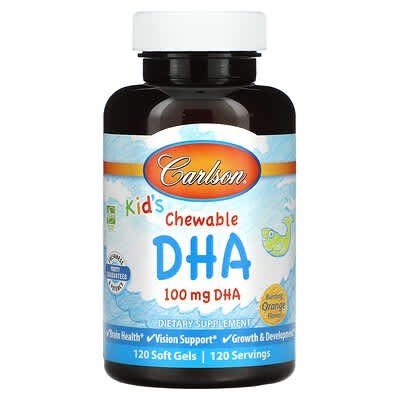
A serving supplies 175 mg total omega-3s with 100 mg DHA and 50 mg EPA. The amount is suitable for modest routine supplementation but not for a high-dose omega-3 goal.
Triglyceride form and natural d-alpha-tocopherol are useful disclosed features. Fish species, independent purity results, complete inactive ingredients, and age-specific directions are not part of the supplied label data.
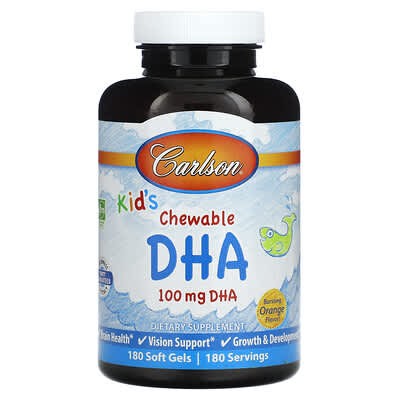
The 180-serving package is best suited to families who already know the child accepts the orange chewable. Its long supply improves convenience, but it is a poor trial size if flavor or texture is uncertain.
Triglyceride delivery and vitamin E are meaningful formulation strengths. Low active concentration and modest fatty-acid amounts substantially limit dose quality.
Core fatty-acid quantities are visible and no proprietary blend hides the formula. Malformed entries, missing full directions, and undisclosed excipients substantially reduce clarity.
The supplied average rating is very strong and the rating volume is substantial. No specific experience details were provided to judge repeated complaints or purpose alignment.
Quality, dose, or safety limitations weaken practical value. Better-dosed or safer alternatives are more competitive.

EPA and DHA have direct cardiovascular relevance through lipid and inflammatory pathways, and the triglyceride form supports absorption. The serving supplies only 150 mg combined EPA and DHA, which is low for a cardiovascular goal.
Vitamin E helps protect the oil from oxidation but does not compensate for the modest omega-3 amount. The formula is suitable as a small children’s serving rather than a targeted cardiovascular dose.
| Ingredient | Amount per serving |
|---|---|
Calories | 5 Calorie(s) |
Total Fat | 0.5 Gram(s) |
Vitamin E | 6.7 mg |
Norwegian Fish Oil | 600 mg |
Total Omega-3 Fatty Acids | 175 mg |
DHA | 100 mg |
EPA | 50 mg |
The triglyceride form supports absorption, while vitamin E helps protect the oil from oxidation. Separate EPA and DHA listing is clear, but together they make up only one quarter of the fish oil. The low dose limits active omega-3 delivery per softgel, although the cost per active gram remains moderate.
Triglyceride oil and vitamin E support absorption and help guard against oxidation. The DHA dose is modest, and DHA plus EPA make up only a small part of the total fish oil. The cost per gram of DHA is fairly high, while fish species and independent purity verification are absent.
The triglyceride form supports absorption, but the small EPA dose sharply limits EPA-focused usefulness. A DHA-heavy balance further shifts the formula away from the selected goal. Vitamin E supplies basic stability support, while absent purity verification and weak EPA cost efficiency are notable limitations.
Published studies used for the product analysis and the top-ranked studies for each ingredient and goal.