
Nutrient quality
The broad B-vitamin pattern provides substantial, focused coverage. Basic forms and an aggressive B6 amount reduce form quality and long-term balance.
.
 Pure Formulas Pure Formulas | $ 11.30 | |
 Vitacost Vitacost | $ 12.63 | |
 iHerb iHerb | $ 11.62 | |
 Daily Vita Daily Vita | $ 11.00 | |
| Daily Vita | $ 8.00 |
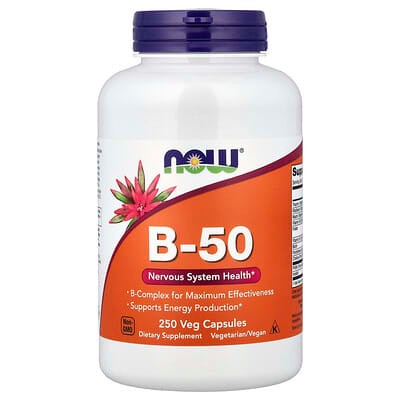
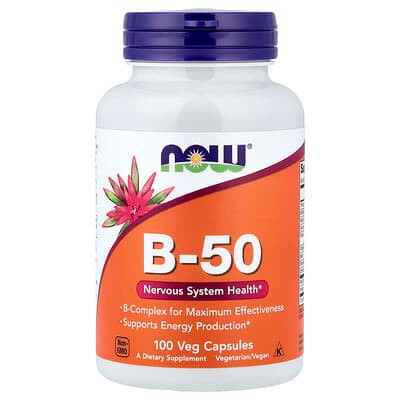
Thiamine, riboflavin, niacinamide, vitamin B6, folate, vitamin B12, biotin, and pantothenic acid create broad support for normal energy metabolism. Most core B vitamins are supplied at 50 mg or a similarly high multiple of daily needs, so the formula is better described as high potency than balanced maintenance nutrition.
Pyridoxine hydrochloride and cyanocobalamin are conventional forms that require conversion before use. Choline at 25 mg is only a small addition, and PABA and inositol provide limited practical depth beside the main B vitamins.
Folate at 667 mcg DFE is clearly stated and provides substantial coverage. The simple serving and complete disclosure support ease of use, but the dose pattern is more aggressive than most adults need every day.
The broad B-vitamin pattern provides substantial, focused coverage. Basic forms and an aggressive B6 amount reduce form quality and long-term balance.
.Active amounts are broadly disclosed without a hidden blend. Repeated vitamin names, missing directions, and absent tablet excipients reduce full clarity.
.The aggregate satisfaction signal is strong and supported by extensive volume. Missing review details prevent assessment of recurring complaints or purpose fit.
.The large supply delivers broad dosing at excellent serving value. Basic forms and high B6 remain the only major disadvantages against gentler options.
.
A complete B-complex supports the nutrient-dependent steps that convert food into cellular energy. High amounts of thiamin, riboflavin, niacin, and pantothenic acid provide focused metabolic coverage.
Standard vitamin forms and a B12 amount below the targeted energy threshold limit the advantage over basic deficiency support. The concentrated vitamin B6 amount also makes long-term daily use less suitable without a clear need.
No linked studies yet.

The high-potency B-vitamin blend supplies several cofactors used to turn food into cellular energy. Its role is foundational, so it is more relevant to correcting inadequate intake than directly raising metabolic rate.
Amounts are substantial and fully disclosed, but most vitamins use standard precursor forms. The focused formula is coherent, although it does not cover thermogenesis, thyroid support, or glycemic control.
| Ingredient | Amount per serving |
|---|---|
Thiamine (Thiamine Hydrochloride, Vitamin B1) | 50 mg |
Riboflavin (Vitamin B2) | 50 mg |
Niacin (Niacinamide, Vitamin B3) | 50 mg |
Vitamin B6 (Pyridoxine Hydrochloride) | 50 mg |
Folate | 667 mcg DFE |
Vitamin B12 (Cyanocobalamin) | 50 mcg |
Biotin | 50 mcg |
Pantothenic Acid (Calcium Pantothenate) | 50 mg |
Choline (Choline Bitartrate) | 25 mg |
PABA | 25 mg |
Inositol | 25 mg |
The B-complex uses clearly named niacinamide at a useful general-support amount. A standard capsule offers no special release control, but niacinamide itself has low flush potential. The serving cost is especially favorable for the included B-vitamin profile.
The clearly listed 25 mg PABA amount fits a standard B-complex or high-potency combination dose. No purity grade is stated, but immediate release is appropriate and the exact amount is easy to verify. Cost efficiency is moderate, although the active amount does not reach the leading value tier.
A 50 mg dose fits the preferred range for focused vitamin B6 support. Pyridoxine HCl is not the active coenzyme form, though the included riboflavin may support its conversion. A single capsule and a low serving cost keep the formula practical.
Published studies used for the product analysis and the top-ranked studies for each ingredient and goal.