
Nutrient quality
Concentrated wild Alaskan liquid fish oil with an unspecified molecular form gives the formula reasonable ingredient quality. The disclosed amounts are meaningful and the ingredient selection stays focused.
 Pure Formulas Pure Formulas | $ 31.99 | |
 Vitacost Vitacost | $ 35.19 | |
 iHerb iHerb | $ 31.99 |
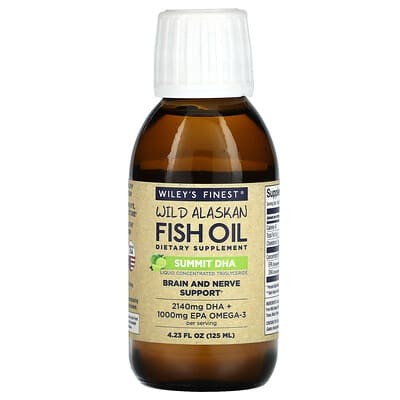
A serving provides 2,140 mg of DHA and 460 mg of EPA, plus 200 mg of other omega-3 fats. The strongly DHA-led profile is distinct from common EPA-heavy fish oils and offers substantial depth for vision-related pathways.
Liquid delivery avoids swallowing many capsules but requires accurate measurement. The supplied data do not identify chemical form, antioxidant protection, or independent purity verification for the concentrated oil.
The product is best for adults intentionally seeking a high-DHA formula rather than basic maintenance. Its large serving and premium cost make it excessive for users who only want a moderate daily amount.
Concentrated wild Alaskan liquid fish oil with an unspecified molecular form gives the formula reasonable ingredient quality. The disclosed amounts are meaningful and the ingredient selection stays focused.
The meaningful actives and their amounts are clearly identified. Serving guidance and the complete inactive-ingredient list are not fully supplied.
The aggregate rating is strong but the review volume limits confidence. No review excerpts are supplied to assess repeated complaints or purpose-specific experiences.
Formula quality provides fair value for the category. The effective serving and focused ingredient list compare favorably with similar options.

A high disclosed amount of EPA and DHA offers strong support for healthy triglyceride levels and vascular function. The concentration provides clear depth in a well-supported cardiovascular pathway.
The formula remains focused on omega-3 benefits rather than covering rhythm or calcium handling. Fish-derived omega-3s may not suit people with a fish allergy, and high supplemental intake deserves extra care alongside anticoagulant or antiplatelet medicines.

The high DHA amount plus substantial EPA directly supports omega-3 pathways involved in resolving inflammation. Clear disclosure of both fatty acids makes the active strength easy to judge.
The liquid concentrate delivers strong depth in one foundational pathway rather than broad multi-ingredient coverage. People using anticoagulant or antiplatelet medicines should discuss this high EPA and DHA intake with a clinician because it may increase bleeding tendency.

The DHA-heavy fish oil provides substantial structural lipid support for retinal membranes, while EPA may support the ocular surface. Its focused omega-3 profile does not supply lutein, zeaxanthin, zinc, vitamin C, or vitamin E for macular filtering and broader antioxidant defense.
The DHA and EPA amounts are clearly disclosed and far above token levels. The supplied label does not identify the oil's molecular form, antioxidant protection, or independent contaminant testing, leaving quality verification incomplete.
| Ingredient | Amount per serving |
|---|---|
Calories | 41 Calorie(s) |
Total Fat | 4.6 Gram(s) |
Cholesterol | 5 mg |
concentrated Fish Oil | 4600 mg |
Eicosapentaenoic Acid | 460 mg |
Docosahexaenoic Acid | 2140 mg |
Other Omega-3 Fatty Acids | 200 mg |
The concentrated fish oil gives separate EPA and DHA amounts with a moderate active concentration. Its molecular structure is not confirmed, and no antioxidant or independent purity certification is stated. The large DHA-rich serving delivers excellent cost efficiency per active gram.
The serving supplies 2,600 mg of combined EPA and DHA, providing a high active dose at about 57% concentration. Wild Alaskan sourcing is a strength, but molecular form, purification method, and independent testing are not disclosed. The cost per active gram is competitive, although no antioxidant stabilizer is shown.
The concentrated liquid delivers a very high DHA dose and excellent cost efficiency for the active amount. Its omega-3 density is moderate, while the chemical form and antioxidant protection are not stated. The fish source is only broadly described and no contaminant-testing credential is provided.
Published studies used for the product analysis and the top-ranked studies for each ingredient and goal.