
Nutrient quality
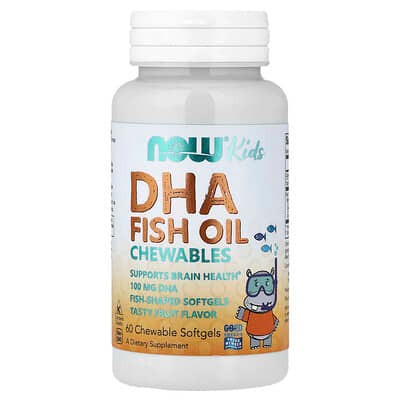
A child-sized DHA amount and chewable format fit foundational omega-3 use. Low active concentration and limited source and quality details temper that strength.
.
 Vitacost Vitacost | $ 12.09 | |
| Vitacost | $ 12.09 | |
 iHerb iHerb | $ 11.01 | |
 Pure Formulas Pure Formulas | $ 10.37 | |
 Daily Vita Daily Vita | $ 10.40 | |
| iHerb | $ 11.01 |
The formula supplies 48 mg EPA and 200 mg DHA per serving, giving a low omega-3 dose. Both key omega-3s are quantified, so the active amount is easy to assess.
The low EPA-and-DHA amount is better suited to light supplemental use than to someone seeking a concentrated omega-3 serving. The active-dose value is limited relative to the formula and serving cost.
The label does not identify the omega-3 molecular form or provide independent purity and oxidation test results, so important quality details remain uncertain. The softgel(s) format may be convenient for routine use, but the disclosed facts do not establish freshness or contaminant control.
A child-sized DHA amount and chewable format fit foundational omega-3 use. Low active concentration and limited source and quality details temper that strength.
.Active amounts are individually disclosed, and no proprietary blend hides the supplied doses. Complete use directions, excipients, and some source or quality details remain unavailable.
.Supplied aggregate data indicate very strong satisfaction with a very large response base. Specific comments are absent, so recurring complaints and purpose-specific experiences cannot be verified.
.A child-friendly format and focused formula provide some practical value. Low active yield limits efficiency despite the accessible serving cost.
.
DHA and EPA directly support cardiovascular lipid and membrane pathways, but the child-sized serving is modest for targeted heart support. The exact 200 mg DHA and 48 mg EPA amounts make the active profile easy to assess.
The chewable is appropriately focused for children and avoids a crowded blend. It is better viewed as foundational omega-3 nutrition than as a product for changing cardiovascular markers.

DHA and EPA provide a relevant pro-resolving fatty-acid mechanism, but their combined amount is low for meaningful systemic anti-inflammatory support. The child-oriented chewable may serve routine omega-3 intake better than a targeted inflammation goal.
EPA and DHA amounts are clearly separated, while fish source, molecular form, purification, and independent testing are not stated. Fish oil can add to bleeding risk at higher intakes, but the modest amount here makes that concern limited for most children.
| Ingredient | Amount per serving |
|---|---|
Calories | 10 Calorie(s) |
Total Fat | 1 Gram(s) |
Fish Oil concentrate | 1100 mg |
Docosahexaenoic Acid | 200 mg |
Eicosapentaenoic Acid | 48 mg |
The unspecified oil form, very low EPA concentration, and missing antioxidant disclosure provide weak alignment with an EPA-focused collection. DHA greatly exceeds EPA, and the absolute EPA amount is too small for the supplied goal thresholds. The low serving price still produces poor cost efficiency when measured against actual EPA delivered.
The chewable serving supplies 200 mg of DHA with only a small amount of EPA. DHA form is undisclosed, the active omega-3s are dilute within the fish oil, and no antioxidant or purity-testing evidence is supplied. Its child-friendly format may aid use, but the cost per gram of DHA is relatively high.
The combined 248 mg EPA and DHA amount provides a below-minimum dose at about 23% of the fish oil, indicating low concentration. The molecular form, purification method, and independent testing are not stated. The low active yield makes the cost inefficient despite a modest serving price.
Published studies used for the product analysis and the top-ranked studies for each ingredient and goal.