Nutrient quality
Meaningful lutein and several well-regarded nutrient forms support a broad eye formula. High fat-soluble vitamins and small accessory antioxidant doses reduce balance.
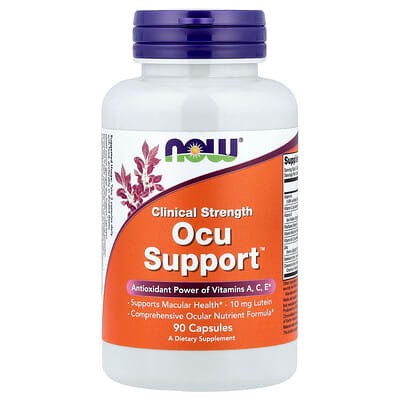
.
 Daily Vita Daily Vita | $ 19.70 | |
 Vitacost Vitacost | $ 22.29 | |
 iHerb iHerb | $ 20.81 | |
| iHerb | $ 20.81 | |
 Pure Formulas Pure Formulas | $ 20.55 |
Lutein, zeaxanthin, beta-carotene, vitamin C, natural vitamin E, zinc, bilberry, and proanthocyanidins create a broad eye-antioxidant profile. Methylcobalamin and a useful riboflavin amount add nutrient support.
Several ingredients appear mainly as label breadth: CoQ10, glutathione, ginkgo, alpha-lipoic acid, taurine, and green tea are each modest. Zeaxanthin is also much lower than lutein, and green tea standardization is not stated.
The formula suits users wanting comprehensive eye-related nutrients in one capsule regimen, though the supplied goals emphasize general and hair health instead. Beta-carotene and ginkgo also require more careful screening than a simple lutein-zeaxanthin product.
Meaningful lutein and several well-regarded nutrient forms support a broad eye formula. High fat-soluble vitamins and small accessory antioxidant doses reduce balance.
.The main active amounts are generally available and no broad proprietary blend obscures the formula. Complete usage directions and non-active ingredients are not supplied, while any noted duplicate or vague entries reduce clarity.
.Aggregate satisfaction is very strong and supported by an extensive evidence base. No firsthand experience details are supplied, so recurring complaints and purpose alignment remain uncertain.
.Eye-specific ingredients and good nutrient forms justify the product position. Several small add-ons modestly reduce value, but the core formula remains competitive.
.Antioxidant vitamins, carotenoids, and selected botanicals create a coherent formula for eye-focused support. Those nutrients have some general-health relevance, but the product is too specialized to cover broad foundational needs.
Methylcobalamin and well-chosen zinc and selenium forms are strengths, while many secondary antioxidants are present at small amounts. The formula is best viewed as targeted ocular nutrition rather than a daily general-health foundation.
| Ingredient | Amount per serving |
|---|---|
Vitamin A (Beta-Carotene) | 3000 mcg |
Vitamin C (Ascorbic Acid) | 250 mg |
Vitamin E (D-Alpha-Tocopheryl Succinate) | 67 mg |
Riboflavin (Vitamin B2) | 15 mg |
Vitamin B6 (Pyridoxine Hydrochloride) | 10 mg |
Vitamin B12 (Methylcobalamin) | 100 mcg |
Zinc (L-OptiZinc Zinc-L-Methionine) | 7.5 mg |
Selenium (L-Selenomethionine) | 50 mcg |
Chromium (Chromemate Chromium Polynicotinate) | 50 mcg |
Citrus Bioflavonoid Complex | 100 mg |
Rutin powder (Sophora japonica) | 100 mg |
Eyebright | 100 mg |
Green Tea extract | 50 mg |
Taurine | 50 mg |
N-Acetyl Cysteine | 50 mg |
Bilberry extract (Total Anthocyanins) | 25 mg |
Alpha Lipoic Acid | 25 mg |
Grape seed extract (Polyphenols) | 25 mg |
Ginkgo biloba extract (Ginkgoflavonglycosides, Terpene Lactones) | 20 mg |
CoQ10 | 10 mg |
Lutein (Marigold flowers extract) | 10 mg |
Zeaxanthin (Marigold flowers extract) | 500 mcg |
L-Glutathione | 2.5 mg |
A clearly identified Sophora japonica source improves traceability, but no purity or concentration is stated. The standalone amount reaches a basic support range but remains below the targeted dose range. Cost per unit of Rutin is average, so value remains limited by the dose.
Methylcobalamin provides a well-chosen bioactive form. Its low B12 dose is better suited to maintenance than targeted high-dose support. The standard swallowed format offers no special absorption advantage.
Standard riboflavin requires conversion before it can support energy metabolism. The 15 mg dose is suited to maintenance rather than high-potency support. The serving cost is high for a 15 mg maintenance dose.
Published studies used for the product analysis and the top-ranked studies for each ingredient and goal.