
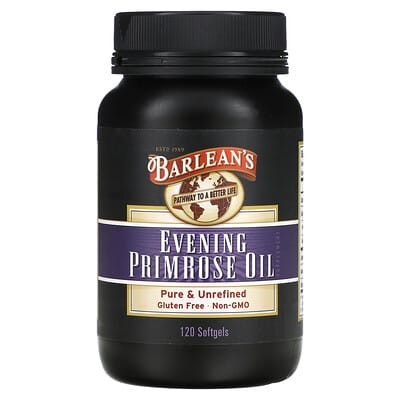
Nutrient quality
Evening primrose oil provides useful GLA and a large, clearly measured linoleic acid serving. The label gives no extraction method or antioxidant protection, leaving oil quality and freshness uncertain.
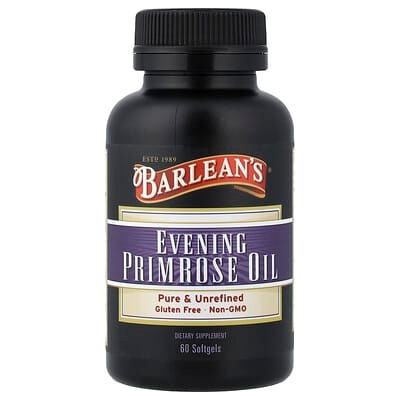
 Vitacost Vitacost | $ 20.89 | |
 iHerb iHerb | $ 21.49 |
Each serving provides 234 mg of GLA, 1,846 mg of linoleic acid, and 130 mg of oleic acid. The profile is best suited to users wanting broad evening primrose fatty acids rather than maximum GLA concentration.
All three fatty-acid amounts are clearly stated, which is a meaningful transparency strength. The extraction method and any antioxidant protection are not provided for the oxidation-sensitive oil.
Two softgels are needed per serving and the bottle lasts for 30 uses. Value is moderate, especially compared with more concentrated borage-based GLA products.
Evening primrose oil provides useful GLA and a large, clearly measured linoleic acid serving. The label gives no extraction method or antioxidant protection, leaving oil quality and freshness uncertain.
Listed active ingredients have specific amounts and no proprietary blend hides their doses. Complete intake directions and a full non-active ingredient list are not supplied.
The supplied aggregate rating is strong and rests on a moderate sample. No specific feedback is provided, so repeated complaints and real-world fit with the intended purpose cannot be assessed.
The effective serving offers fair value relative to formula and dose quality. A focused ingredient list supports efficient spending.
| Ingredient | Amount per serving |
|---|---|
Calories | 25 Calorie(s) |
Total Fat | 2.5 Gram(s) |
Polyunsaturated Fat | 1.5 Gram(s) |
Monounsaturated Fat | 1 Gram(s) |
Linoleic Acid | 1846 mg |
Gamma-Linolenic Acid | 234 mg |
Oleic Acid | 130 mg |
Evening primrose is a lower-density GLA source than borage, but the disclosed active amount reaches a useful supportive range. The label clearly states the GLA yield, while the extraction method and antioxidant stabilization are not described. Cost efficiency is moderate for the amount of active GLA delivered.
The disclosed linoleic acid dose is high and clearly identified, making the oil well suited to targeted intake. The evening primrose source is named, but the label data does not describe pressing or solvent removal. No antioxidant is listed to help protect the polyunsaturated oil from oxidation during storage.
Its clearly disclosed oleic acid amount is moderate rather than high, while evening primrose oil provides a specifically named source. No extraction method or oxidation-protection ingredient is disclosed, leaving meaningful quality and freshness uncertainty. The active amount is transparent, but the cost per unit of oleic acid is relatively high.