
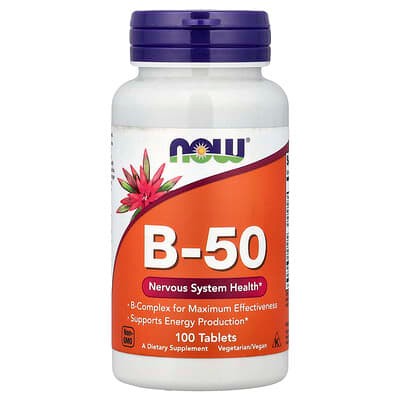
Nutrient quality
The broad B-vitamin pattern provides substantial, focused coverage. Basic forms and an aggressive B6 amount reduce form quality and long-term balance.
.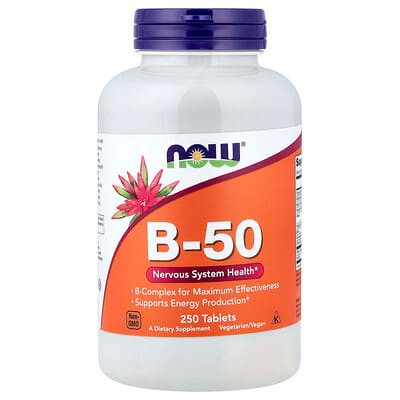
 iHerb iHerb | $ 26.94 | |
 Daily Vita Daily Vita | $ 25.50 | |
 Vitacost Vitacost | $ 28.83 |
Thiamine, riboflavin, niacinamide, vitamin B6, folate, vitamin B12, biotin, and pantothenic acid create broad support for normal energy metabolism. Most core B vitamins are supplied at 50 mg or a similarly high multiple of daily needs, so the formula is better described as high potency than balanced maintenance nutrition.
Pyridoxine hydrochloride and cyanocobalamin are conventional forms that require conversion before use. Choline at 50 mg is only a small addition, and PABA and inositol provide limited practical depth beside the main B vitamins.
Folate at 667 mcg DFE is clearly stated and provides substantial coverage. The simple serving and complete disclosure support ease of use, but the dose pattern is more aggressive than most adults need every day.
The broad B-vitamin pattern provides substantial, focused coverage. Basic forms and an aggressive B6 amount reduce form quality and long-term balance.
.Active amounts are broadly disclosed without a hidden blend. Repeated vitamin names, missing directions, and absent tablet excipients reduce full clarity.
.The aggregate satisfaction signal is strong and supported by extensive volume. Missing review details prevent assessment of recurring complaints or purpose fit.
.Broad dosing and a low serving cost provide excellent supply value. Basic forms and high B6 are the main trade-offs against gentler competitors.
.
A complete high-potency B-complex provides focused support for normal energy metabolism. Thiamin, riboflavin, niacin, vitamin B6, and B5 are all clearly quantified.
Vitamin B12 is below the goal threshold and uses cyanocobalamin rather than a bioactive form. The vitamin B6 amount is high enough that prolonged daily use may increase neuropathy risk.
No linked studies yet.

High-potency B vitamins provide a focused set of cofactors for normal cellular energy production. The formula is most relevant when low B-vitamin status is impairing energy metabolism.
No thyroid nutrient, chromium, thermogenic, carnitine, or substantial mitochondrial active broadens the effect. Long-term daily use of the supplied B6 amount may cause tingling, numbness, or other nerve symptoms.
| Ingredient | Amount per serving |
|---|---|
Thiamine (Thiamine Hydrochloride, Vitamin B1) | 50 mg |
Riboflavin (Vitamin B2) | 50 mg |
Niacin (Niacinamide, Vitamin B3) | 50 mg |
Vitamin B6 (Pyridoxine Hydrochloride) | 50 mg |
Folate | 667 mcg DFE |
Vitamin B12 (Cyanocobalamin) | 50 mcg |
Biotin | 50 mcg |
Pantothenic Acid (Calcium Pantothenate) | 50 mg |
Choline (Choline Bitartrate) | 50 mg |
PABA | 50 mg |
Inositol | 50 mg |
PABA is clearly named in a standard form, though no pharmaceutical-grade or high-purity claim is supplied, and the delivery format suits the dose. The clearly disclosed 50 mg amount suits a high-potency B-complex, and no targeted additives appear in the supplied ingredient data. PABA-specific cost efficiency is favorable within the broader formula.
Niacinamide at 50 mg fits a general B-complex and avoids the typical nicotinic-acid flush concern. The tablet has no stated release technology, but the form and amount are clearly suited to routine multivitamin use. A long supply and low serving cost make it an efficient option for broad B-vitamin coverage.
The 50 mg B6 dose is useful, but pyridoxine hydrochloride is less metabolically ready than P-5-P. A substantial riboflavin amount supports conversion of the precursor.
One tablet provides a convenient B-complex serving at strong value. Excipients remain uncertain because the supplied product data omits other ingredients.
Published studies used for the product analysis and the top-ranked studies for each ingredient and goal.