
Nutrient quality
The formula relies on thiamine mononitrate, pyridoxine hydrochloride, cyanocobalamin, and conventional forms. The very high vitamin B6 amount creates a substantial neuropathy concern with long-term use.
.
 iHerb iHerb | $ 43.52 | |
| iHerb | $ 43.52 |
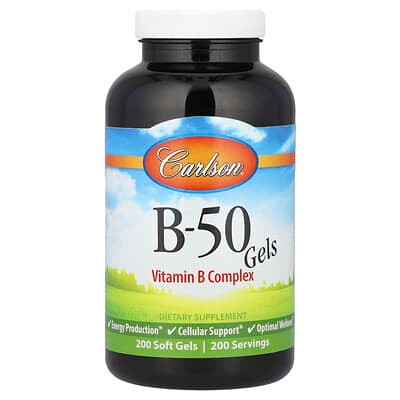
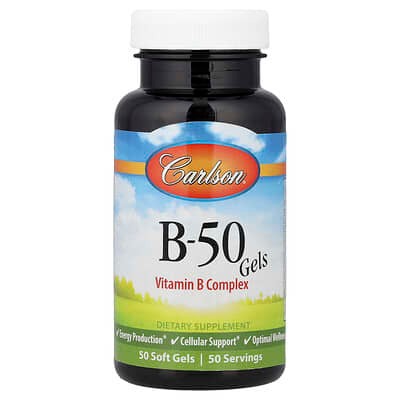
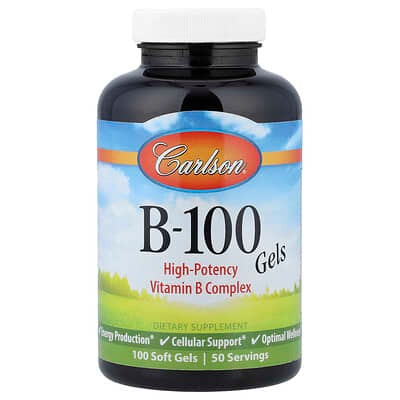
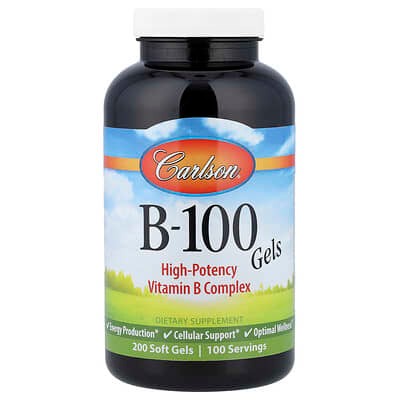
The two-softgel serving provides thiamine, riboflavin, niacinamide, B6, B12, biotin, and pantothenic acid near the 100-level pattern, with a large folate amount as well. Phosphatidylcholine adds a small choline contribution.
Most forms are conventional, including thiamine mononitrate, pyridoxine hydrochloride, and cyanocobalamin. The large doses therefore do not come with a corresponding improvement in form quality.
Vitamin B6 at 100 mg is the main concern because prolonged daily use can cause nerve symptoms. This is an aggressive formula for a defined, supervised need rather than a sensible everyday energy supplement.
The formula relies on thiamine mononitrate, pyridoxine hydrochloride, cyanocobalamin, and conventional forms. The very high vitamin B6 amount creates a substantial neuropathy concern with long-term use.
.Specific amounts are supplied for every listed active ingredient. No proprietary blend hides the listed doses.
.The supplied aggregate rating is very strong. No complaint themes or purpose-specific experience details are supplied.
.Major dose, transparency, or formulation weaknesses make the qualitative cost difficult to justify. Phosphatidylcholine is relevant, while softgel fat and protein add little active value.
.
High amounts of thiamin, riboflavin, niacin, vitamin B6, and pantothenic acid provide broad B-vitamin support for energy metabolism. The focused formula avoids unrelated botanical blends.
Vitamin B12 remains below the rubric's higher target and uses cyanocobalamin, while most other forms are conventional. The very high vitamin B6 amount may raise the risk of nerve symptoms with prolonged daily use.
No linked studies yet.

High-potency B vitamins support cellular energy reactions but do not directly increase thermogenesis or fat oxidation. The formula is most relevant for correcting low intake rather than boosting an already adequate metabolism.
Conventional vitamin forms limit quality compared with an active coenzyme B-complex. The 100 mg B6 amount reaches a chronic-use concern and may increase nerve-symptom risk with prolonged daily use.
| Ingredient | Amount per serving |
|---|---|
Calories | 20 Calorie(s) |
Total Fat | 1.5 Gram(s) |
Protein | 1 Gram(s) |
Thiamine (Thiamine Mononitrate, Vitamin B1) | 100 mg |
Riboflavin (Vitamin B2) | 100 mg |
Niacin (Niacinamide) | 100 mg |
Vitamin B6 (Pyridoxine Hydrochloride) | 100 mg |
Folate | 1360 mcg DFE |
Vitamin B-12 (Cyanocobalamin) | 100 mcg |
Biotin | 100 mcg |
Pantothenic Acid (Calcium D-Pantothenate) | 100 mg |
Choline (Phosphatidylcholine) | 13 mg |
Phosphatidyl Choline (Soybeans) | 100 mg |
Niacinamide is clearly disclosed at an amount suited to targeted general use. The swallowed softgel provides conventional immediate delivery without added release technology. Its broad B-complex profile offers moderate context for a serving cost that remains high for standard niacinamide.
The 100 mg thiamine amount is potent and clearly disclosed, but thiamine mononitrate remains a conventional form. Softgel delivery offers no stated absorption advantage, and the cost per active dose is high for standard thiamine. The 100 mg vitamin B6 amount may raise the risk of nerve symptoms with prolonged daily use.
Standard riboflavin requires conversion before it becomes active. The 100 mg dose supplies a high-potency amount for metabolic support. The useful dose is offered at a competitive serving cost.
Published studies used for the product analysis and the top-ranked studies for each ingredient and goal.