
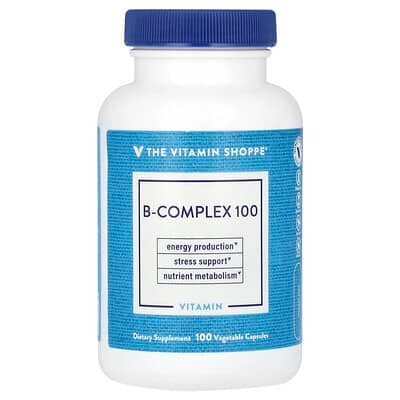
Nutrient quality
Methylcobalamin and D-biotin are useful, while pyridoxine and unspecified folate are conventional forms. Most B vitamins are substantial, but choline and several secondary compounds are modest.
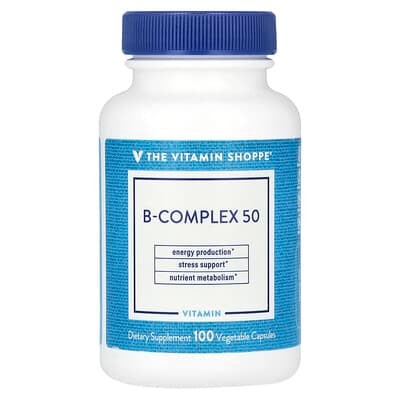
.
 iHerb iHerb | $ 17.99 |
The formula provides substantial thiamine, riboflavin, niacinamide, pantothenic acid, vitamin B6, folate, B12, and biotin. Methylcobalamin is a useful B12 form, and the one-capsule serving is convenient.
Pyridoxine HCl is used instead of active P-5-P and reaches 50 mg per serving. Choline, inositol, and PABA add label breadth but remain modest amounts.
The product fits short-term or intermittent users seeking a conventional high-potency B complex. Long-term daily use is harder to support because sustained pyridoxine intake may cause nerve symptoms.
Methylcobalamin and D-biotin are useful, while pyridoxine and unspecified folate are conventional forms. Most B vitamins are substantial, but choline and several secondary compounds are modest.
.Active amounts are visible, though repeated form entries make some totals less intuitive. Complete non-active ingredient details are not included in the supplied label data.
.The supplied average rating provides limited high-level context. Detailed firsthand feedback is unavailable, so recurring complaints and purpose fit cannot be assessed.
.Broad coverage and methylcobalamin support value at the modest serving cost. Substantial doses provide good serving value despite ordinary forms and high vitamin B6.
.
A complete B-vitamin set directly supports carbohydrate, fat, and protein metabolism. Core B vitamins are supplied at substantial amounts, and methylcobalamin improves B12 quality.
The formula does not address acute alertness, stress resilience, or major mitochondrial cofactors such as CoQ10. The high vitamin B6 amount may be unnecessary for indefinite daily use.

High-dose B vitamins support the cofactor reactions that release energy from food. They do not directly stimulate thermogenesis or cover thyroid, glycemic, and mitochondrial transport pathways.
Methylcobalamin improves form quality, but most other vitamins use conventional forms. Long-term daily use of 50 mg vitamin B6 may cause tingling, numbness, or other nerve symptoms.
| Ingredient | Amount per serving |
|---|---|
Thiamine (Thiamine Mononitrate, Vitamin B1) | 50 mg |
Riboflavin (Vitamin B2) | 50 mg |
Niacin (Niacinamide, Vitamin B3) | 50 mg NE |
Vitamin B6 (Pyridoxine Hydrochloride) | 50 mg |
Folate | 667 mcg DFE |
Vitamin B12 (Methylcobalamin) | 50 mcg |
Biotin (D-Biotin) | 300 mcg |
Pantothenic Acid (D-Calcium Pantothenate, Vitamin B5) | 50 mg |
Choline (Choline Bitartrate) | 50 mg |
Inositol | 50 mg |
PABA | 50 mg |
The clearly identified PABA amount fits a standard high-potency B-complex range. Standard immediate release is appropriate at this amount. The serving offers reasonable cost efficiency for the active amount delivered.
The formula supplies 50 mg of pyridoxine hydrochloride with riboflavin to support conversion to active B6. The dose fits the preferred range, and one capsule provides the clearly labeled serving. The B-complex is economical for daily use.
The 50 mg serving provides high-potency support, but standard riboflavin requires conversion to its active coenzyme form. The one vegetable capsule supports efficient release, and no unnecessary artificial additives are listed. The serving offers exceptional value for its form and potency.
Published studies used for the product analysis and the top-ranked studies for each ingredient and goal.