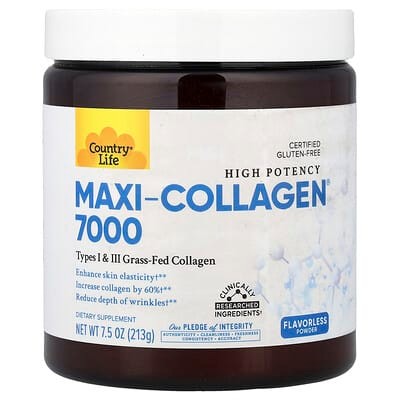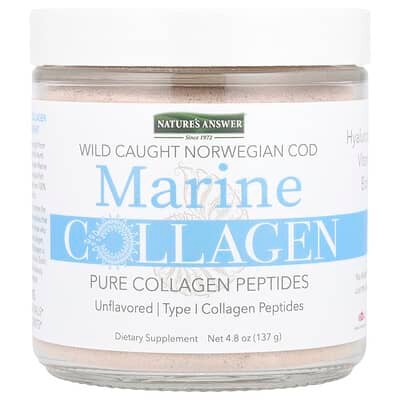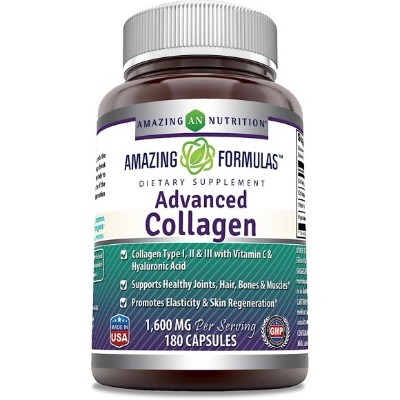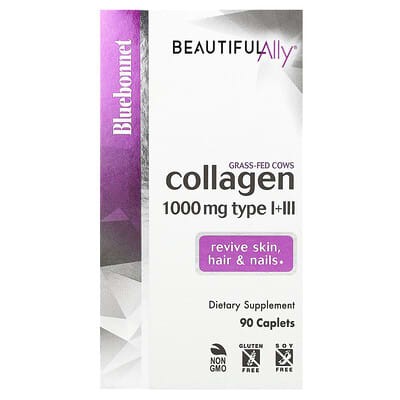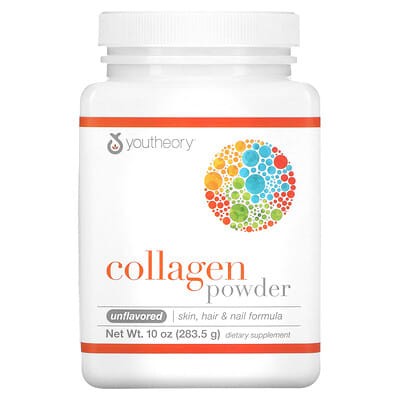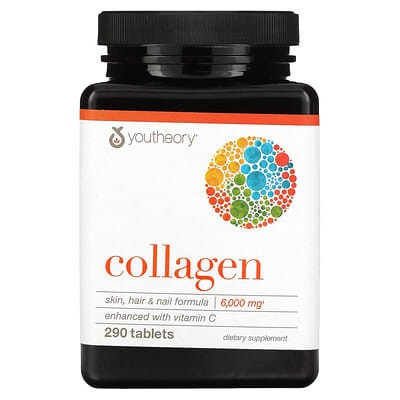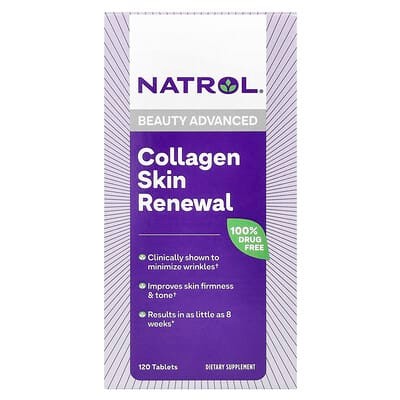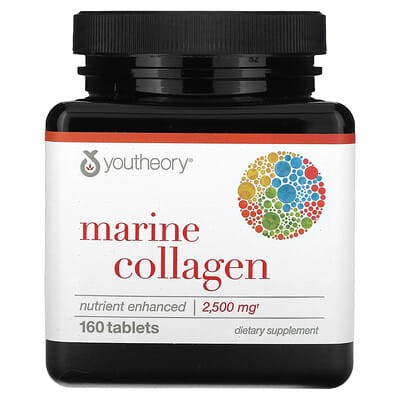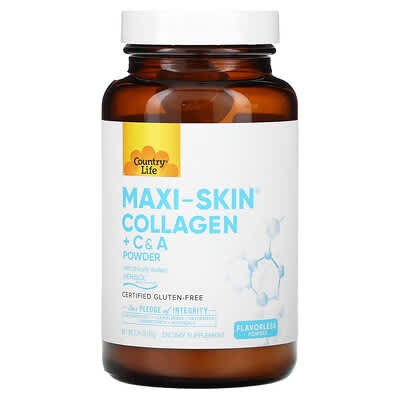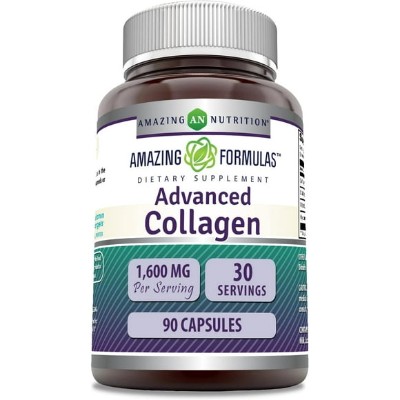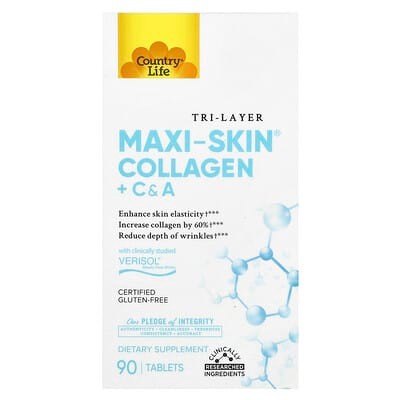
Collagen

protein

Collagen is the most abundant protein in the body, accounting for about one-third of total protein content. Its fibrous, triple-helix structure provides significant tensile strength to tissues. It is a vital component of the extracellular matrix, offering firmness to the skin, strength to the bones, and flexibility to cartilage, tendons, and ligaments. Natural collagen production tends to decline starting in the mid-20s, a process that can be influenced by age, UV exposure, smoking, and poor diet. This reduction is associated with common signs of aging, such as wrinkles, sagging skin, brittle nails, thinning hair, and joint discomfort. Supplementation provides the structural building blocks intended to support the body's internal production and maintain tissue health. There are at least 28 types of collagen, with types I, II, and III the most prevalent. Type I is found in skin, bones, tendons, and ligaments; type II is the primary form in cartilage; and type III is found in skin, blood vessels, and internal organs. The specific type used in a supplement generally determines its primary focus, though many formulas use blends for broader connective tissue support.

Natural sources
Bone broth (from beef, chicken, fish)Animal hides and skins (e.g., bovine, porcine)Fish skin and scalesChicken feetFoods rich in Vitamin C, Copper, Zinc, and Manganese (which support collagen synthesis)

Ingredient forms

No public comparison lists found.

Safety & Toxicity
4 safety notes
  • Individuals with known allergies to fish, beef, or poultry should avoid collagen supplements derived from these sources.
  • Pregnant or breastfeeding women should consult a healthcare professional before taking collagen supplements.
  • Those with kidney disease or who are on a protein-restricted diet should consult a doctor due to collagen's protein content.
  • Ensure supplements are sourced from reputable manufacturers to avoid contaminants.
Goals
Joint Health
Impact
Highest effect
Typical dose:5000–15000 mg
Hydrolyzed collagen peptides are easily absorbed and have been clinically shown to accumulate in cartilage, stimulating the production of new connective tissue, reducing joint pain, and improving function.

Study evidence

49 studies

Collagen supplements may modestly reduce knee pain and improve function in people with osteoarthritis or activity-related discomfort. Results vary across collagen preparations, and some trials find no advantage over placebo; symptom relief does not establish cartilage repair or prevention of joint disease.

View goal

Nail Health
Impact
Highest effect
Typical dose:2500–15000 mg
Hydrolyzed collagen peptides are highly bioavailable and supply the fundamental amino acids required for nail growth. Studies suggest that collagen supplementation can support faster nail growth and reduce the frequency of broken or chipped nails.

Study evidence

4 studies

Collagen peptides show preliminary promise for brittle nails and nail appearance, but the direct evidence is limited. Improvements in nail growth and breakage come mainly from uncontrolled research, so a reliable benefit from collagen supplements remains uncertain.

View goal
Skin Health
Impact
Highest effect
Typical dose:2.5–15 g
Hydrolyzed collagen peptides are clinically shown to be well-absorbed and effective at increasing skin hydration, elasticity, and dermal collagen density. Supplementation helps counteract the age-related decline in collagen production, leading to a visible reduction in fine lines and wrinkles.

Study evidence

62 studies

Collagen supplements may improve skin hydration and elasticity, with some studies also reporting fewer wrinkles. Confidence is limited because benefits were not clear in higher-quality or independently funded studies, making broad claims that collagen prevents or reverses skin aging premature.

View goal
Anti-Aging
Impact
High effect
Typical dose:2500–15000 mg
As the body's most abundant protein, collagen production declines with age, leading to wrinkles and joint stiffness. Hydrolyzed collagen peptides are well-absorbed and can stimulate the body's own collagen synthesis, supporting both aesthetic and functional health.

Study evidence

33 studies

Oral collagen peptides can improve some visible signs of skin aging, especially hydration and elasticity, with evidence also suggesting reduced wrinkles. These findings concern skin appearance, mainly in women, and do not show that collagen slows aging throughout the body or extends life.

View goal
Anti-Inflammatory Support
Impact
High effect
Typical dose:5–20 g
Collagen, particularly hydrolyzed forms, supplies glycine and proline, which are essential for repairing connective tissue in joints and the gut barrier. By supporting tissue integrity and providing anti-inflammatory amino acids, it helps reduce pain and inflammation associated with arthritis and leaky gut.

Study evidence

5 studies

Some collagen preparations may help inflammation-related symptoms in specific joint or skin conditions, but evidence for general anti-inflammatory support is limited. Results depend on the collagen form, and ordinary collagen supplements have not consistently reduced inflammatory markers in human research.

View goal
Bone Health
Impact
High effect
Typical dose:5–15 g
While minerals provide hardness, collagen provides the toughness and resilience to prevent fractures. Supplementing with hydrolyzed collagen peptides provides the specific amino acids (glycine, proline) needed to stimulate the body's own collagen production in bone tissue.

Study evidence

16 studies

Collagen peptides may improve bone density in postmenopausal women with low bone mass, although findings are inconsistent. Evidence is strongest for specific preparations and sometimes includes calcium and vitamin D; a reduction in fractures has not been established.

View goal
Showing 6 of 10 goals

Studies

Research connections will load here.
Interactions

Positive Interactions

Vitamin C
Vitamin C is an essential cofactor for the synthesis of collagen, aiding in the hydroxylation of proline and lysine residues, which is critical for collagen's stability and structure.
Copper
Copper is a cofactor for lysyl oxidase, an enzyme necessary for the cross-linking of collagen fibers, which provides tensile strength to connective tissues.
Zinc
Zinc plays a role in collagen synthesis and tissue repair, supporting the body's ability to produce and maintain healthy connective tissues.
Manganese
Manganese is a cofactor for enzymes involved in the synthesis of proteoglycans and collagen, which are crucial components of cartilage and connective tissues.
Glycine
Glycine is the most abundant amino acid in collagen, forming a significant part of its triple-helix structure, thus enhancing collagen's structural integrity.
Proline
Proline, along with hydroxyproline, is critical for collagen's unique helical structure and stability, contributing directly to its formation.
Lysine
Lysine is an essential amino acid involved in the cross-linking of collagen fibers, a process that gives collagen its strength and stability.
Arginine
Arginine is a precursor to proline, an amino acid vital for collagen synthesis, thus indirectly supporting collagen production.
Glutamine
Glutamine supports protein synthesis and cell growth, which can indirectly aid in the repair and maintenance of tissues containing collagen.
Hyaluronic Acid
Hyaluronic Acid works synergistically with collagen to improve skin hydration and elasticity, and to lubricate joints, enhancing the overall benefits for connective tissues.
Silicon
Silicon contributes to the structural integrity of connective tissue and is thought to play a role in collagen formation and stabilization.
Vitamin A
Vitamin A supports skin health and can influence collagen production and remodeling, protecting existing collagen and promoting new synthesis.
Vitamin E
Vitamin E is an antioxidant that can protect collagen fibers from oxidative damage, helping to preserve their structure and function.
Biotin
Biotin supports healthy hair, skin, and nails, complementing collagen's benefits for these tissues by contributing to overall epidermal health.
N-Acetyl Glucosamine
N-Acetyl Glucosamine is a precursor to hyaluronic acid and other glycosaminoglycans, which are vital components of the extracellular matrix that support collagen.
Sources

Up to five highest-ranked published examples per goal. Study counts and charts include all published studies for the connection.

  1. Management and Amelioration of Knee Joint Osteoarthritis in Adults Using a Novel High-Functional Bovine Collagen Peptide as a Nutritional Therapy: A Double-Blind, Prospective, Multicentric, Randomized, Active and Placebo Controlled, Five-Arm, Clinical Study to Evaluate the Efficacy, Safety, and Tolerability.
    Devasia S; Joseph JT; P S S; Koizumi S; Clarke L; V T S; Kailas AP; Madhavan S · Cartilage · 2024
    Randomized trial100 participantsJoint Health
  2. Efficacy and tolerability of an undenatured type II collagen supplement in modulating knee osteoarthritis symptoms: a multicenter randomized, double-blind, placebo-controlled study.
    Lugo JP; Saiyed ZM; Lane NE · Nutrition journal · 2016
    Randomized trial191 participantsJoint Health
  3. Efficacy and safety of native type II collagen in modulating knee osteoarthritis symptoms: a randomised, double-blind, placebo-controlled trial.
    Luo C; Su W; Song Y; Srivastava S · Journal of experimental orthopaedics · 2023
    Randomized trial101 participantsJoint HealthGeneral Health
  4. [Efficacy and safety of undenatured type II collagen in patients with knee osteoarthritis: a multicenter, prospective, double-blind, placebo-controlled, randomized trial].
    Alekseeva LI; Kashevarova NG; Taskina EA; Strebkova EA; Korotkova TA; Sharapova EP; Savushkina NM; Lila AM; Shostak NA; Mazurov VI; Nesterovich II; Dedkova VA; Vasilyuk VB; Egorova NV; Leontyeva MA; Yakupova SP; Vinogradova IB; Sorotskaya VN; Shirokova LY · Terapevticheskii arkhiv · 2024
    Randomized trial212 participantsJoint Health
  5. The Influence of Specific Bioactive Collagen Peptides on Knee Joint Discomfort in Young Physically Active Adults: A Randomized Controlled Trial.
    Zdzieblik D; Brame J; Oesser S; Gollhofer A; König D · Nutrients · 2021
    Randomized trial180 participantsJoint Health
  6. Oral supplementation with specific bioactive collagen peptides improves nail growth and reduces symptoms of brittle nails.
    Hexsel D; Zague V; Schunck M; Siega C; Camozzato FO; Oesser S · Journal of cosmetic dermatology · 2018
    Single-arm trial25 participantsNail Health
  7. Influence of collagen peptide supplementation on visible signs of skin and nail health and -aging in an East Asian population: A double blind, randomized, placebo-controlled trial.
    Vleminckx S; Virgilio N; Asserin J; Prawitt J; Silva CIF · Journal of cosmetic dermatology · 2024
    Randomized trial85 participantsNail Health
  8. Nail Supplements: When, How, and Why?
    Zaraa I; Richert B · Skin appendage disorders · 2026
    Narrative reviewNail Health
  9. Expanding the COL7A1 mutation database: novel and recurrent mutations and unusual genotype-phenotype constellations in 41 patients with dystrophic epidermolysis bullosa.
    Kern JS; Kohlhase J; Bruckner-Tuderman L; Has C · The Journal of investigative dermatology · 2006
    Observational study41 participantsNail Health
  10. Exploring the Impact of Hydrolyzed Collagen Oral Supplementation on Skin Rejuvenation: A Systematic Review and Meta-Analysis.
    Dewi DAR; Arimuko A; Norawati L; Yenny SW; Setiasih NL; Perdiyana A; Arkania N; Nadhira F; Wiliantari N · Cureus · 2024
    Meta-analysis967 participants14 studies pooledSkin Health
  11. Effects of collagen-based supplements on skin's hydration and elasticity: A systematic review and meta-analysis.
    Danessa G; Notario D; Regina R · Indian journal of dermatology, venereology and leprology · 2025
    Meta-analysis646 participants10 studies pooledSkin Health
  12. Oral intake of collagen peptide NS improves hydration, elasticity, desquamation, and wrinkling in human skin: a randomized, double-blinded, placebo-controlled study.
    Lee M; Kim E; Ahn H; Son S; Lee H · Food & function · 2023
    Randomized trial100 participantsAnti-AgingSkin Health
  13. Oral Intake of Low-Molecular-Weight Collagen Peptide Improves Hydration, Elasticity, and Wrinkling in Human Skin: A Randomized, Double-Blind, Placebo-Controlled Study.
    Kim DU; Chung HC; Choi J; Sakai Y; Lee BY · Nutrients · 2018
    Randomized trial64 participantsSkin Health
  14. Effects of hydrolyzed collagen supplementation on skin aging: a systematic review and meta-analysis.
    de Miranda RB; Weimer P; Rossi RC · International journal of dermatology · 2021
    Meta-analysis1,125 participants19 studies pooledAnti-AgingSkin Health
  15. Oral supplementation of specific collagen peptides has beneficial effects on human skin physiology: a double-blind, placebo-controlled study.
    Proksch E; Segger D; Degwert J; Schunck M; Zague V; Oesser S · Skin pharmacology and physiology · 2014
    Randomized trial69 participantsAnti-Aging
  16. Skin Anti-Aging and Moisturizing Effects of Low-Molecular-Weight Collagen Peptide Supplementation in Healthy Adults: A Randomized, Double-Blind, Placebo-Controlled Clinical Trial.
    Lee E; Ahn DK; Kim JH; Lee S; Kim HJ; Lee HK; Shin JH · Journal of microbiology and biotechnology · 2025
    Randomized trial70 participantsAnti-Aging
  17. Oral intake of specific bioactive collagen peptides reduces skin wrinkles and increases dermal matrix synthesis.
    Proksch E; Schunck M; Zague V; Segger D; Degwert J; Oesser S · Skin pharmacology and physiology · 2014
    Randomized trial114 participantsAnti-Aging
  18. Undenatured type II collagen for knee osteoarthritis.
    Gupta A; Maffulli N · Annals of medicine · 2025
    Systematic review12 studies pooledAnti-Inflammatory Support
  19. Anti-inflammatory effect of collagen tripeptide in atopic dermatitis.
    Hakuta A; Yamaguchi Y; Okawa T; Yamamoto S; Sakai Y; Aihara M · Journal of dermatological science · 2018
    Randomized trial17 participantsAnti-Inflammatory Support
  20. [Points of undenatured type II collagen application in musculoskeletal pain syndromes treatment].
    Shavlovskaya OA; Gromova OA; Torshin IY · Zhurnal nevrologii i psikhiatrii imeni S.S. Korsakova · 2022
    Narrative reviewAnti-Inflammatory Support
  21. Ultrasound Guided Injection of Collagen for Elbow Lateral Epicondylitis - A Pilot Study.
    Porta F; Filippucci E; Barni X; Dinescu SC; Vreju FA · Current health sciences journal · 2026
    Single-arm trial13 participantsAnti-Inflammatory Support
  22. Effects of porcine-derived collagen hydrolysates on 24 h blood pressure profiles, markers for endothelial dysfunction and low-grade inflammation and the retinal vasculature in adults with overweight/obesity: a randomized, controlled trial.
    Chavez-Alfaro MA; Mensink RP; Joris PJ; Plat J · Food & function · 2025
    Randomized trial56 participantsAnti-Inflammatory Support
  23. Effect of Calcium and Vitamin D Supplementation With and Without Collagen Peptides on Volumetric and Areal Bone Mineral Density, Bone Geometry and Bone Turnover in Postmenopausal Women With Osteopenia.
    Lampropoulou-Adamidou K; Karlafti E; Argyrou C; Makris K; Trovas G; Dontas IA; Tournis S; Triantafyllopoulos IK · Journal of clinical densitometry : the official journal of the International Society for Clinical Densitometry · 2022
    Randomized trial51 participantsBone Health
  24. Bone turnover and bone collagen maturation in osteoporosis: effects of antiresorptive therapies.
    Byrjalsen I; Leeming DJ; Qvist P; Christiansen C; Karsdal MA · Osteoporosis international : a journal established as result of cooperation between the European Foundation for Osteoporosis and the National Osteoporosis Foundation of the USA · 2008
    Randomized trialBone Health
  25. A calcium-collagen chelate dietary supplement attenuates bone loss in postmenopausal women with osteopenia: a randomized controlled trial.
    Elam ML; Johnson SA; Hooshmand S; Feresin RG; Payton ME; Gu J; Arjmandi BH · Journal of medicinal food · 2015
    Randomized trial39 participantsBone Health
  26. Assessment of Osteoporosis in Lumbar Spine: In Vivo Quantitative MR Imaging of Collagen Bound Water in Trabecular Bone.
    Liu J; Liao JW; Li W; Chen XJ; Feng JX; Yao L; Huang PH; Su ZH; Lu H; Liao YT; Li SL; Ma YJ · Frontiers in endocrinology · 2022
    Methods validation study189 participantsBone Health
  27. Effect of calcium and vitamin D supplementation with and without collagen peptides on bone turnover in postmenopausal women with osteopenia.
    Argyrou C; Karlafti E; Lampropoulou-Adamidou K; Tournis S; Makris K; Trovas G; Dontas I; Triantafyllopoulos IK · Journal of musculoskeletal & neuronal interactions · 2021
    Randomized trial51 participantsBone Health
  28. A double-blind, placebo-controlled, randomised, clinical study on the effectiveness of collagen peptide on osteoarthritis.
    Kumar S; Sugihara F; Suzuki K; Inoue N; Venkateswarathirukumara S · Journal of the science of food and agriculture · 2015
    Randomized trialGeneral Health
  29. Healing Process, Pain, and Health-Related Quality of Life in Patients with Venous Leg Ulcers Treated with Fish Collagen Gel: A 12-Week Randomized Single-Center Study.
    Mościcka P; Cwajda-Białasik J; Szewczyk MT; Jawień A · International journal of environmental research and public health · 2022
    Randomized trial100 participantsGeneral Health
  30. Efficacy and Safety of Dietary Undenatured Type II Collagen on Joint and Motor Function in Healthy Volunteers: A Randomized, Double-Blind, Placebo-Controlled, Parallel-Group Study.
    Shiojima Y; Takahashi M; Takahashi R; Maruyama K; Moriyama H; Bagchi D; Bagchi M; Akanuma M · Journal of the American Nutrition Association · 2023
    Randomized trial64 participantsGeneral Health
  31. The use of a collagen matrix in hard-to-heal venous leg ulcers.
    Romanelli M; Mulder G; Paggi B; Macchia M; Panduri S; Dini V · Journal of wound care · 2016
    Randomized trial40 participantsGeneral Health
  32. Low-Molecular-Weight Collagen Peptide Supplementation Improves Cellulite Severity, Skin Elasticity, and Hair Shaft Diameter: A Clinical Study with Pharmacokinetic Evaluation.
    Hwang S; Won J; Kim S; Kang W; Park M · Journal of medicinal food · 2026
    Randomized trial114 participantsHair Health
  33. Calcium and Vitamin D Supplementation with and Without Collagen on Bone Density and Skin Elasticity in Menopausal Women-A Randomized Controlled Study.
    Duangjai A; Srivilai J; Nangola S; Amornlerdpison D · Clinics and practice · 2025
    Randomized trialHair Health
  34. Dietary Collagen Supplementation as a Strategy for Skin Health: A Narrative Review of Clinical Effects on Skin, Hair, Nails, and Wound Healing.
    Biełach-Bazyluk A; Jurga M; Flisiak I; Zbroch E · Nutrients · 2026
    Narrative reviewHair Health
  35. Effects of hydrolyzed collagen alone or in combination with fish oil on the gut microbiome in patients with major burns.
    Salehi S; Hosseinzadeh-Attar MJ; Alipoor E; Dahmardehei M; Yaseri M; Emami MR; Siadat SD · Burns : journal of the International Society for Burn Injuries · 2024
    Randomized trial57 participantsDigestive Health
  36. Laparoscopic ventral rectopexy using biologic mesh for the treatment of obstructed defaecation syndrome and/or faecal incontinence in patients with internal rectal prolapse: a critical appraisal of the first 100 cases.
    Franceschilli L; Varvaras D; Capuano I; Ciangola CI; Giorgi F; Boehm G; Gaspari AL; Sileri P · Techniques in coloproctology · 2016
    Cohort study100 participantsDigestive Health
  37. Collagen patch cover facilitates recovery of bowel function after laparoscopic colectomy.
    Huang PY; Tsai MC; Kiu KT; Yen MH; Chang TC · BMC surgery · 2024
    Observational study241 participantsDigestive Health
  38. Which Protein-Based Dietary Supplements Most Effectively Enhance Fat-Free Mass and Strength Gains in Healthy Adults Undergoing Resistance Training? A Network Meta-Analysis.
    Drummond MDM; Silva RAD; Junior NC; Melo MS; Ferreira MHL · Translational sports medicine · 2026
    Meta-analysis4,755 participants78 studies pooledFitness
  39. Collagen peptide supplementation in combination with resistance training improves body composition and increases muscle strength in elderly sarcopenic men: a randomised controlled trial.
    Zdzieblik D; Oesser S; Baumstark MW; Gollhofer A; König D · The British journal of nutrition · 2016
    Randomized trial53 participantsFitness
  40. Dietary collagen peptides alleviate exercise-induced muscle soreness in healthy middle-aged males: a randomized double-blinded crossover clinical trial.
    Kuwaba K; Kusubata M; Taga Y; Igarashi H; Nakazato K; Mizuno K · Journal of the International Society of Sports Nutrition · 2023
    Randomized trial20 participantsFitness
  41. Effects of Specific Bioactive Collagen Peptides in Combination with Concurrent Training on Running Performance and Indicators of Endurance Capacity in Men: A Randomized Controlled Trial.
    Jerger S; Jendricke P; Centner C; Bischof K; Kohl J; Keller S; Gollhofer A; König D · Sports medicine - open · 2023
    Randomized trial32 participantsFitness
  42. Collagen Peptide Supplementation Enhances Muscle-Tendon Stiffness and Explosive Strength: A 16-wk Randomized Controlled Trial.
    Miyamoto N; Ishihara K; Oshima T; Kawai M; Oritani Y; Iemoto N · Medicine and science in sports and exercise · 2026
    Randomized trial50 participantsFitness